



- Details
- By Aaron Payment
Guest Opinion. PART I of 3 It may surprise many to learn that education is not explicitly a direct Constitutional right for most Americans. However, it is protected as an equal protection right under the 14th Amendment—meaning that if any government provides education, it must not be denied to any American citizen. Federal Title funding and the U.S. Department of Education were established to safeguard this equal protection right and to address funding inequities when states or local districts fall short, supplementing the additional costs that districts cannot afford to offset the disadvantages some students face when they enter school.
The U.S, Department of Education does not dictate curriculum. Funding inequities originate at the state and local levels, where school finance is authorized by state legislatures and by local voters via school millages. These millages often fail because not everyone shares the same values regarding education. I hope we do not abandon the necessary protections in federal Title funding established under the 14th Amendment, Civil Rights laws, and equal rights protections.
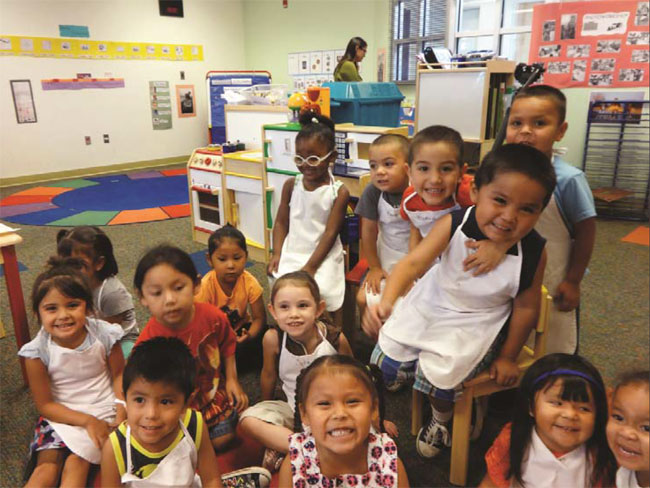
Recall what education was like before the U.S. Department of Education was created in 1979: women and minorities were relegated to non–college-prep tracks and not to STEM educational pathways. Fifty-five years after the seminal 1969 Kennedy Report "Indian Education: A National Tragedy—A National Challenge"—and during the 50th anniversary of the Indian Self-Determination and Education Assistance Act (1975)—the dropout rate disparity between Native and white students remains nearly unchanged (NACIE 2023-24/ Broken Promises, 2018).
READ Part II Indian Education as a Constitutional Right
READ Part III Indian Education as a Constutional Right
During the 2024 presidential campaign, Russell Vought, the architect of Project 2025 and now our Office of Management and Budget Director, proposed several ideas for Indian education that, if funded, might help address the alarmingly low high school graduation rate among Native students compared to all other groups. Below are the suggestions from Project 2025 for Indian education:
- Move student-driven Impact Aid programs to the Department of Defense Education Authority (DoDEA) or the Department of Interior’s Bureau of Indian Education.
- Transfer all Indian education programs to the Bureau of Indian Education.
- Move the Tribally Controlled Postsecondary Career and Technical Education Program to the Bureau of Indian Education.
- Transfer the Vocational Rehabilitation Grants for Native American students to the Bureau of Indian Education from Office of Special Education and Rehabilitation Services
- Provide Education Choice for Populations Under the Jurisdiction of Congress including BIE.
Next, I will examine the striking parallels between the Project 2025 plan for Indian education and the President’s recent Executive Order on Indian education. Even with the potential dismantling of the U.S. Department of Education, we must continue to maintain and, ideally, expand the treaty and trust obligation to provide Indian education. Given that Native students currently have the lowest graduation rate, change is clearly needed.
Dr. Payment currently serves on his Tribal Council. He previously served 22 years in office including four terms as Tribal Chairperson. He also served for nearly a decade on the National Congress of American Indians Executive Committee including at 1 st VP twice. A high school dropout, Dr. Payment earned five college degrees including doctorate in Education (EdD). He served as a university faculty teaching Native Studies/Political Science; as School Board President of a Tribal Grant and State Charter School; and as a Tribal College Board Regent Vice-President.
Dr. Payment can be reached at [email protected]
More Stories Like This
The SAVE America Act Threatens Native Voting Rights — We Must Fight BackThe Presidential Election of 1789
Cherokee Nation: Telling the Full Story During Black History Month
Jesse Jackson Changed Politics for the Better
Native News Online at 15: Humble Beginnings, Unwavering Mission
Help us defend tribal sovereignty.
At Native News Online, our mission is rooted in telling the stories that strengthen sovereignty and uplift Indigenous voices — not just at year’s end, but every single day.
Because of your generosity last year, we were able to keep our reporters on the ground in tribal communities, at national gatherings and in the halls of Congress — covering the issues that matter most to Indian Country: sovereignty, culture, education, health and economic opportunity.
That support sustained us through a tough year in 2025. Now, as we look to the year ahead, we need your help right now to ensure warrior journalism remains strong — reporting that defends tribal sovereignty, amplifies Native truth, and holds power accountable.
 The stakes couldn't be higher. Your support keeps Native voices heard, Native stories told and Native sovereignty defended.
Stand with Warrior Journalism today.
Levi Rickert (Potawatomi), Editor & Publisher