- Details
- By Native News Online Staff
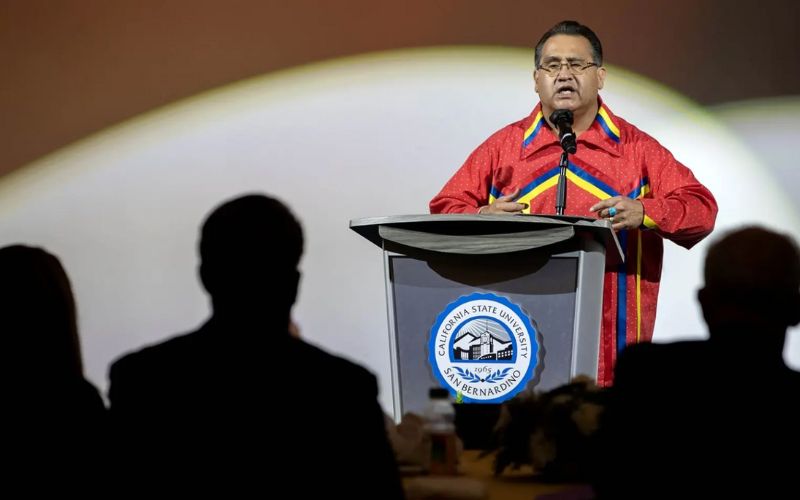
A measure to grant state peace officer status to tribal law enforcement who meet the same California standards as other officers and another to grant victims of domestic violence or sexual assault temporary criminal protective orders against their convicted assailants upon the perpetrator’s release from state prison were approved Tuesday unanimously by the Assembly Public Safety Committee. Assemblymember James C. Ramos (D-San Bernardino) introduced the two bills.
AB 31 Peace Officer Status on Tribal Lands
“AB 31, the tribal peace officer proposal, and AB 285, the criminal protective order measure, both create new preventive safeguards again the Missing and Murdered Indigenous People (MMIP) crisis in our Native American communities,” Ramos stated. “Due to a decades-old federal law, tribal lands were left without adequate law enforcement tools such as officers without full authority to pursue criminal investigations on their reservations. AB 31 seeks to remedy that public safety omission to underserved tribal lands.”
Ramos’s bill would authorize the state Department of Justice (DOJ) to establish a Tribal Police Pilot Program in coordination with the California’s California Commission on Peace Officer Standards (POST). The three-year program would grant tribal police from three state tribes peace officer status if they meet the same California requirements as other peace officers. DOJ and POST would provide ongoing monitoring, evaluation and support for the program and have the authority to suspend or terminate participation of a qualified entity for gross misconduct or for willful or persistent failure to comply with requirements of the pilot program.
The bill would also allow participating tribes to enter into agreements to share liability and collaborate on MMIP cases. AB 31 is sponsored by the Yurok Tribe, located in Humboldt County. Northern California is considered particularly vulnerable to the MMIP crisis.
AB 285 Criminal Protective Order Protection for Domestic Violence Victims
AB 285 would require that a temporary 180-day criminal protective order (CPO) be issued when a defendant convicted of domestic violence or sex offenses is released from state prison to protect the victim(s) they were convicted of harming.
Protective orders are issued by a judge to protect witnesses or crime victims and routinely issued in domestic violence cases. Such orders may be valid for up to 10 years. However, the CPO may expire before the perpetrator is released from prison, leaving the victim at risk. AB 285 would allow a 180-day CPO to be in effect in those cases where a void would exist between expiration of an existing CPO and the assailant’s release from prison. Closing this protective gap would also allow victims to take additional legal steps to prevent new violence and assaults.
Ramos declared, “AB 285 specifically gives victims of domestic violence and sexual assault time to create protective, more permanent guardrails when their assailant is released from state prison and prevent re-victimization. This also provides an additional weapon in confronting MMIP cases which disproportionately affect Native American people, especially women and girls.”
More Stories Like This
Native News Weekly (August 25, 2024): D.C. BriefsNavajo Nation Mourns the Passing of Former Vice President Rex Lee Jim
Deb Haaland Earns Endorsement From Communications Workers of America Local 7076
University Soccer Standout Leads by Example
Two Native Americans Named to Democratic Congressional Campaign Committee's“Red to Blue” Program
Help us defend tribal sovereignty.
At Native News Online, our mission is rooted in telling the stories that strengthen sovereignty and uplift Indigenous voices — not just at year’s end, but every single day.
Because of your generosity last year, we were able to keep our reporters on the ground in tribal communities, at national gatherings and in the halls of Congress — covering the issues that matter most to Indian Country: sovereignty, culture, education, health and economic opportunity.
That support sustained us through a tough year in 2025. Now, as we look to the year ahead, we need your help right now to ensure warrior journalism remains strong — reporting that defends tribal sovereignty, amplifies Native truth, and holds power accountable.
 The stakes couldn't be higher. Your support keeps Native voices heard, Native stories told and Native sovereignty defended.
Stand with Warrior Journalism today.
Levi Rickert (Potawatomi), Editor & Publisher