- Details
- By Levi Rickert
The legislation—heralded by President Donald Trump and his Republican allies as a "big, beautiful bill," and condemned by House Minority Leader Hakeem Jeffries (D-NY) and Democrats as a "big ugly bill"—passed through Congress on Thursday afternoon, largely along party lines. Only two Republicans, Rep. Thomas Massie (R-KY) and Rep. Brian Fitzpatrick (R-PA), voted against it. The final vote was 218–214.
Formally a continuing resolution, the bill was designed to fund the government after Congress failed to pass a budget by the October 1, 2024 deadline. The delay gave President Trump the opportunity to include an extension of the tax cuts for billionaires from his first term, along with several key items from his broader agenda.
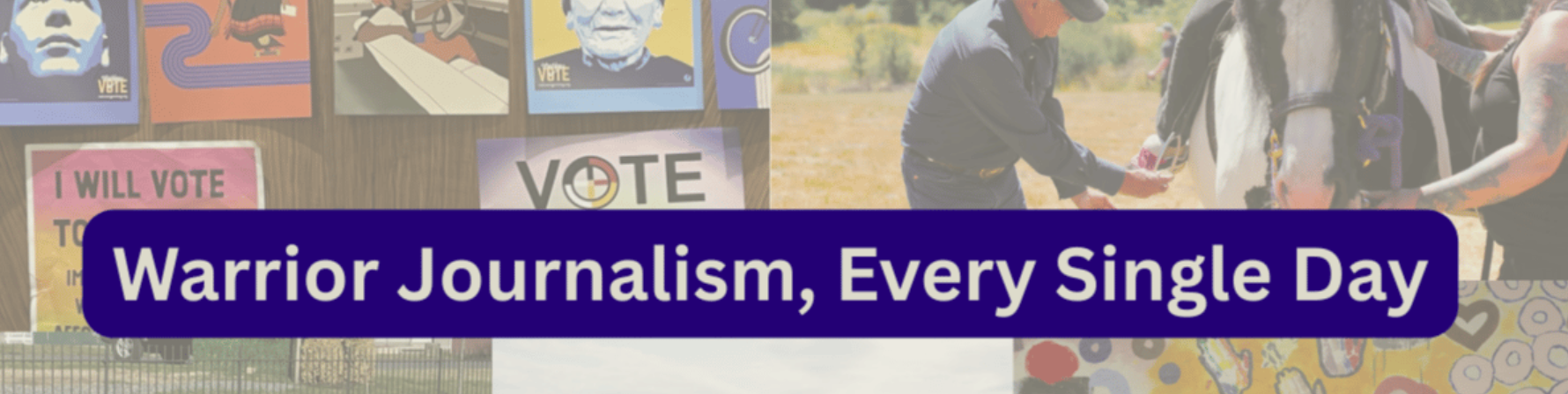
Trump is expected to sign the legislation—designated H.R. 1—on the Fourth of July. The bill represents the most significant legislative achievement for Republicans in the current session of Congress. It includes sweeping changes to major social safety net programs such as Medicaid, Medicare, and SNAP.
Facing broad public opposition—polls show Americans oppose the bill by a margin of 2-to-1—many of its more controversial provisions have been delayed from taking effect until after the 2026 midterm elections. Nonetheless, the bill will become law once it is signed by the president on Friday.
Because the legislation passed just before the Fourth of July holiday weekend, a detailed analysis of how last-minute changes could impact Indian Country will not be available until after the three-day break. However, what is currently known is that American Indians and Alaska Natives have been exempted from certain major cuts to Medicaid and SNAP.
According to economists, a recent bill is projected to increase the federal deficit by $3.3 trillion over the next decade. This increase is primarily attributed to the bill's extension of the 2017 tax cuts.
Below is a summary of key provisions affecting Tribes, compiled by the National Indian Health Board (NIHB):
Key Provisions to Know:
Medicaid Work Requirements:
-
American Indians and Alaska Natives are exempt from community engagement and work requirements.
-
The bill prohibits states from using 1115 waivers to bypass these work requirements.
SNAP Work Requirements:
-
American Indians and Alaska Natives are also exempt from SNAP work requirements.
Medicaid Cost-Sharing:
-
Existing cost-sharing protections for American Indians and Alaska Natives are preserved. No new cost-sharing measures will be introduced.
Medicaid Redetermination:
-
While the bill shortens Medicaid redetermination from 12 months to 6 months for most groups, American Indians and Alaska Natives will retain the 12-month redetermination period.
Rural Healthcare Transformation Payments:
-
The bill provides up to $50 billion over five years to support rural healthcare providers. Tribal programs may participate if they meet general eligibility requirements.
Medicaid PBM Spread Pricing:
-
A House provision banning spread pricing by pharmacy benefit managers (PBMs) in Medicaid was removed by the Senate. NIHB will continue advocating for this ban in future legislation.
Although most changes will not be implemented until 2026 or later, the NIHB has pledged to work with Tribes to ensure they are directly involved in the policy and regulatory processes, in order to protect federal trust and treaty obligations.
More Stories Like This
Native News Weekly (August 25, 2024): D.C. BriefsNavajo Nation Mourns the Passing of Former Vice President Rex Lee Jim
Deb Haaland Earns Endorsement From Communications Workers of America Local 7076
University Soccer Standout Leads by Example
Two Native Americans Named to Democratic Congressional Campaign Committee's“Red to Blue” Program
Help us defend tribal sovereignty.
At Native News Online, our mission is rooted in telling the stories that strengthen sovereignty and uplift Indigenous voices — not just at year’s end, but every single day.
Because of your generosity last year, we were able to keep our reporters on the ground in tribal communities, at national gatherings and in the halls of Congress — covering the issues that matter most to Indian Country: sovereignty, culture, education, health and economic opportunity.
That support sustained us through a tough year in 2025. Now, as we look to the year ahead, we need your help right now to ensure warrior journalism remains strong — reporting that defends tribal sovereignty, amplifies Native truth, and holds power accountable.
 The stakes couldn't be higher. Your support keeps Native voices heard, Native stories told and Native sovereignty defended.
Stand with Warrior Journalism today.
Levi Rickert (Potawatomi), Editor & Publisher