



- Details
- By Chad Hunter, Senior Reporter, Cherokee Phoenix
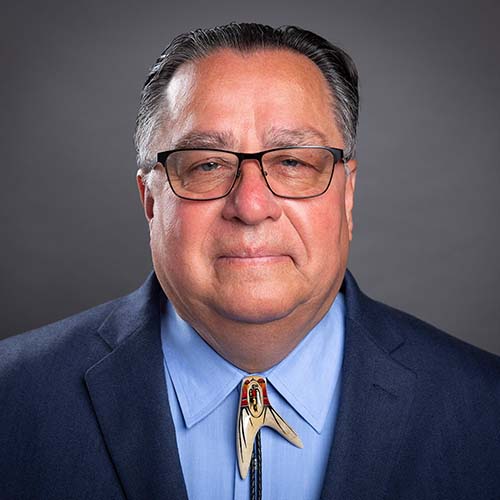
STILWELL – From a cellular “dead spot” in rural Adair County, the Cherokee Nation’s chief signed into law the Cherokee Connect Broadband Initiative, paving the way for high-speed internet and cell coverage for more than 6,000 households lacking service.
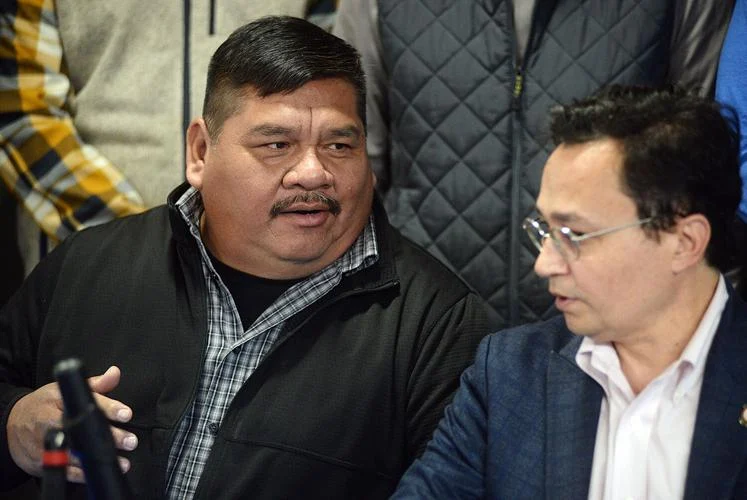
“We’re at CC Camp in Adair County,” Principal Chief Chuck Hoskin Jr. said Dec. 18. “We’re celebrating something that will make generational impact for Cherokee Nation citizens and the communities where they live, in areas that have the biggest gaps in terms of connectivity. We are today signing a resolution that will allow us to move forward on 15 cell towers connecting 16 communities – an investment of $45 million.”
The towers will be in the communities of Belfonte, Bell/CC Camp, Brent, Brushy, Chewey, Christie, Dry Creek, Eucha, Greasy, Marble City, Oak Hill/Piney, Oaks, Proctor, Tailholt and Vian.
“We know when we go into these different communities where the dead spots are,” Councilor Joshua Sam said. “We know if we’re going to go to a certain area, whether it’s Belfonte, Bell, CC Camp or certain areas, especially in District 7 and District 8, we know where those dead spots are. We know the importance this might have and will have for our future generations.”
The CN received a $34 million National Telecommunications and Information Administration grant and expects to invest another $11 million from its Respond, Recover and Rebuild program toward broadband efforts. The tribe hopes to wrap up tower construction by the summer of 2026.
“It’s exciting,” CC Camp Community Organization chairman Joe “Mouse” Chewey said. “Residents will be able to talk to one another instead of having to travel all over the mountain or through the holler and through the valley. They can connect. It is a game-changer. I can’t wait to get these Cherokees connected.”
The initiative was signed by the chief two days after its unanimous approval by the Tribal Council.
“A lot of our areas in the Cherokee Nation are rural,” Council Speaker Mike Shambaugh said. “We have rolling hills and all those mountain-like areas, and they’ve just never had the connectivity that other places have had.”
National and statewide investments into high-speed internet and cellular service “hadn’t reached this area,” Hoskin said.
“I think we have to, as Cherokee people, understand that we have to take care of Cherokee communities when we have resources to do it and not wait around,” he added.
In 2023, the Cherokee Nation built its first cell tower in the rural community of Kenwood. The tribe partnered with AT&T on that project. Because the newest initiative is much larger, Hoskin said, the tribe must “make sure the private sector competes for our business.”
“Once we’ve made this investment, I don’t have any doubt in my mind that there will be an attractiveness to invest in what is the relatively less expensive part of this proposition, which is putting the equipment on the towers,” he said. “I think you’ll see some of the big players in telecommunications come and want to compete to be on these towers.”
Tower sites are owned by the Cherokee Nation. On properties considered restricted land, lease agreements with the Bureau of Indian Affairs are required. A CN Tribal Employment Rights Office-certified company called Texoma will construct the towers.
The Cherokee Connect Broadband Initiative builds upon the tribe’s broadband push that began during the COVID-19 pandemic. In late 2020, the tribe installed 35 drive-up WiFi locations and deployed nearly 11,000 hotspots to Cherokee families to increase connectivity. The tribe also opened a digital learning center in Catoosa to help bring internet service to the community.
Help us defend tribal sovereignty.
At Native News Online, our mission is rooted in telling the stories that strengthen sovereignty and uplift Indigenous voices — not just at year’s end, but every single day.
Because of your generosity last year, we were able to keep our reporters on the ground in tribal communities, at national gatherings and in the halls of Congress — covering the issues that matter most to Indian Country: sovereignty, culture, education, health and economic opportunity.
That support sustained us through a tough year in 2025. Now, as we look to the year ahead, we need your help right now to ensure warrior journalism remains strong — reporting that defends tribal sovereignty, amplifies Native truth, and holds power accountable.
 The stakes couldn't be higher. Your support keeps Native voices heard, Native stories told and Native sovereignty defended.
Stand with Warrior Journalism today.
Levi Rickert (Potawatomi), Editor & Publisher