



- Details
- By Center for Great Plains Studies
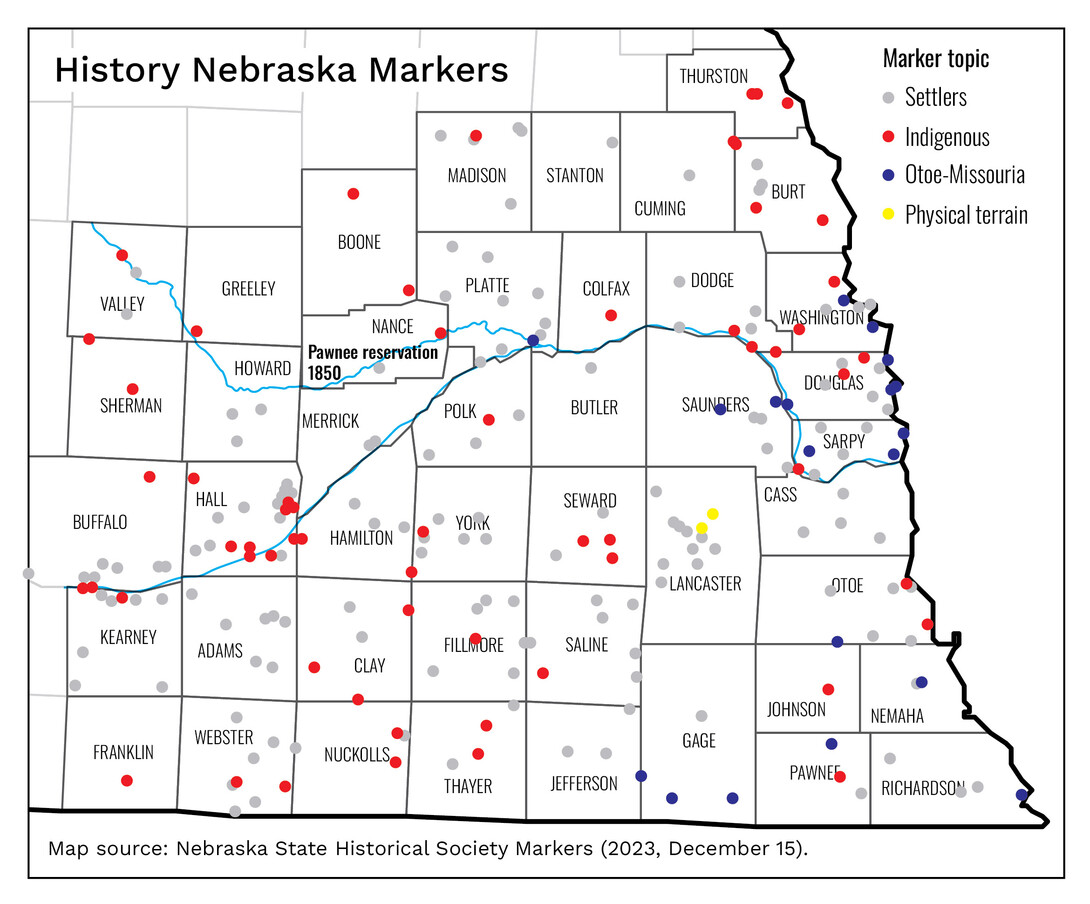
A new study of 363 modern historical markers in southeast Nebraska found that 72% focus solely on settlers, overlooking the region’s Indigenous history.
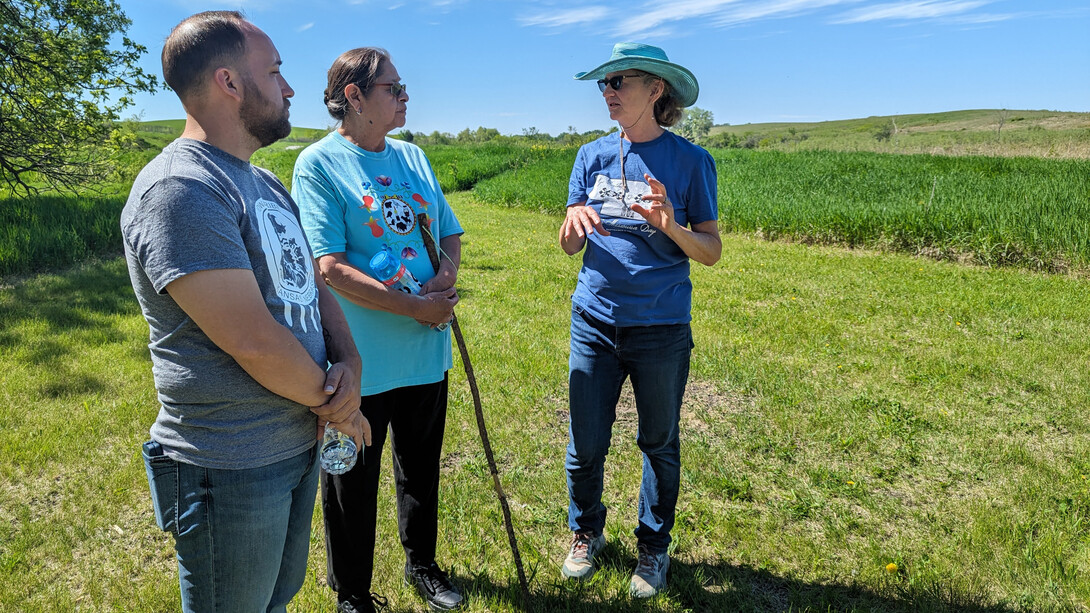
As part of its larger work, the Walking in the Footsteps of Our Ancestors: Re-Indigenizing Southeast Nebraska project — a collaboration between the Otoe-Missouria Tribe of Oklahoma and the Center for Great Plains Studies at the University of Nebraska–Lincoln — wanted to know how Indigenous people are commemorated in the area and commissioned a study of historical markers now released to the public.

The study found that when these markers do mention Indigenous people, it is predominantly in relation to or from the perspective of settlers. Of the 100 markers that mention Indigenous people, none mention them without also mentioning settlers.
The Otoe-Missouria Tribe is mentioned on 5% of markers and often only in reference to Lewis and Clark, as they were the first tribe to interact with the expedition.
The full monument audit is available for download on the Center for Great Plains Studies’ website.
The project also commissioned two surveys:
- The first looked to gain insight into what the Otoe-Missouria community thinks about reconciliation, their knowledge about Nebraska and what future efforts in Nebraska should look like.
- The second aimed to learn what southeast Nebraska residents know about Indigenous history in the region and whether they would support efforts to reconnect the Otoe-Missouria to their homeland.
The latter survey found that nearly 80% of southeast Nebraskans have little or no familiarity with the history, culture and art of local Indigenous peoples.
Both surveys found each group wanted more education about the history of the tribe in the region alongside more cultural events to bring the tribe and southeast Nebraskans together. When asked which activities the local community in Nebraska could undertake to better connect non-Otoe-Missouria people with Otoe-Missourians, respondents rated cultural events or festivals, collaborations with local Indigenous organizations and formal and informal education events as the best options.
The full results of the surveys are available for download here. The southeast Nebraska survey was administered by the University of Nebraska–Lincoln’s Bureau of Sociological Research. The project team is planning additional surveys to measure future impacts of the project.
The Center for Great Plains Studies and the Otoe-Missouria Tribe were awarded a three-year, $1.58 million grant from the Andrew W. Mellon Foundation, the nation’s largest supporter of the arts and humanities, to launch the Walking in the Footsteps of Our Ancestors project in 2023.
Help us defend tribal sovereignty.
At Native News Online, our mission is rooted in telling the stories that strengthen sovereignty and uplift Indigenous voices — not just at year’s end, but every single day.
Because of your generosity last year, we were able to keep our reporters on the ground in tribal communities, at national gatherings and in the halls of Congress — covering the issues that matter most to Indian Country: sovereignty, culture, education, health and economic opportunity.
That support sustained us through a tough year in 2025. Now, as we look to the year ahead, we need your help right now to ensure warrior journalism remains strong — reporting that defends tribal sovereignty, amplifies Native truth, and holds power accountable.
 The stakes couldn't be higher. Your support keeps Native voices heard, Native stories told and Native sovereignty defended.
Stand with Warrior Journalism today.
Levi Rickert (Potawatomi), Editor & Publisher