- Details
- By Neely Bardwell
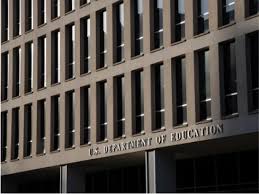
On Wednesday, March 12, the U.S. Department of Education announced significant staff reductions, cutting nearly half of its workforce.
The agency plans to lay off more than 1,300 employees after already downsizing through buyout offers and the termination of probationary staff. Following these layoffs, the department's total workforce will shrink from its original 4,100 employees to approximately half that number, officials stated.

These cuts align with President Donald Trump’s broader objective of dismantling the Department of Education and reducing the size of the federal government. The Education Department is not alone in facing workforce reductions—thousands of jobs are also expected to be eliminated at the Department of Veterans Affairs, the Social Security Administration, and other federal agencies.
In addition to the layoffs, the department is terminating leases on office buildings in several major cities, including New York, Boston, Chicago, and Cleveland, according to officials.
The impact of these cuts is already being felt in Indian Country. A coalition of tribal nations and students has filed a lawsuit against the federal government over severe funding reductions affecting two colleges and a federal agency that serves Native American students.
Haskell Indian Nations University in Kansas and Southwestern Indian Polytechnic Institute (SIPI) in New Mexico have both suffered staffing and service reductions as a result of the downsizing. The lawsuit alleges that the federal government failed to notify or consult with tribal nations before implementing these cuts.
Adding to the turmoil, reports have surfaced that Trump is preparing to sign an executive order to dissolve the Department of Education entirely. According to The Wall Street Journal, a draft of the order directs Education Secretary Linda McMahon to "take all necessary steps to facilitate the closure" of the agency. The signing of the order was anticipated as early as March 6 or soon thereafter.
This contradicts what Department of Education Secretary Linda McMahon said during her recent Senate confirmation hearing where she affirmed the White House cannot unilaterally close the department, which was created by Congress in 1979.
“It is set up by the United States Congress and we work with Congress. It really cannot be shut down without it,” McMahon said.
The department's functions include supporting state and local education systems, promoting educational equity for all students, and providing grants and loans to higher education institutions and students. The Department of Education spent $268 billion in fiscal year (FY) 2024, 4.0% of the $6.8 trillion in overall federal spending, ranking sixth among federal agencies in total spending.
Currently, the Department’s highest-spending division is the Office of Federal Student Aid which funds higher education aid programs like Pell Grants. The Office of Elementary and Secondary Education is the Department’s second most funded office which funds Title I, special education programs, and school improvement programs.
According to the National Postsecondary Student Aid Survey, 54 percent of Native American students received some form of federal Title IV financial aid in the 2019-20 academic year, compared to 55 percent of all students. Pell Grants are also a big source of aid for Native students with 45 percent receiving a Pell grant, compared to 40 percent of all students
Job cuts to the Department of Education puts critical offices within the department like the Office of Federal Student Aid at risk. This, in turn, puts Native students who rely on federal funding and Pell Grants to achieve a higher education at risk.
In Project 2025, the conservative blueprint for this administration, it suggests all federal Indian Education programs be transferred to the Bureau of Indian Education (BIE), as well as tribal postsecondary career and technical programs, to reduce “bloat” and streamline services. Currently, tribes can either contract with the BIE to provide educational services, or the bureau manages schools on tribal land.
More Stories Like This
Hanging a Red Dress for Christmas: MMIP, Native Higher Education, and Hope for a Better New YearNative Students Can Win $5,000 Scholarship, International Distribution in Pendleton Design Contest
American Indian College Fund Raises Alarm Over Plan to Shift Native Programs Away From the Dept. of Education
MacKenzie Scott Foundation Gives $5 Million Contribution to Little Priest Tribal College
Tribal Leaders Push Back on Dismantling of U.S. Department of Education
Help us defend tribal sovereignty.
At Native News Online, our mission is rooted in telling the stories that strengthen sovereignty and uplift Indigenous voices — not just at year’s end, but every single day.
Because of your generosity last year, we were able to keep our reporters on the ground in tribal communities, at national gatherings and in the halls of Congress — covering the issues that matter most to Indian Country: sovereignty, culture, education, health and economic opportunity.
That support sustained us through a tough year in 2025. Now, as we look to the year ahead, we need your help right now to ensure warrior journalism remains strong — reporting that defends tribal sovereignty, amplifies Native truth, and holds power accountable.
 The stakes couldn't be higher. Your support keeps Native voices heard, Native stories told and Native sovereignty defended.
Stand with Warrior Journalism today.
Levi Rickert (Potawatomi), Editor & Publisher