- Details
- By Jenna Kunze
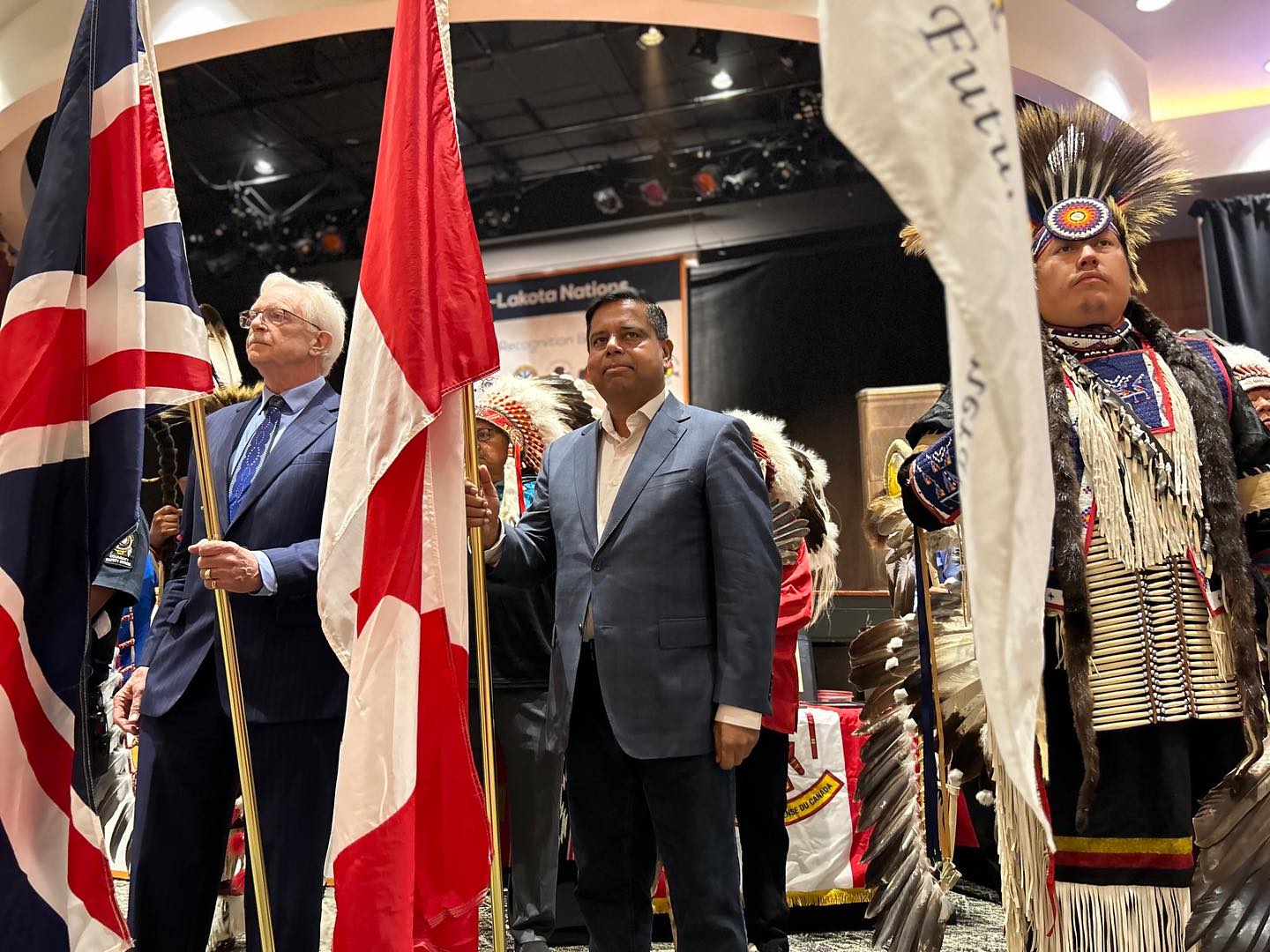
Canada’s Minister of Crown-Indigenous Relations, Gary Anandasangaree, on Monday delivered an apology on behalf of Canada to nine First Nations in Manitoba and Saskatchewan for decades of labeling them as refugees.
In a 650-person gathering at Whitecap Dakota Nation, Anandasangaree formally acknowledged the Dakota and Lakota as "Aboriginal peoples of Canada,” a designation that comes with constitutionally protected rights.

The Dakota and Lakota people played a critical role in defending what is now Canada during the War of 1812, but were not invited to sign treaties in the 1870s and, as a result, received no constitutional rights or benefits, including smaller reserves than Treaty First Nations.
In 2007, Ottawa rejected the claim of the Dakota and Lakota Nations that they should be included in the local treaties, a move that meant the nations weren't included in the multimillion-dollar treaty land entitlement process in Saskatchewan and Manitoba.
“Today, on behalf of the Government of Canada and all Canadians, we seek to begin to mend this injustice with three simple words: we are sorry,” Anandasangaree said. “We acknowledge that you have been treated as ‘second-class First Nations’ and strangers here on your own land in Canada – a Canada that you helped defend, build and develop. We recognize the hurt that this has caused generations of your citizens. We hope, today, that we can remove this stain and begin the important work of healing.”
In response to the apology, many First Nation leaders called the day “historic” and expressed hope that it was a critical step towards healing.
For too long, the Dakota people in Canada have been treated as foreigners in their own land, said Whitecap Dakota Nation Darcy Bear in a statement.
Last year, Canada first recognized the Dakota as an Aboriginal People of Canada, and enshrined that recognition in the Whitecap Dakota Self-Government Treaty.
“This apology today builds on that affirmation, and takes us one further step ahead in the journey of healing and recognition that is so long overdue,” Chief Bear added.
Chief Don Smoke of the Dakota Plains Wahpeton Nation said that it is essential that the apology come with land back.
“This response should involve the return and conservation of lands that were not ceded, responsible governance of the land, rejuvenation of traditional practices, and a shared respect for our natural resources.”
More Stories Like This
Native News Weekly (August 25, 2024): D.C. BriefsUS Presidents in Their Own Words Concerning American Indians
Navajo Man Faces Vehicular Homicide Charge After Child Killed at Navajo Nation Christmas Parade
Suspected Drunk Driver Crashes into Parade in Kayenta on Navajo Nation, Killing 1 & Injuring 3 Others
Tribal Broadband to Get $6.5M Boost as NTIA Plans Consultations
Help us defend tribal sovereignty.
At Native News Online, our mission is rooted in telling the stories that strengthen sovereignty and uplift Indigenous voices — not just at year’s end, but every single day.
Because of your generosity last year, we were able to keep our reporters on the ground in tribal communities, at national gatherings and in the halls of Congress — covering the issues that matter most to Indian Country: sovereignty, culture, education, health and economic opportunity.
That support sustained us through a tough year in 2025. Now, as we look to the year ahead, we need your help right now to ensure warrior journalism remains strong — reporting that defends tribal sovereignty, amplifies Native truth, and holds power accountable.
 The stakes couldn't be higher. Your support keeps Native voices heard, Native stories told and Native sovereignty defended.
Stand with Warrior Journalism today.
Levi Rickert (Potawatomi), Editor & Publisher