- Details
- By Levi Rickert
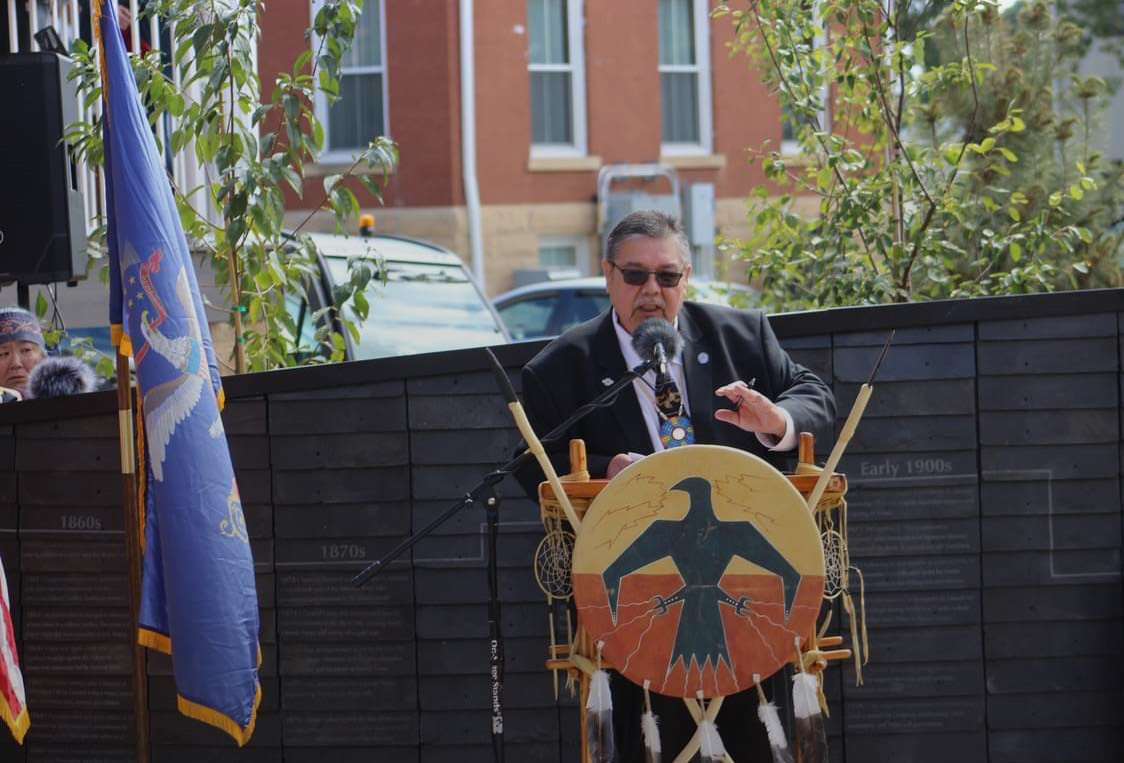
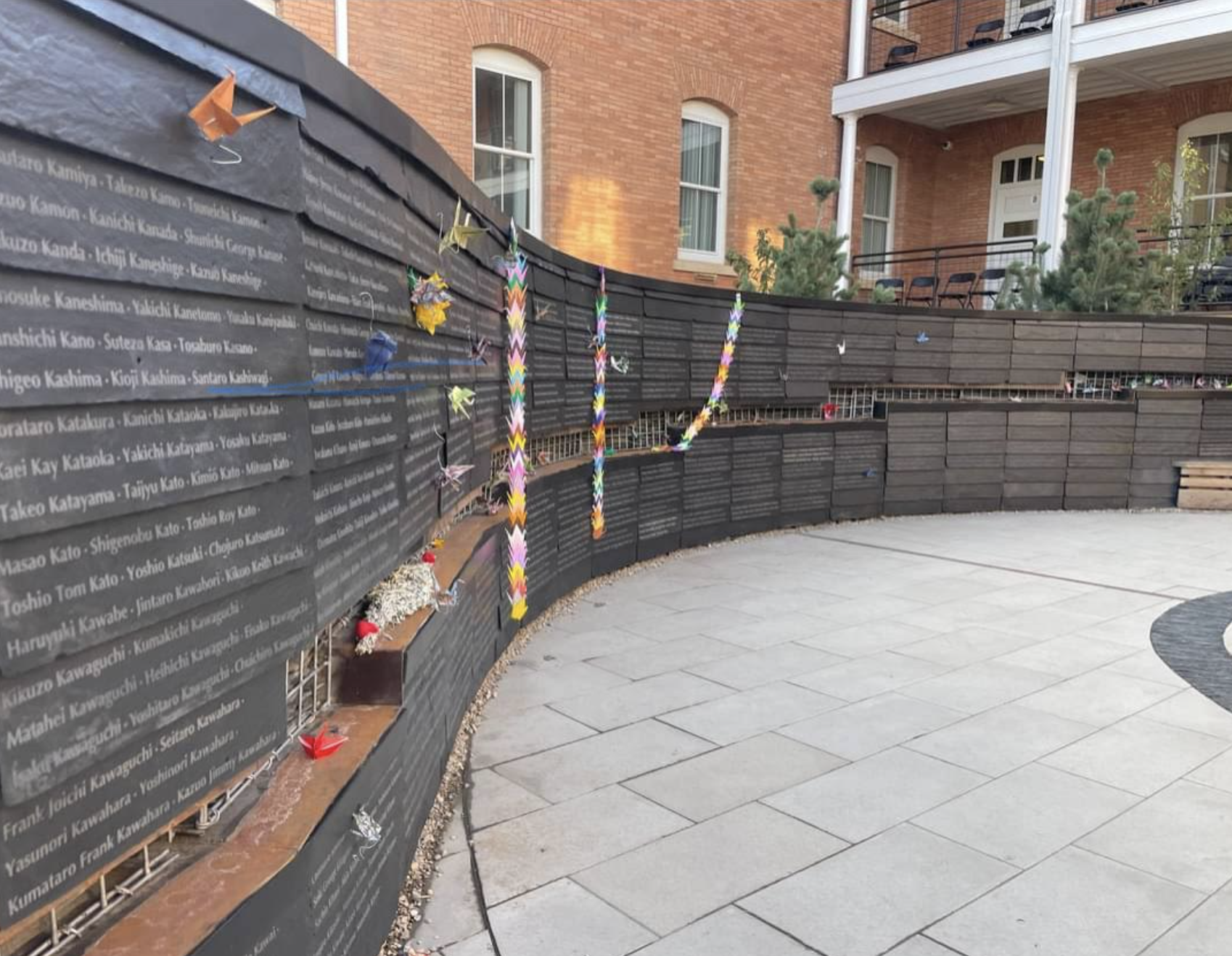
BISMARCK, N.D. — Among cloudy skies, the sun shone through the clouds on Friday afternoon, as Native Americans, Japanese Americans, and white allies gathered at United Tribes Technical College (UTTC) to dedicate the Snow Country Prison Japanese American Internment Memorial.
The ceremony marked the beginning of a two-day event honoring the history of the former Fort Lincoln internment center, now home to the UTTC campus.
The memorial, 15 years in the making, is known as “Snow Country Prison” — a name once used to describe Fort Lincoln.
During World War II, Fort Lincoln held 1,920 Japanese Americans — many of them first-generation immigrants — under President Franklin D. Roosevelt’s Enemy Alien Control Program. The new memorial stands as a tribute to their resilience and a reminder of a dark chapter in American history.
Dr. Leander “Russ” McDonald, the president of UTTC served as the master of ceremonies for the dedication. In remarks, he drew the parallels between the Japanese American internment and the forced removal of Native Americans.
“As we did the research for this memorial between what happened with the Japanese people and what happened with our own people here. Some of those similarities in regard to land loss or forced removal, there's been centuries of US policy that forcibly removed Indigenous nations from their ancestral lands following the Indian Removal Act of 1830 many were confined to reservation and faced massive loss of territory and sovereignty. But the Japanese Americans in World War Two, Executive Order 9066, led to the uprooting of over 120,000 Japanese American citizens and residents who were forced to abandon their homes, businesses, and communities to live in internment camps,” McDonald said.
“In both cases U.S.authorities exercised a paternalistic rationale, justifying forced relocation as protective or necessary. A government commission later deemed the internment of grave injustice driven by racial prejudice, wartime hysterical and political failure. Both of these experiences were rooted in consistent racism.”
Some 100 Japanese Americans attended the dedication ceremony from San Francisco, Los Angeles, New York City, and other places from around the country. Some even came from Japan. The youngest was a young-year-old and the oldest was 95.
Satsuki Ina, a Tule Lake Segregation Center survivor, from Albany, California spoke of the significance of the memorial and remembering the internment of Japanese American citizens.
“Seven hundred and fifty people who were American citizens lost their birthright citizenship for the “crime” of protesting the injustice of their wartime incarceration. It was a story that very few people in our own community understood and knew about, and in the broader community even fewer people knew about it,” Ina said. “So here we are at a ceremony organized by a Native American college with leadership that has compassion and understanding to recognize the importance of the story.”
Mike Ishii, a Japanese American leader with Tsuru for Solidarity, spoke about the injustices of children today being taken away from their families and put into cages, such as what happened during the first administration.
“That was when they were taking children away from their parents, deporting their parents. We still don’t know where some of them are, and then putting children in cages,” Ishii said. “Chidren are the sacred trust across all cultures.”
The Japanese Americans were honored at the 55th Annual United Tribes Technical College International Powwow on Friday evening.
In addition to the Japanese held captive at Fort Lincoln, German nationals held at the makeshift prison by the U.S. Justice Department.
More Stories Like This
Native News Weekly (August 25, 2024): D.C. BriefsUS Presidents in Their Own Words Concerning American Indians
Native America Celebrates the Winter Solstice
Tlingit & Haida Launch New Foundation to Support Education, Wellness
Michigan Attorney General Opens Criminal Investigation into Indian Boarding Schools
Help us defend tribal sovereignty.
At Native News Online, our mission is rooted in telling the stories that strengthen sovereignty and uplift Indigenous voices — not just at year’s end, but every single day.
Because of your generosity last year, we were able to keep our reporters on the ground in tribal communities, at national gatherings and in the halls of Congress — covering the issues that matter most to Indian Country: sovereignty, culture, education, health and economic opportunity.
That support sustained us through a tough year in 2025. Now, as we look to the year ahead, we need your help right now to ensure warrior journalism remains strong — reporting that defends tribal sovereignty, amplifies Native truth, and holds power accountable.
 The stakes couldn't be higher. Your support keeps Native voices heard, Native stories told and Native sovereignty defended.
Stand with Warrior Journalism today.
Levi Rickert (Potawatomi), Editor & Publisher