



- Details
- By Levi Rickert Neely Bardwell
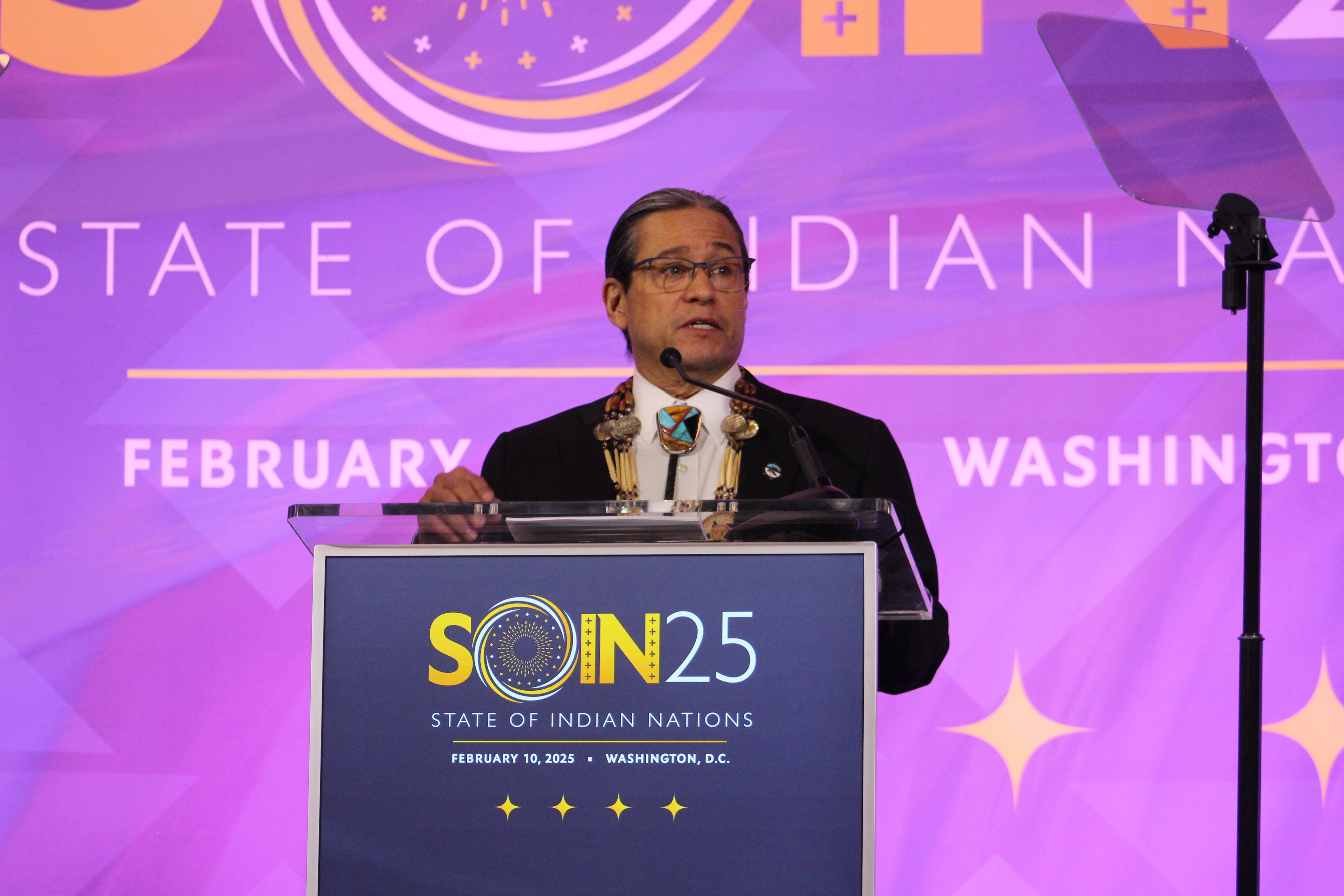
WASHINGTON – With hundreds of tribal leaders gathered in Washington, D.C., this week, the National Congress of American Indians (NCAI) delivered its annual State of Indian Nations address on Monday. Just three weeks into the second Trump administration, the central theme was the protection and defense of tribal sovereignty.
The address, held ahead of NCAI’s Executive Council Winter Session, marked the first tribal gathering since Trump’s return to office. The event began with a prayer and opening remarks from Jack Potter Jr. (Redding Rancheria), chairman of Redding Rancheria and NCAI Alternate Vice President for the Pacific Region.

NCAI President Mark Macarro, chairman of the Pechanga Band of Indians, declared that the “state of Indian Nations is on the rise,” highlighting the historic success of Native candidates in the 2024 elections, where 166 Native Americans won office, including 115 first-time elected officials at state and local levels.
Macarro also addressed the wave of executive orders issued since Trump’s inauguration, many directly impacting Indian Country. The most significant came on January 27, when Acting OMB Director Matthew J. Vaeth ordered a halt on all federal financial assistance obligations, effectively freezing $3 trillion in funding. Though the directive was later rescinded, tribal leaders remain vigilant.
“Native Americans still lag far behind the nation as a whole in virtually all key indicators of healthy communities. Yet as we gather here today, we don't firmly know about the security of federal funding for tribal programs that might address those gaps,” Macarro stated.
To address the ongoing executive orders and directives from the White House, Macarro announced that NCAI has convened a coalition of national tribal organizations urging the administration to ensure that recent executive actions do not undermine the sovereign status of tribal nations or disrupt the federal funding tied to treaty and trust obligations.
The funding freeze is linked to Trump’s broader attack on Diversity, Equity, and Inclusion (DEI) initiatives. However, tribal leaders continue to assert that federal support for tribes is not a DEI program but a fundamental trust and treaty responsibility.
“We will work with our congressional allies to avert further detrimental administrative action. We will continue our litigation analysis and preparation with NARF, the Native American Rights Fund, and we will not yield as we navigate the next three, four, years. We stand firm. We hold our ground,” said Macarro.
Before Macarro spoke, the Co-Chairs of the NCAI Youth Commission, Madison Brown (Seneca Nation) and Angelina Serna (Oneida, Turtle Mountain Band) spoke together and called on the audience to support Native youth.
“For too long, the wisdom and knowledge of Indigenous people have been sidelined, dismissed, misunderstood and misappropriated, yet our reciprocal relationship with the land, our sustainable practices and our values of community are precisely what the world needs today,” said Serna. “This isn't just a matter of seeking a seat at the table. It's about ensuring that the voices and knowledge of indigenous people shape the conversation and guide the solutions we come together today, not only to honor our people, but to boldly claim our rightful place in the shaping of tomorrow.
They each spoke to the unique challenges Native youth face today including challenges to inclusive education and access to cultural and language revitalization resources.
“Reflect on your responsibility to establish relationships with the youth here today and ask them what they need from you right now,” Brown said. “I call on our leaders to become familiar with her unbounded responsibilities to the generations before and after them.”
Help us defend tribal sovereignty.
At Native News Online, our mission is rooted in telling the stories that strengthen sovereignty and uplift Indigenous voices — not just at year’s end, but every single day.
Because of your generosity last year, we were able to keep our reporters on the ground in tribal communities, at national gatherings and in the halls of Congress — covering the issues that matter most to Indian Country: sovereignty, culture, education, health and economic opportunity.
That support sustained us through a tough year in 2025. Now, as we look to the year ahead, we need your help right now to ensure warrior journalism remains strong — reporting that defends tribal sovereignty, amplifies Native truth, and holds power accountable.
 The stakes couldn't be higher. Your support keeps Native voices heard, Native stories told and Native sovereignty defended.
Stand with Warrior Journalism today.
Levi Rickert (Potawatomi), Editor & Publisher