- Details
- By Chez Oxendine
The Tohono O’oodham Nation and San Carlos Apache Tribe, joining with Archaeology Southwest and the Center for Biological Diversity, have aimed a new lawsuit at the federal government for their role in permitting a high voltage transmission line across sacred sites.
The lawsuit, filed on Jan. 17, alleges that the Bureau of Land Management and the Department of the Interior ignored executive orders and federal laws that would protect sacred sites from a part of Pattern Energy’s SunZia energy project, which aims to establish clean energy infrastructure between Arizona and New Mexico.
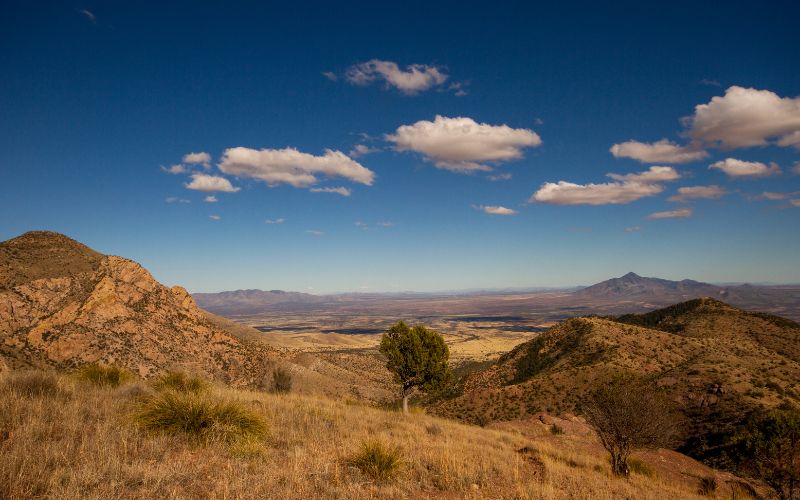
The transmission line in question would run through the heart of the San Pedro Valley, which in turn would cause “irreparable damage to scared and cultural sites of the Tohono O’odham Nation, San Carlos Apache Tribe, and other tribes,” per a joint statement.

In 2023, the Bureau of Land Management allowed the project to move forward without notifying the tribes involved first, which falls afoul of the National Historic Preservation Act, the Administrative Procedure Act, and multiple executive orders on preservation and tribal consultation, the tribes write in their joint statement. They further allege that the Bureau has failed to adequately inventory cultural resources in the area, and ignored repeatedly raised concerns about cultural safety.
“This disregard for tribal cultural resources corrupted the NHPA process and resulted in the unlawful granting of a LNTP which has allowed SunZia and Pattern Energy to plow forward with construction despite the permanent damage to sacred and cultural resources in the San Pedro Valley,” the tribes write.
Tohono O’odham Nation Chairman Verlon Jose said the line “must change course” to avoid damaging cultural resources in the area.
More Stories Like This
Navajo Council Committees Tackle Grazing Enforcement, Code RevisionsU.S. Must Fulfill Obligations by Protecting Programs
50 Years of Self-Determination: How a Landmark Act Empowered Tribal Sovereignty and Transformed Federal-Tribal Relations
Trump Veto Stalls Effort to Expand Miccosukee Tribal Lands
Oneida Nation Responds to Discovery Its Subsidiary Was Awarded $6 Million ICE Contracts
Help us defend tribal sovereignty.
At Native News Online, our mission is rooted in telling the stories that strengthen sovereignty and uplift Indigenous voices — not just at year’s end, but every single day.
Because of your generosity last year, we were able to keep our reporters on the ground in tribal communities, at national gatherings and in the halls of Congress — covering the issues that matter most to Indian Country: sovereignty, culture, education, health and economic opportunity.
That support sustained us through a tough year in 2025. Now, as we look to the year ahead, we need your help right now to ensure warrior journalism remains strong — reporting that defends tribal sovereignty, amplifies Native truth, and holds power accountable.
 The stakes couldn't be higher. Your support keeps Native voices heard, Native stories told and Native sovereignty defended.
Stand with Warrior Journalism today.
Levi Rickert (Potawatomi), Editor & Publisher