Department of War Pete Hegseth used social media on Thursday night to announce that U.S. 7th Cavalry soldiers who massacred hundreds of innocent Lakota during the 1890 Wounded Knee Massacre will retain their Medals of Honor. The Medal of Honor, which is the highest award of valor presented to military service members, was given to 20 soldiers.
These medals were given despite the fact that the incident involved the killing of at least 250–300 Lakota people, the majority of whom were women, children, and elders.
“Under my direction, we’re making it clear, without hesitation, that the soldiers who fought in the Battle of Wounded Knee in 1890 will keep their medals, and we’re making it clear that they deserve those medals,” Hegseth said in a video posted on the social platform X.
In July 2024, then-Defense Secretary Lloyd Austin had established a five-member panel to reassess the commendations awarded to troops for their actions at Wounded Knee.
The Biden administration stated that the panel would evaluate each medal recipient’s service and records individually to ensure that “no soldier was recognized for conduct that did not merit recognition under the standards applicable at the time.”
Hegseth did not release the findings of the panel during Thursday’s social media announcement.
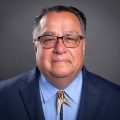
“We are not surprised, but disheartened that Secretary Hegseth has decided to follow former Defense Secretary Austin’s footsteps and follow recommendations by what I believe to be a panel that was established to ensure a specific outcome,” O.J. Semans, Sr. (Rosebud Sioux), co-founder and co-executive director of Four Directions, Inc., told Native News Online on Thursday evening.
The violence began when the U.S. Cavalry attempted to confiscate weapons from those taken into custody; a shot was fired, prompting troops to open fire and kill at least 250 Lakota men, women, and children. Around 25 U.S. soldiers also died, likely as a result of friendly fire.
For several years, Native organizations have urged Congress to pass the Remove the Stain Act that would rescind the Medal of Honor to those awarded for their violent deeds at Wounded Knee.
In May 20205, Remove the Stain Act of 2025 was reintroduced by Senators Elizabeth Warren (D–MA) and Jeff Merkley (D–OR), along with Representative Jill Tokuda (D–HI),
“We cannot be a country that celebrates and rewards horrifying acts of violence against Native people,” Sen. Warren said when the legislation was reintroduced. “Congress must recognize how shameful this massacre was and take an important step toward justice for the Lakota people.”
“We must acknowledge our history and take concrete steps to right historic wrongs from America’s darkest chapters,” said Sen. Merkley. “Moving forward together as a nation demands we remember, reflect on, and work to rectify the abhorrent massacre of hundreds of innocent Lakota men, women, and children at Wounded Knee. This horrific injustice is not deserving of our nation’s highest award for military valor, and our long-overdue bill helps finally set the record straight by revoking these medals.”
Semans still hopes Congress will pass the legislation.
“We will continue to work with Congress to ensure Americans know the truth,” Semans said.
Earlier in the year, Hegseth also directed the restoration and refurbishment of a Confederate memorial at Arlington National Cemetery that had previously been removed.