- Details
- By Native News Online Staff
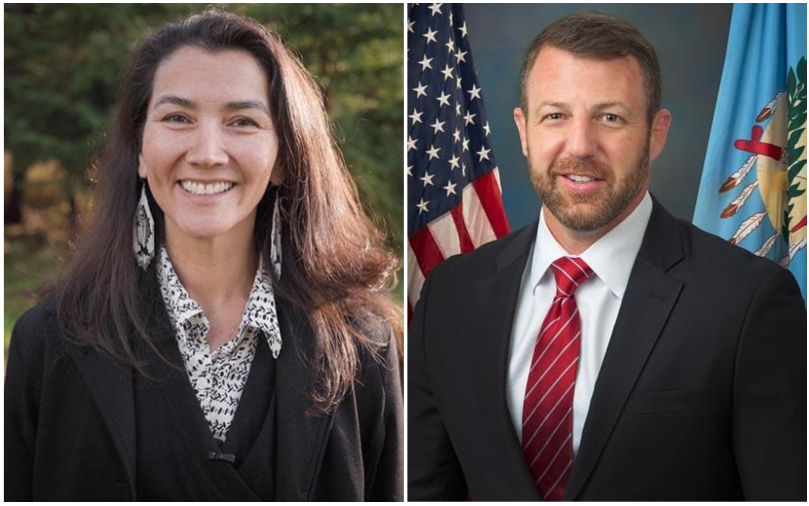
WASHINGTON—Rep. Mary Pelota, who is Yupik, and U.S. Sen. Markwayne Mullin, a Cherokee Nation citizen, introduced legislation on Wednesday to protect tribal citizens’ rights to buy, keep and bear arms.
Peltola (D-AK) partnered with South Dakota Republican Dusty Johnson to introduce the bipartisan Tribal Firearms Access Act in the House of Representatives. Mullin (R-OK) and South Dakota Republican Mike Rounds introduced the companion legislation in the Senate.

The proposed legislation, which Johnson introduced with Mullin’s support in the previous Congress, would make it easier for Native Americans living on tribal lands to buy firearms. If enacted into law, the bill would list tribal governments as eligible entities to issue identification documents for the purposes of transferring ownership of a firearm.
“Tribal citizens, and all law-abiding Americans, have a fundamental right to keep and bear arms,” Mullin said in a statement. “For too long, a lapse in existing law has prohibited Tribal members from using their Tribal government-issued ID to lawfully purchase firearms. Our commonsense legislation corrects this unconstitutional infringement."
The bill is being backed by a number of Republican House members, including Rep. Tom Cole (R-OK), co-chair of the Native American Caucus. The bill is endorsed by the National Rifle Association (NRA), the National Native American Law Enforcement Association and other gun-rights advocacy organizations.
"In Alaska, firearms are an essential tool for subsistence and self-defense alike,” Peltola said in a statement. "Tribal identification cards are already valid for a variety of uses, including boarding planes and accessing federal buildings and banks across the nation. This bill would extend this parity to include the Second Amendment Rights of Tribal members. It is past time that Tribal sovereignty is recognized in this regard, and I look forward to working with Rep. Johnson on this essential legislation.”
For many tribal citizens, tribal identification cards (IDs) are their only form of identification. South Dakota passed a law in 2011 allowing Tribal IDs to be “acceptable forms" of government-issued identification for purchasing alcohol and tobacco products. Current federal law allows for citizens of a foreign country to purchase a firearm with their foreign passport but does not permit an American citizen who is a tribal citizen to use their tribal ID to purchase a firearm.
“The right to bear arms is constitutionally vested, and important to the day-to-day lives of Native Americans,” President Tony Reider of the Flandreau Santee Sioux Tribe said in a statement. The new legislation, he said, “removes certain barriers for tribal members to purchase firearms by allowing them to utilize tribally issued identification cards as a valid form of identification.”
According to the U.S. Census Bureau, over half of American Indian people who live on Indian Reservations lack access to high-speed internet service and 18% have no internet access at all, making obtaining a state-issued identification card difficult for many Native people.
Tribal IDs usually contain the same information found on a driver’s license and are acceptable forms of identification by numerous government agencies — including the Dept. of Homeland Security while flying domestically.
More Stories Like This
Native News Weekly (August 25, 2024): D.C. BriefsUS Presidents in Their Own Words Concerning American Indians
Native America Celebrates the Winter Solstice
Tlingit & Haida Launch New Foundation to Support Education, Wellness
Michigan Attorney General Opens Criminal Investigation into Indian Boarding Schools
Help us defend tribal sovereignty.
At Native News Online, our mission is rooted in telling the stories that strengthen sovereignty and uplift Indigenous voices — not just at year’s end, but every single day.
Because of your generosity last year, we were able to keep our reporters on the ground in tribal communities, at national gatherings and in the halls of Congress — covering the issues that matter most to Indian Country: sovereignty, culture, education, health and economic opportunity.
That support sustained us through a tough year in 2025. Now, as we look to the year ahead, we need your help right now to ensure warrior journalism remains strong — reporting that defends tribal sovereignty, amplifies Native truth, and holds power accountable.
 The stakes couldn't be higher. Your support keeps Native voices heard, Native stories told and Native sovereignty defended.
Stand with Warrior Journalism today.
Levi Rickert (Potawatomi), Editor & Publisher