- Details
- By Native News Online Staff
The term Diné, meaning the People in the Navajo language, is viewed by many as a more culturally accurate reflection of the Nation’s heritage and identity.
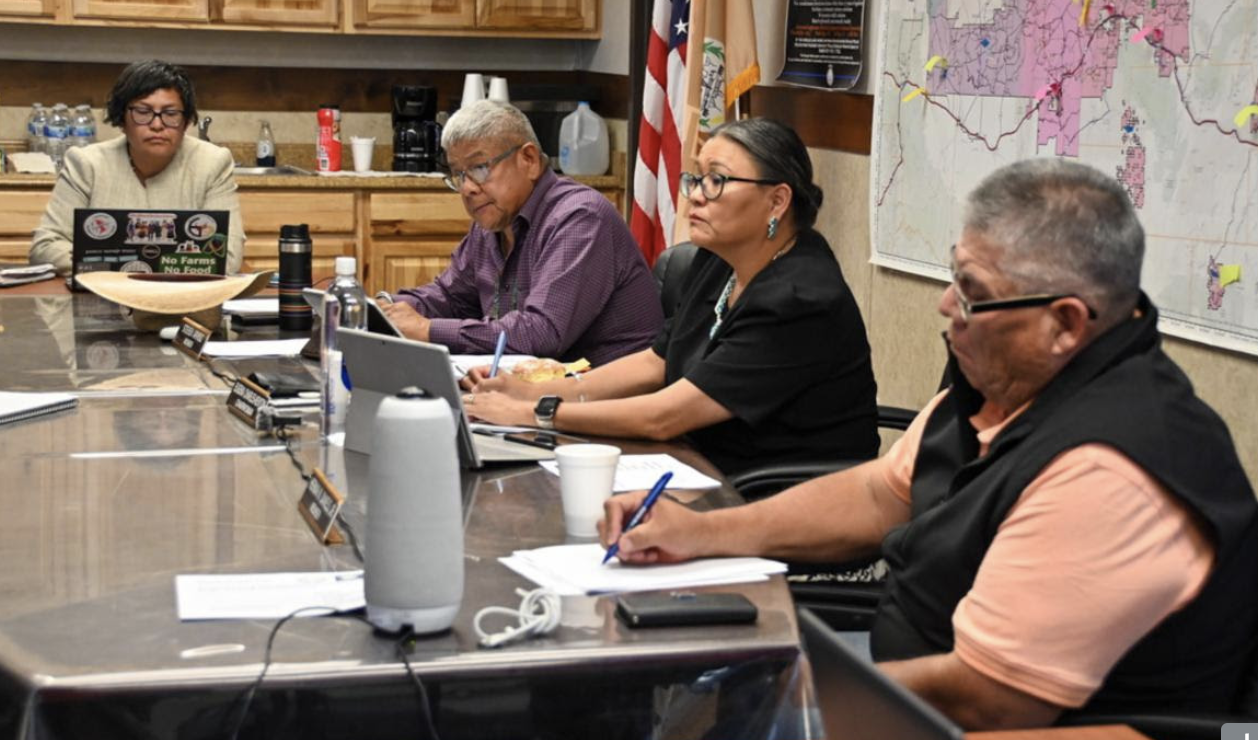
On Wednesday, the 25th Navajo Nation Council’s Law and Order Committee advanced legislation that seeks a referendum allowing Diné voters to decide whether to change the official name of the Navajo Nation to the Diné Nation.

If the 25th Navajo Nation Council approves the legislation, the referendum will be presented to Navajo voters, allowing them to decide on the name change in the upcoming general election on November 5, 2024.
Law and Order Committee's Chair Eugenia Charles-Newton highlighted the potential impacts that an official name change could have on the Nation’s sovereignty, citing historical precedents such as the 1986 name change of the Papago Indians to the Tohono O’odham Nation.
Council Delegate Herman M. Daniels, Jr., who sponsored the legislation, said that recognizing the traditional name could similarly strengthen the sovereignty and tribal identity of the Navajo Nation.
Vice Chair Cherilyn Yazzie called for a comprehensive cost analysis to fully understand the potential financial impacts of the name change before proceeding further. Committee members supported the request to include financial and administrative costs associated with updating official documents, signage, digital platforms, and other materials, into the legislation.
The outcome of the referendum will have significant implications for the community, government entities, and the cultural identity of the Navajo people.
The Law and Order Committee voted two in favor and one opposed to advancing Legislation 0201-24 to the Naabik’iyati’ Committee for further deliberation. If approved by the Naabik’iyati’ Committee, the legislation will then move forward to the full Navajo Nation Council for a final decision.
More Stories Like This
50 Years of Self-Determination: How a Landmark Act Empowered Tribal Sovereignty and Transformed Federal-Tribal RelationsNavajo Nation Council Members Attend 2025 Diné Action Plan Winter Gathering
Ute Tribe Files Federal Lawsuit Challenging Colorado Parks legislation
NCAI Resolution Condemns “Alligator Alcatraz”
NABS Documents 134 More Survivor Stories, Expands Digital Archive in 2025
Help us defend tribal sovereignty.
At Native News Online, our mission is rooted in telling the stories that strengthen sovereignty and uplift Indigenous voices — not just at year’s end, but every single day.
Because of your generosity last year, we were able to keep our reporters on the ground in tribal communities, at national gatherings and in the halls of Congress — covering the issues that matter most to Indian Country: sovereignty, culture, education, health and economic opportunity.
That support sustained us through a tough year in 2025. Now, as we look to the year ahead, we need your help right now to ensure warrior journalism remains strong — reporting that defends tribal sovereignty, amplifies Native truth, and holds power accountable.
 The stakes couldn't be higher. Your support keeps Native voices heard, Native stories told and Native sovereignty defended.
Stand with Warrior Journalism today.
Levi Rickert (Potawatomi), Editor & Publisher