- Details
- By Native News Online Staff
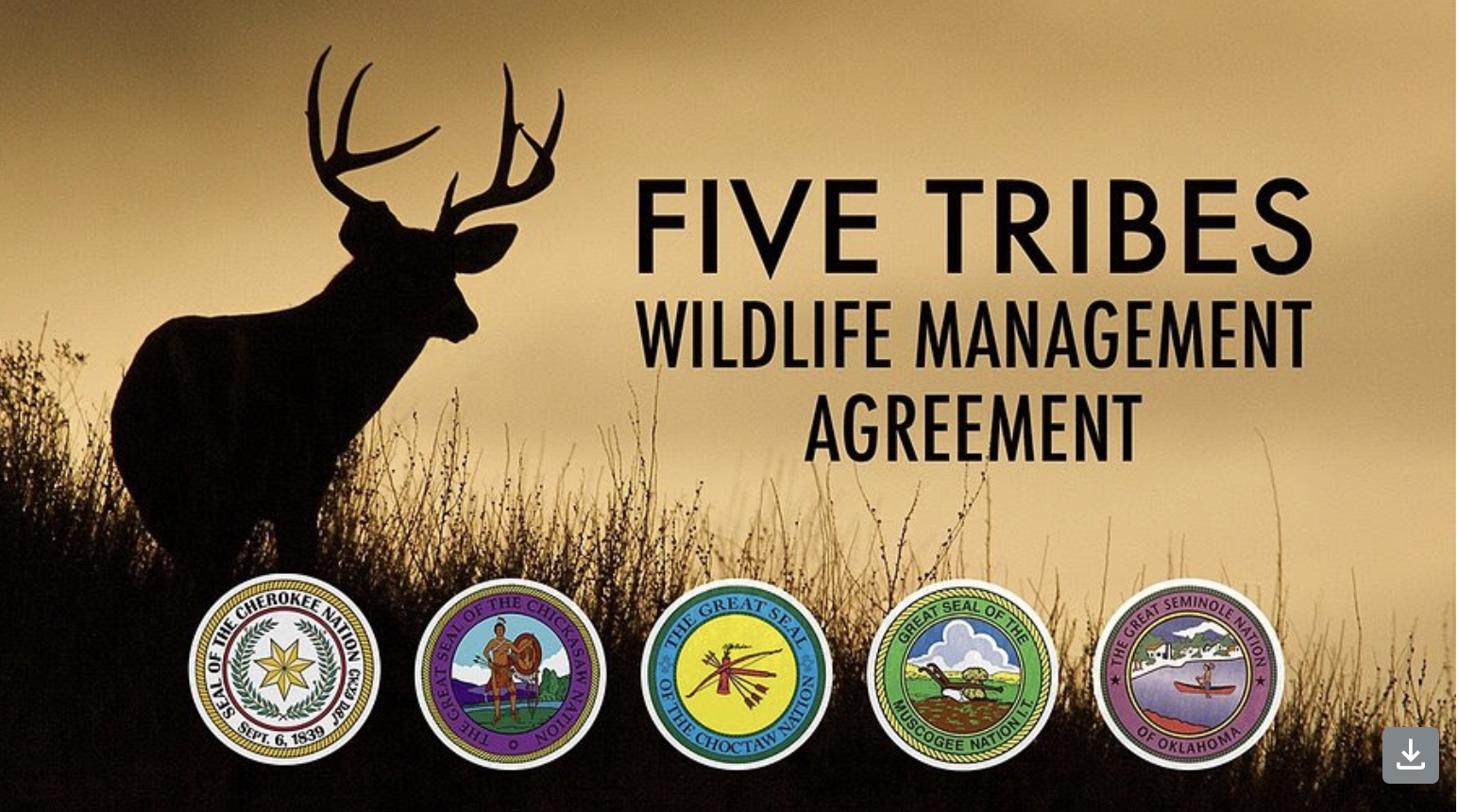
The Five Civilized Tribes of Oklahoma announced a wildlife management reciprocity agreement that will allow tribal citizens of the Cherokee Nation, Chickasaw Nation, Choctaw Nation of Oklahoma, Muscogee Nation, and soon the Seminole Nation to enjoy hunting and fishing in participating tribes’ treaty territories.
The announcement was made Friday by the Inter-Tribal Council of the Five Civilized Tribes during its July quarterly meeting at the Hard Rock Hotel & Casino Tulsa. In the agreement called the Five Tribe Wildlife Management Reciprocity Agreement tribal citizens will be allowed to hunt or fish using licenses issued through their own tribe on each other tribal respective reservation land. Most tribes allow tribal membership cards to serve as their credential or license.

Hunting and fishing licenses were made available to tribal members and citizens in October 2022.
For Cherokee Nation Chief Chuck Hoskin, Jr. the wildlife management reciprocity agreement demonstrates the strength of collective tribal sovereignty.
“For the past two years, this has proven to be a highly successful initiative for both the tribe and our outdoor sportsmen. This new Five Tribes agreement makes hunting and fishing in eastern Oklahoma more sustainable, and more diverse for all our citizens. The adoption of uniform codes by all tribal governments involved is a significant accomplishment and demonstrates the strength of our collective sovereignty,” Hoskin said in a statement.
"Hunting and fishing are inherent treaty rights among our five tribal nations and have been vital to food security for generations of Cherokees," Cherokee Nation Principal Chief Chuck Hoskin Jr. said. "As Cherokees, we can use tribal citizenship photo IDs to hunt and fish on our 7,000-square-mile reservation.
All Oklahoma residents with valid state-issued hunting and fishing licenses are eligible to hunt and fish within these tribal treaty territories in accordance with all applicable laws.
State game wardens cross-deputized with the respective tribes can ticket and enforce laws on these reservations, as well. The Tribes indicated that they look forward to working with State and Federal partners as they implement this agreement and continue to identify partnerships for advancing wildlife conservation.
This agreement will allow the five tribes to collaborate on wildlife management within their reservations and enhance their ability to effectively manage natural resources in a sustainable manner.
The reciprocity agreement states hunting and fishing activities by tribal members and citizens under this agreement will be subject to the laws of the tribe on whose reservation the activity is taking place. It is the responsibility of the individuals engaging in these activities in the various reservations to know and abide by any applicable laws. Tribal citizens will also be responsible for securing permissions to access land owned by others to engage in hunting and fishing, though each Tribe will manage programs to provide access to Tribally owned areas.
More Stories Like This
50 Years of Self-Determination: How a Landmark Act Empowered Tribal Sovereignty and Transformed Federal-Tribal RelationsNavajo Nation Council Members Attend 2025 Diné Action Plan Winter Gathering
Ute Tribe Files Federal Lawsuit Challenging Colorado Parks legislation
NCAI Resolution Condemns “Alligator Alcatraz”
NABS Documents 134 More Survivor Stories, Expands Digital Archive in 2025
Help us defend tribal sovereignty.
At Native News Online, our mission is rooted in telling the stories that strengthen sovereignty and uplift Indigenous voices — not just at year’s end, but every single day.
Because of your generosity last year, we were able to keep our reporters on the ground in tribal communities, at national gatherings and in the halls of Congress — covering the issues that matter most to Indian Country: sovereignty, culture, education, health and economic opportunity.
That support sustained us through a tough year in 2025. Now, as we look to the year ahead, we need your help right now to ensure warrior journalism remains strong — reporting that defends tribal sovereignty, amplifies Native truth, and holds power accountable.
 The stakes couldn't be higher. Your support keeps Native voices heard, Native stories told and Native sovereignty defended.
Stand with Warrior Journalism today.
Levi Rickert (Potawatomi), Editor & Publisher