- Details
- By Levi Rickert
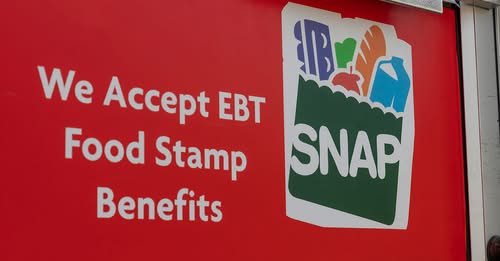
Guest Opinion. I am calling on Oklahoma Gov. Kevin Stitt to follow Cherokee Nation’s lead and extend a lifeline to hundreds of thousands of Oklahomans who will lose food assistance in November.
On Nov. 1, over 922,000 low-income Oklahomans, mostly kids, will get kicked while they’re down. They will lose, on average, $184, in SNAP benefits because leaders of the world’s wealthiest and most powerful nation cannot seem to keep the federal government funded. It will cost between $130 million and $142 million to fund a month of SNAP, according to Gov. Stitt.

On Oct. 26, in the midst of the second-longest federal government shutdown in American history, the U.S. Department of Agriculture announced that funding for the Supplemental Nutrition Assistance Program (SNAP) was exhausted.

This means millions of low-income Americans — mostly children, many elders and a lot of working families who struggle with low wages and high food prices — face a crisis in November. Among them are tens of thousands of citizens of the Cherokee Nation.
Because Cherokee Nation has laws on the books and funding in place to address emergencies, Deputy Chief Bryan Warner and I had resources and legal authority at our disposal to address the SNAP crisis.
Two days after USDA’s announcement that SNAP benefits were stopping, we announced a $6.75 million crisis response package. I issued an emergency declaration and we committed $4.5 million of the package to fund $185 payments in November to all Cherokee Nation citizens on SNAP living within our reservation and in surrounding counties. The balance of the package — over $2 million — funds food banks and other non-profits and will keep our Women Infant and Children (WIC) program operating should the federal funding dry up.
Gov. Stitt has the same type of laws and budgets available as governor that I do as Chief. The difference is, he has exponentially more resources at his disposal. The state of Oklahoma enjoys budget reserves of over $3.69 billion, including the $1.32 billion “Rainy Day Fund,” which can be used for emergencies. The SNAP crisis is an emergency.
The governor needs to call a special session immediately. He and the legislature need to declare that the loss of SNAP funding is an emergency, just as Deputy Chief Warner and I did. He needs to utilize a small portion of the state’s surplus, less than 4%, and extend a helping hand to SNAP recipients.
There is no legal or procedural barrier to Gov. Stitt and the legislature taking this action. The only question is whether they have the will to do it.
The governor voiced objections to tapping state reserves that amount to hogwash, in my estimation. He fretted at a press conference that the federal government may not reimburse the state for sending replacement SNAP payments. Maybe, but that is a flimsy excuse when we remind ourselves that we are talking about giving low-income people purchasing power.
It is worth noting that, according to President Trump’s USDA, every dollar spent through SNAP generates more than $1.50 in local economic activity. That means the loss of SNAP robs from your local grocery store and the people who work there. Oklahoma’s budget will be fine and our economy stronger if we keep low-income Oklahomans shopping for groceries by tapping state reserves.
Gov. Stitt observed that the state cannot endlessly fund SNAP and that no one knows when the shutdown will end. He’s right, but that should not stop us from taking this SNAP crisis a month at a time.
Gov. Stitt says that the victims of this crisis should simply lean on food banks and churches. Food banks and church food pantries are already stressed and not all are within reach of all SNAP participants. Perhaps the state could use our plan as a template, providing cash assistance to SNAP recipients and donating to regional food banks.
For Cherokee Nation leaders, stepping up to help our citizens, friends and neighbors in need was a fiscal and policy choice. But, ultimately, it was question of right and wrong. Providing relief was a moral imperative. So, we met the crisis with bold action.
Oklahoma is sitting on a $3.69 billion reserve. It has funds for unexpected crises, including a constitutional “Rainy Day Fund” for crises response “upon the declaration of the governor that an emergency exists,” with a supermajority of the legislature in concurrence.
Gov. Stitt, it’s raining. It is time to lead. It is time to follow Cherokee Nation’s lead and save SNAP for all Oklahomans in need.
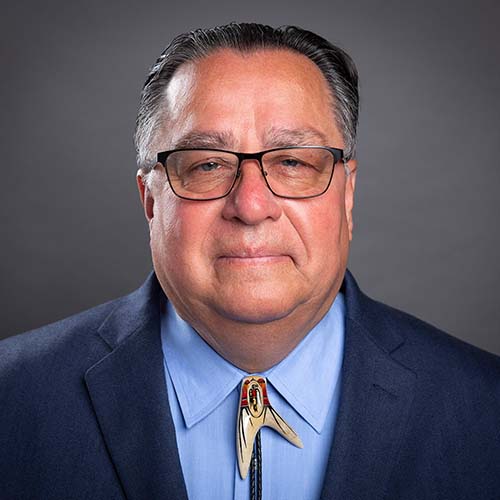
Chuck Hoskin, Jr. is the principal chief of the Cherokee Nation.
More Stories Like This
The Lie We Keep Telling About Wounded KneeAnother Weapon of Mass Destruction
Colorado cannot heal until it confronts Sand Creek honestly
Native American Mothers Deserve to Live
Technology Rooted in Tradition is Strengthening Cherokee Nation
Help us defend tribal sovereignty.
At Native News Online, our mission is rooted in telling the stories that strengthen sovereignty and uplift Indigenous voices — not just at year’s end, but every single day.
Because of your generosity last year, we were able to keep our reporters on the ground in tribal communities, at national gatherings and in the halls of Congress — covering the issues that matter most to Indian Country: sovereignty, culture, education, health and economic opportunity.
That support sustained us through a tough year in 2025. Now, as we look to the year ahead, we need your help right now to ensure warrior journalism remains strong — reporting that defends tribal sovereignty, amplifies Native truth, and holds power accountable.
 The stakes couldn't be higher. Your support keeps Native voices heard, Native stories told and Native sovereignty defended.
Stand with Warrior Journalism today.
Levi Rickert (Potawatomi), Editor & Publisher