




- Details
- By Shaun Griswold
California’s first governor, Peter Hardeman Burnett, swore that the racist campaign he championed would not end “until the Indian race becomes extinct.” His two years in office brought malnutrition, homicide and forced migration, decimating California’s Native populations by nearly 90% between 1848 and 1900.
But Burnett died, his campaign ended, and ultimately, California’s Indigenous people survived.
Please support our year-end campaign. CLICK HERE TO DONATE.

Then, in 1905, the United States publicly disclosed the unratified treaties it had made with 18 California tribes. The tribes responded by building a legal and economic framework for tribal sovereignty. In 1988, the Indian Gaming Regulatory Act was enacted, and small casinos sprouted on reservations in Wisconsin, Minnesota and Southern California. Similar resorts sprang up across the country, and the economic benefits have helped fuel the struggle for tribal sovereignty.
A recent study from the Harvard Kennedy School Project on Indigenous Governance and Development shows how gaming has helped tribes acquire economic and political capital. The report was written by three Indigenous researchers: Randall Akee (Native Hawaiian), Elijah Moreno (Coastal Band of the Chumash Nation) and Amy Besaw Medford (Brothertown).
“In reality, nearly every tribe is impacted by gaming in some capacity, whether directly or indirectly,” the authors wrote. “Past studies on American Indian gaming likely understate its impact, as nearly every tribe in the US may be exposed to various aspects of the industry whether they directly operate a casino themselves or not.”
The $43.9 billion tribes reported to the National Indian Gaming Commission (NIGC) last year accounts for nearly 40% of the nation’s $115 billion in gaming revenue, according to the American Gaming Association. And tribes are using that money to fund health care, education, small business, philanthropy and other much-needed programs.
Tribal gaming has long faced criticism, including for the negative social impacts of gambling; the Harvard study offers a different perspective on the controversial industry, examining gaming economies and their impact on tribal investments, both in Indigenous economies and the overall U.S. economy. Researchers looked at 14 indicators, including population, income, poverty, labor, housing and education, for reservation communities in the Lower 48 states between 1990 and 2020. (Due to its population, the Navajo Nation was studied separately.) The writers concluded that gaming has been central to tribal economies that have successfully leveraged revenue for political capital, funding groups that lobby for tribal sovereignty, the largest and most prominent being the National Congress of American Indians (NCAI).
In September, just a week before his sudden death on Sept. 26, Indian Gaming Association Chairman Ernie Stevens Jr. (Oneida Nation) joined the Native-run lobby in Washington, D.C., meeting with NCAI leaders from the Ponca Tribes of Nebraska, Pechanga, Cherokee and Muscogee Creek Nations. The nation’s largest gaming tribes had come together to remind Congress of Indian Country’s economic contributions.
“In the Indian gaming world, we’re responsible for 700,000 jobs,” Stevens said. “We continue to help this world turn, and we don’t do it by asking for help. We do it to help. Ask people to understand what we do is for our communities, for our generation and generations to come.”
Stevens said that gaming revenue had returned to “pre-COVID levels.” The revenue came from gaming as well as related amenities — entertainment options, conferences, food and lodging.
Stevens said his mentors — Rick Hill, Gay Kingman and Tim Wapato — not only implemented tribal gaming laws, they also built a relationship with Congress to lobby for tribal sovereignty.
“They came to Washington to establish the presence of gaming and help folks understand why it’s not just about economic development, it’s about tribal sovereignty, our governments, how we interact in today’s world, and to defend every aspect of tribal sovereignty,” Stevens said.
Under Stevens’ leadership, the NIGC used treaty laws to expand tribal gaming, increasing revenues by more than $20 billion and enabling tribes to fund essential services like housing, education and health care, as well as finance other capital projects. When the federal government shut down, the NCAI lobby credited its September meetings with Congress with helping tribes protect the Indian Health Service and Bureau of Indian Education from furloughs and funding cuts.
Tribes with substantial gaming revenue were able to assist their citizens along with others whose tribes lacked casino reserves, providing food aid and paying tribal government employees while their federal counterparts were furloughed during the shutdown. However, the tribes’ financial reserves dwindled as the shutdown dragged on, reducing their capacity to help.
On Oct. 29, as the shutdown neared a month long, Ben Mallott, president of the Alaska Federation of Natives, told the U.S. Senate Committee on Indian Affairs that Alaska’s Indigenous people were being forced to choose between “food or fuel.” So when the remnants of Typhoon Halong ravaged the western Alaska coast in October, the NCAI and gaming tribes jumped in to help with donations.
“As Cherokees, we have long-settled traditions of coming together and helping others, but especially in times of tragedy or catastrophes such as this,” said Cherokee Nation Deputy Principal Chief Bryan Warner. “Our word for it is Gadugi, which at its core is all of us working together and supporting one another.”
According to the Harvard report, “tribes with successful casinos also often play a significant role in funding community development, benefiting both tribal and non-tribal communities. The Shakopee Mdewakanton Sioux Community, for example, has used its substantial success in the gaming industry to invest in community projects and support other tribes across Minnesota.”
Back in 1906, a year after California tribes obtained their treaty rights, a Bureau of Indian Affairs employee named C.E. Kelsey successfully petitioned the federal government to purchase an additional 235 acres of land to be added to the Pechanga’s land in Riverside County. When Mark Macarro became chairman of the Pechanga Band of Indians in 1995, the tribe had just opened its first tiny casino. State law had yet to catch up, but in 1998, California voters approved Proposition 5, which allowed tribal gaming. Throughout that campaign, Macarro reminded people that Prop. 5 would prove a boon for tribal sovereignty. In 2002, the tribe opened a 200,000-square-foot casino and resort in Temecula, California, on the Kelsey Tract. The casino, which is currently one of the county’s largest overall employers, has both Native and non-Native workers.
In 2004, Katherine Spilde, chair of the Sycuan Institute on Tribal Gaming at San Diego State University, looked at the tribe for a different Harvard study on casino gambling’s impact on overall economic well-being. Spilde is not Indigenous, but her parents were schoolteachers on the White Earth Nation in Minnesota, where she was raised, and she is an expert on tribal gaming.
“Pechanga government’s gaming and resort revenues have allowed the Tribe to effectively eliminate its reliance on other governments and to create opportunities that benefit the entire region,” Spilde wrote in 2004. “The results are a sense of independence and self-determination among Pechanga citizens, and productive and mutually supportive relations with the surrounding communities where once there was very little positive interaction between the Tribe and its neighbors.”
In September, before the shutdown, Macarro said that both Congress and administration officials were coming to understand that tribal self-determination works. “We have much more work to do, but we leave this week with momentum, with allies on both sides of the aisle, and with a shared understanding that when tribal nations thrive America thrives.”
Tribal sovereignty endures under long-standing legal frameworks that are strengthened by healthy economies. Ensuring that the U.S. continues to meet its trust and treaty obligations requires ever-evolving negotiations with the federal government. Right now, the U.S. government is shifting radically, in unexpected ways. The NCAI wants the federal government to realize that economically healthy tribes are in a good place to help the U.S. economy.
Cherokee Nation Chief Chuck Hoskin Jr. acknowledges that some tribes face serious budget problems, worsened by recent cuts from the federal government. This is why, he said, the NCAI’s lobbying efforts are vital to protect projects that are threatened by shifting federal priorities.
“We’re pointing out where the Congress can do better, where the agencies can do better; we’re pointing out that self-determination is the law of the land, and it’s not only the law of the land, it is a prescription that works,” Hoskin said. “While we may be able to absorb some of the damage done by cuts, there are tribes for which this is absolutely consequential in terms of stopping services. We’re using our resources to do it and asking that the United States ought to step up and help us do it.”
More Stories Like This
50 Years of Self-Determination: How a Landmark Act Empowered Tribal Sovereignty and Transformed Federal-Tribal RelationsSRMT Child Support Enforcement Unit Delivers Holiday Food Boxes to Families
The Shinnecock Nation Fights State of New York Over Signs and Sovereignty
Navajo Nation Council Members Attend 2025 Diné Action Plan Winter Gathering
Ute Tribe Files Federal Lawsuit Challenging Colorado Parks legislation
Help us defend tribal sovereignty.
At Native News Online, our mission is rooted in telling the stories that strengthen sovereignty and uplift Indigenous voices — not just at year’s end, but every single day.
Because of your generosity last year, we were able to keep our reporters on the ground in tribal communities, at national gatherings and in the halls of Congress — covering the issues that matter most to Indian Country: sovereignty, culture, education, health and economic opportunity.
That support sustained us through a tough year in 2025. Now, as we look to the year ahead, we need your help right now to ensure warrior journalism remains strong — reporting that defends tribal sovereignty, amplifies Native truth, and holds power accountable.
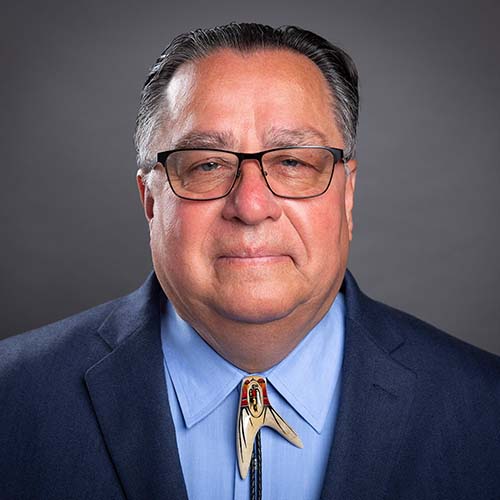 The stakes couldn't be higher. Your support keeps Native voices heard, Native stories told and Native sovereignty defended.
Stand with Warrior Journalism today.
Levi Rickert (Potawatomi), Editor & Publisher