



- Details
- By Kristen Lilya
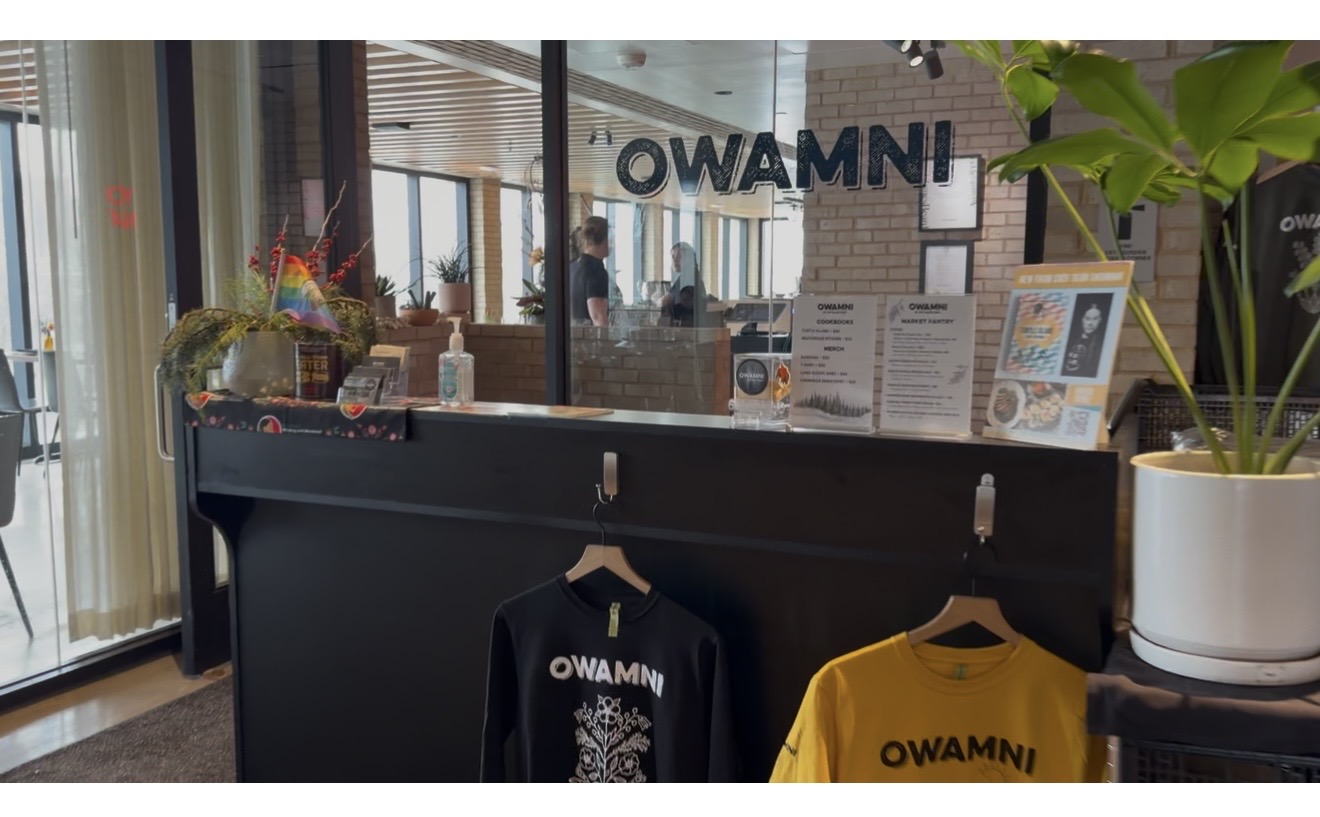
When I visited Owamni last week, I knew its reputation, its awards, and the phrase “decolonized food.” What I didn’t expect was the quiet power of the experience. The room felt intentional, framed by the soft sounds of the Mississippi River just outside.
The menu at Owamni, created by Chef Sean Sherman (Oglala Lakota) and co-owner Dana Thompson (Dakota), is built on the total removal of colonial ingredients. There is no wheat flour, cane sugar, dairy, beef, pork, or chicken. In their place are the Indigenous foods of Turtle Island: corn, squash, wild rice, game, and foraged plants.
The meal felt both ancient and modern. I started with the Black Fern Indigenous Tea, its herbal notes are subtle and grounded. The Three Sisters Salad arrived vibrant and textured, while the Bean Dip and Smoked Whitefish offered earthy, rich flavors that conversed rather than competed. For dessert, the Zhiizhiibzzwan Custard provided a delicate comfort, proving that indulgence doesn't require colonial sugar.
 Three Sisters Salad (left) Bean Dip and Smoked Whitefish (right). Photo by Kristen Lilya/Native News Online
The textures demanded attention; the flavors told the truth. Owamni doesn’t frame Indigenous foodways as something lost, but as something alive and adaptive.
This intentionality extends beyond the plate to the staff. During my visit, Owamni General Manager, Tara Morstrom (Ojibwe), explained that the restaurant intentionally avoids the "dictator" hierarchy common in traditional restaurants.
"We don’t yell at people," Morstrom said. "We take the time to talk, teach, and train. Sean is so humble; he really helped create a community."
While Owamni is preparing for a major move to the Guthrie Theater (projected for late spring or early summer of 2026), the mission remains the same. Morstrom noted that while they will miss their original view, the new space offers more opportunity to engage with the community and the many travelers who visit specifically to experience this vision.
At Native News Online, we often report on food insecurity and the loss of traditional lands. Owamni is the response to those challenges. By centering Indigenous ingredients and supporting Native producers through the North American Traditional Indigenous Food Systems (NATIFS) ecosystem, the restaurant provides a blueprint for food sovereignty.
As a Native person, I felt the difference immediately. This isn’t culture translated for outsiders; it is culture practiced with confidence.
Owamni won’t solve food insecurity alone, but it expands the imagination. It proves that Indigenous food systems are viable at scale and that Native-led solutions can succeed without compromise.
I left with more than the memory of a good meal; I left with clarity. This is what it looks like when Native people build something better on our own terms, with our own knowledge, in full view of the world.
More Stories Like This
Seven Deaths in Indian Country Jails as Inmate Population Rises and Staffing DropsSen. Luján Convenes Experts to Develop Roadmap for Native Maternal Health Solutions
Senate Passes Bill Aimed at Missing and Murdered Indigenous Peoples Crisis
Johns Hopkins Collecting Tribal Success Stories from $1.5B Opioid Settlement