- Details
- By Native News Online Staff
U.S. Secretary of the Interior Deb Haaland (Laguna Pueblo) has signed Public Land Order 7956, solidifying protections for the Pactola Reservoir–Rapid Creek Watershed within the Black Hills National Forest. This decision aims to safeguard the area from potential impacts of mineral exploration and development.
The order, requested by the U.S. Forest Service, withdraws 20,510 acres of National Forest System land in Pennington County, South Dakota, from sale, exchange, mineral entry, and leasing for a 20-year period, subject to valid existing rights. It does not apply to non-federal lands or minerals.

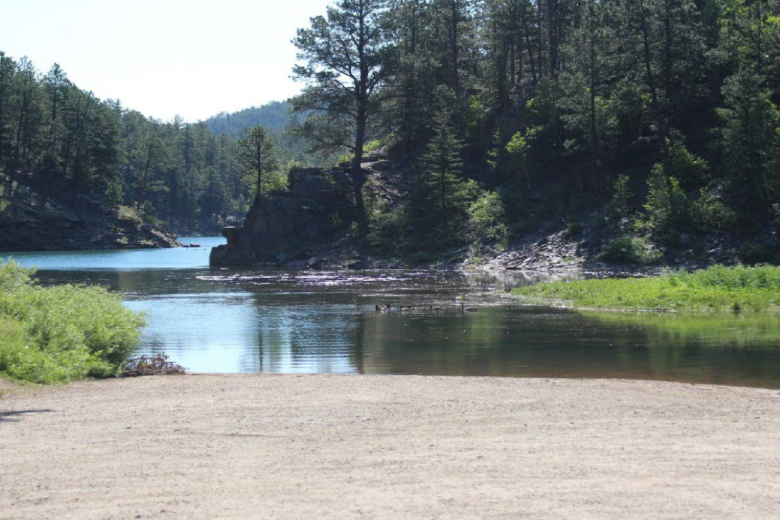
This action reflects responses to concerns raised by Tribes and the local community to preserve the cultural and natural resources of the area, as well as to protect municipal water supplies serving Rapid City and Ellsworth Air Force Base. As the largest and deepest reservoir in the Black Hills National Forest, Pactola Reservoir boasts 14 miles of shoreline and depths of up to 150 feet, underscoring its vital role in the region's ecosystem and water infrastructure.
"The Pactola Reservoir-Rapid Creek Watershed is a treasured landscape, valued for its clean air and water, abundant recreation and ecological benefits, and sacred to multiple Tribes who call the area home,” said Secretary of the Interior Deb Haaland. “I’m proud to take action today to withdraw this area for the next 20 years, to help protect clean drinking water and ensure this special place is protected for future generations.”
“We’re grateful to Secretary Haaland for her decision to withdraw these lands to protect their many invaluable resources,” said Agriculture Secretary Tom Vilsack. “The Pactola Reservoir–Rapid Creek Watershed provides so many benefits to the people and communities we serve, from clean water to world-class recreation, from livestock grazing to the spaces our Tribal communities consider sacred, this withdrawal will safeguard this space for decades.”
The picturesque Pactola Reservoir–Rapid Creek Watershed offers exceptional year-round recreational opportunities, including world-class fishing, hunting, hiking, camping, boating, and cross-country skiing. Local ranchers also depend on the reservoir for summer grazing, highlighting its importance to the community's livelihood.
For the Oceti Sakowin, Cheyenne, Arapaho, Arikara, Hidatsa, Mandan, and Crow Tribes, this area is much more than a recreational haven—it is a sacred landscape and a traditional spiritual homeland. The Black Hills, including the lands within the withdrawn area, contain sites of deep cultural and spiritual significance. These include sacred spaces, traditional cultural properties, and vital areas for gathering medicine, conducting spiritual ceremonies, and harvesting sacred foods.
The withdrawal was enacted under the Federal Land Policy and Management Act, which permits the Secretary of the Interior to withdraw federal lands of 5,000 acres or more for up to 20 years, with the possibility of renewal. Permanent withdrawals of this scale can only be authorized by Congress.
The process began in March 2023, when the U.S. Forest Service proposed the withdrawal and the Bureau of Land Management published the application. This initiated a 90-day public comment period and public meetings, along with two Tribal consultations conducted by the Forest Service and BLM.
More Stories Like This
Apache Leader Walks 60 Miles to Court Hearing That Will Decide Fate of Sacred Oak FlatRappahannock Tribe Raises Sovereignty and Environmental Concerns Over Caroline County Water Permit
Klamath Indigenous Land Trust Purchases 10,000 Acres as Salmon Return
Trump signs law that revokes some limits on drilling in Alaska’s National Petroleum Reserve
Southern Sierra Miwuk Nation Gets 900-Acres ofLand Back
Help us defend tribal sovereignty.
At Native News Online, our mission is rooted in telling the stories that strengthen sovereignty and uplift Indigenous voices — not just at year’s end, but every single day.
Because of your generosity last year, we were able to keep our reporters on the ground in tribal communities, at national gatherings and in the halls of Congress — covering the issues that matter most to Indian Country: sovereignty, culture, education, health and economic opportunity.
That support sustained us through a tough year in 2025. Now, as we look to the year ahead, we need your help right now to ensure warrior journalism remains strong — reporting that defends tribal sovereignty, amplifies Native truth, and holds power accountable.
 The stakes couldn't be higher. Your support keeps Native voices heard, Native stories told and Native sovereignty defended.
Stand with Warrior Journalism today.
Levi Rickert (Potawatomi), Editor & Publisher