




- Details
- By Kaili Berg and Elyse Wild
Last week, plaintiffs filed a class action lawsuit against the state of Arizona for its role in a mulit-billion dollar sober living scheme that targeted Native Americans; the Senate passed a bill that could shore up medical staff for the Indian Health Service; and KFF investigated a medical billing system that leaves Native patients holding the bag for debt the government owes.
Here is Native News Online’s weekly round-up of health equity news.
Oklahoma’s Native American Health Care System Ranks Low in 2024 Commonwealth Fund Report
The 2024 Commonwealth Fund’s Health Disparities Report gave Oklahoma’s Native American healthcare system a score of just 11 out of 100.
Lauren Bristow, Clinic Operations Director at Citizen Potawatomi Nation Health Services, told Fox25 that the low score highlights significant gaps in care, including higher mortality rates and fewer health screenings compared to other populations.
Bristow attributed these disparities to persistent barriers like poverty, lack of insurance, and limited transportation, which hinder access to care. In response, Citizen Potawatomi Nation Health Services is working to improve outcomes by ensuring screenings are completed, referrals are managed effectively, and follow-ups are conducted to close care gaps.
Indian Health Service Collaboration
The Indian Health Service (IHS) and the Consumer Financial Protection Bureau (CFPB) announced a collaboration to protect patients in the IHS Purchased/Referred Care (PRC) program from improper billing and debt collection practices.
Under federal laws like the Indian Health Care Improvement Act (IHCIA), PRC-approved patients cannot be held liable for costs related to approved health services.
The CFPB, responsible for ensuring fair treatment by financial institutions, worked with the IHS to create a joint letter emphasizing these patient protections. The initiative also aligns with the CFPB’s new report, which examines the impact of medical debt on Native American and Alaska Native communities.
The collaboration includes efforts to educate patients about their rights and provide avenues for complaints through the CFPB’s portal.
Patients are encouraged to monitor their credit reports annually and seek PRC assistance if needed to address billing errors.
Vacancy
The Coquille Indian Tribe is seeking to fill a vacancy on its Health and Wellness Executive Board of Directors.
The Tribe’s Health and Wellness Division was created to offer integrated health with primary care, behavioral health, dental, pharmacy, public health, opioid, and substance use disorder programs. The Health and Wellness Executive Board of Directors consists of five members appointed by the Coquille Indian Tribal Council, usually for staggered terms of three years. Find more information here.
Legislation
This week, the Senate passed a bill aimed at recruiting and retaining healthcare workers for the Indian Health Service. Introduced by Senators Catherine Cortez Masto (D-Nev.) and Markwayne Mullin (R-Okla.), The IHS Workforce Parity Act allows providers working part-time to access IHS scholarship and loan repayment programs. Currently, IHS scholarship and loan repayment recipients are required to work full-time. The legislation aims to reduce the agency’s vacancy rate, which has historically remained at 25%.
Lawsuit
Native Americans victimized by fraudulent sober living homes operating in Arizona filed a class action lawsuit against the state for failing to intervene in the scheme that paid out billions of dollars to fraudsters targeting Native communities.
The 230+ page complaint, filed by BREWERWOOD, P.L.L.C.and MCCOY LEAVITT LASKEY, LLC., details how hundreds of unlicensed sober living homes in Arizona coerced Native Americans struggling with substance use disorder and homelessness into their care. Thousands reported being kidnapped – forced into unmarked SUVs and vans under false pretenses, given alcohol and drugs such as fentanyl or methamphetamine, fraudulent mental health services, held prisoner, and eventually ejected onto the street or dropped off in rural locals with no means of transportation.
The complaint represents nearly 7,000 Native Americans, nearly 2,000 of whom have died or gone missing.
Worthy Read
KFF Health News published an article exploring the high rates of Native American patients burdened with medical debt the government owes.
Native Americans enrolled in the Indian Health Service (IHS) Purchased/Referred Care (PRC) program are frequently burdened with wrongful medical bills, causing long-lasting financial harm.
According to a recent Consumer Financial Protection Bureau (CFPB) report, Native-majority communities are nearly twice as likely to have medical debt in collections compared to the national average, with higher debt amounts. Some patients face damaged credit scores that impact their ability to secure loans, housing, and education.
The article details how Tescha Hawley, a member of the Gros Ventre Tribe, discovered during a home-buying class that hospital bills from her son’s 2003 birth had been sent to collections.
Despite federal assurances that the PRC would cover the costs, the financial fallout delayed her homeownership and took seven years to resolve. Stories like hers are not isolated. Tribal leaders, such as Crow Tribe Chairman Frank White Clay, have testified about veterans denied home loans and elders whose Social Security benefits were garnished due to wrongful billing.
Help us defend tribal sovereignty.
At Native News Online, our mission is rooted in telling the stories that strengthen sovereignty and uplift Indigenous voices — not just at year’s end, but every single day.
Because of your generosity last year, we were able to keep our reporters on the ground in tribal communities, at national gatherings and in the halls of Congress — covering the issues that matter most to Indian Country: sovereignty, culture, education, health and economic opportunity.
That support sustained us through a tough year in 2025. Now, as we look to the year ahead, we need your help right now to ensure warrior journalism remains strong — reporting that defends tribal sovereignty, amplifies Native truth, and holds power accountable.
 The stakes couldn't be higher. Your support keeps Native voices heard, Native stories told and Native sovereignty defended.
Stand with Warrior Journalism today.
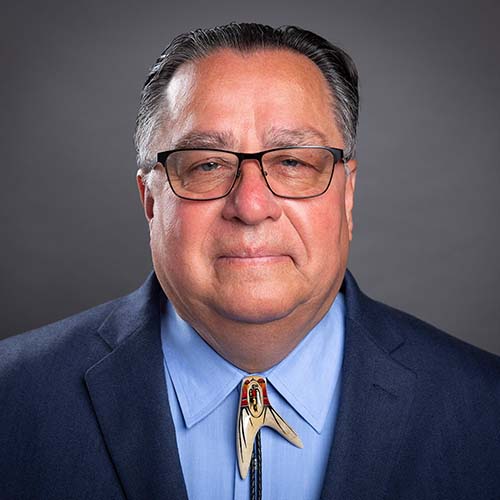
Levi Rickert (Potawatomi), Editor & Publisher