- Details
- By Native News Online Staff
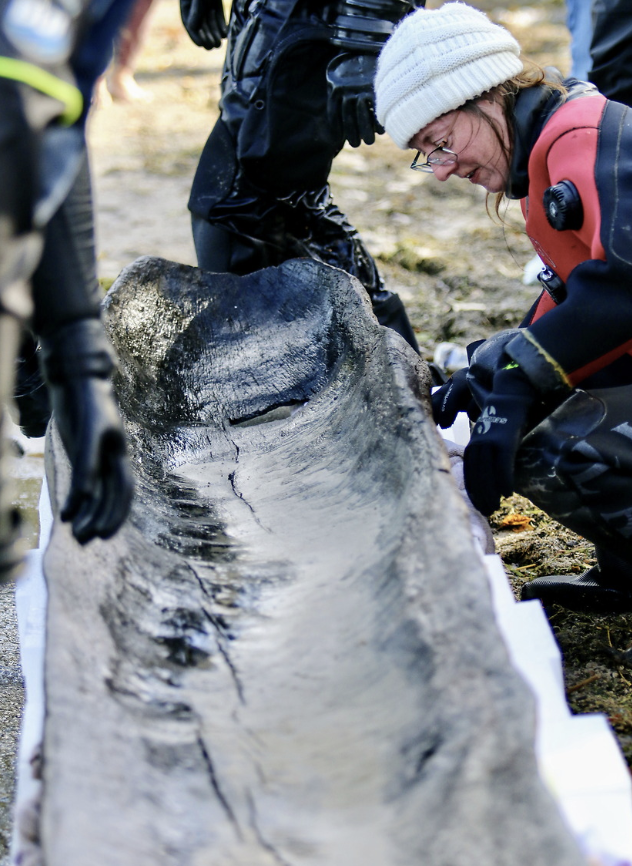
Four years after discovering a 1,200-year-old dugout canoe in Lake Mendota, archaeologists with the Wisconsin Historical Society and regional First Nations continue to uncover new details from one of the most significant underwater archaeological sites in the Great Lakes.
Since retrieving the first canoe in 2021 and a second—estimated at 3,000 years old—in 2022, researchers have identified 14 additional ancient canoes still submerged in the lakebed. Six of those were found in the spring of 2025. As preservation work on the two recovered vessels nears completion, investigators are developing new theories about the site’s cultural history and the canoe builders who used Mendota’s waters for thousands of years.

Tamara Thomsen, a Wisconsin Historical Society maritime archaeologist, has led the search for additional canoes in partnership with First Nations, University of Wisconsin–Madison professor Sissel Schroeder and the USDA Forest Products Laboratory. To date, Thomsen’s team has mapped the locations of all 16 known canoes and identified the tree species used in their construction.
“Archaeology is kind of like putting together pieces of a puzzle, and the more pieces you can find, the better you can start to form a picture of what was going on and why during a period of history,” Thomsen said. “We can’t go back in time to get answers to our questions, but we can examine the available data alongside knowledge from First Nations and cultural history to form theories to answer our questions.”
Half of the canoes appear to be made of red or white oak—an unexpected finding because red oak tends to absorb water and is not commonly used for watercraft. Thomsen said the discovery prompted questions about why specific tree species were chosen and why the canoes are clustered in two areas.
“When you look at the shoreline map with canoe locations charted, it’s clear that there are two distinctive groupings represented,” she said. “Looking at the tree species taxonomy, we wondered not just why certain trees were used by the builders but also why these canoes were situated in these two locations. Carbon dating from the samples told us that both spots were in use over thousands of years, and so we started to form theories as to why they were left where they were and why certain trees were used.”
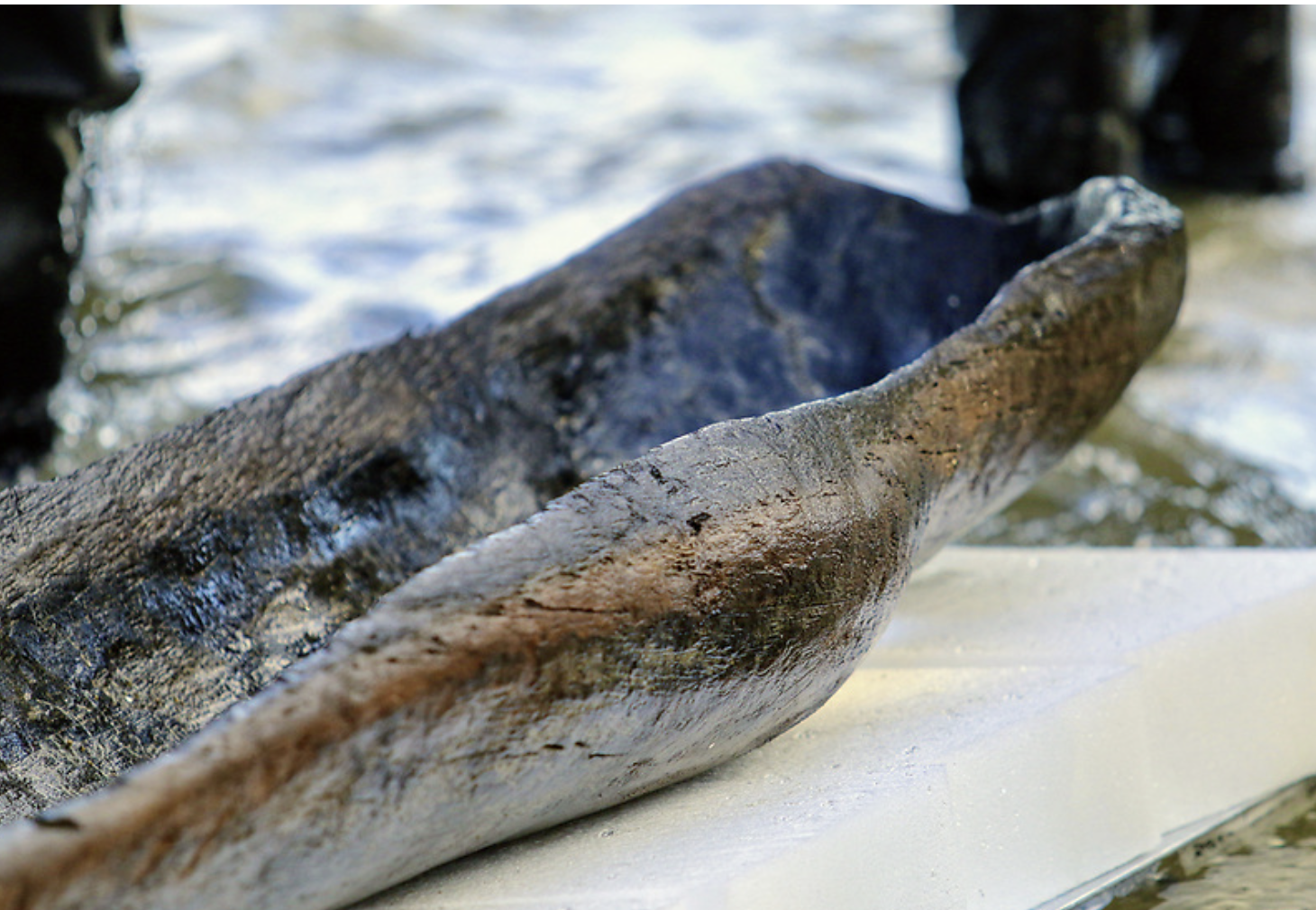
Carbon dating suggests the oldest canoe is roughly 5,200 years old and the most recent about 700 years old. The oldest, made of red oak, dates to around 3000 BCE—older than the Great Pyramid of Giza—and is now the earliest known dugout canoe from the Great Lakes region and the third oldest documented in eastern North America.
Researchers also believe the canoe makers may have intentionally selected trees that had undergone natural stress. Oak and several other identified species form tyloses—balloon-like structures that block water movement and help resist decay—when stressed or wounded.
“It’s entirely possible that the canoe builders were intentionally selecting trees that had been damaged from weather or purposefully wounding them during their growth cycle to induce tyloses,” Thomsen said. “We think of bioengineering as a modern practice, but the samples we have suggest this may have been taking place long before the term was coined in the mid-20th century.”
The two clusters of canoes may correspond with ancient travel routes used by Indigenous communities, researchers say. Canoes could have served as shared resources stored at strategic points to ease travel for fishing, trading and visiting culturally significant places such as Lake Wingra.
“The canoes give us insight into a sophisticated travel network and interconnected communities who used their incredible skills and knowledge to live and thrive on lands where we still live and thrive today,” said Larry Plucinski, Tribal Historic Preservation Officer for the Bad River Band of Lake Superior Chippewa. “They reflect a deep relationship with the environment and the ingenuity of our ancestors.”
Artifacts found with some canoes—including net sinkers with Canoe #1 and Canoe #13—suggest they were used for fishing as well as transportation. Before European settlement reshaped the landscape around Madison’s lakes, large bluffs and marshy terrain made overland travel difficult. Water routes were often far more efficient.
“Lake Wingra holds deep spiritual significance for the Ho-Chunk people, whose ancestral lands surround its shores,” said Dr. Amy Rosebrough, State Archaeologist for the Wisconsin Historical Society. “One of its springs, with its white clay bottom, is viewed as a portal to the spirit world. For generations, the Ho-Chunk have honored this place through ceremonies of remembrance, guidance and peace, helping spirits journey to the world beyond. This lake is not just a natural feature but a place of profound cultural and spiritual connection.”
Bill Quackenbush, Tribal Historic Preservation Officer for the Ho-Chunk Nation, said the ongoing research strengthens community ties to the region’s deep past.
“This project gives us a meaningful opportunity to gain a deeper perspective on our heritage and our ancestors,” Quackenbush said. “The canoes remind us how long our people have lived in this region and how deeply connected we remain to these waters and lands. It is important that we document and share these stories so our youth feel that connection to our past.”
In September, the Wisconsin Historical Society received a $113,912 Save America’s Treasures grant from the National Park Service to support preservation of the two recovered canoes. The vessels are undergoing a multi-year treatment using polyethylene glycol (PEG) to stabilize the wood before being shipped to Texas A&M University for freeze-drying, the final step in the preservation process.
“The recovery and preservation of the Mendota canoes is a remarkable achievement made possible through the dedication, expertise and strong partnerships between First Nations, archaeologists and preservation specialists,” said Christian Overland, Ruth and Hartley Barker Director & CEO of the Wisconsin Historical Society. “Thanks to this collaboration, we are excited about the learning opportunities and that one of these incredible canoes will be exhibited in the future Wisconsin History Center, where it will help share the stories of our state’s earliest peoples.”
More Stories Like This
Native News Weekly (August 25, 2024): D.C. BriefsNative News Weekly (March 1, 2026): D.C. Briefs
Scope Narrowed, Report Withheld: Questions Mount Over Michigan Boarding School Study
Zuni Youth Enrichment Project Announces Family Engagement Night and Spring Break Youth Programming
Next on Native Bidaské: Leonard Peltier Reflects on His First Year After Prison
Help us defend tribal sovereignty.
At Native News Online, our mission is rooted in telling the stories that strengthen sovereignty and uplift Indigenous voices — not just at year’s end, but every single day.
Because of your generosity last year, we were able to keep our reporters on the ground in tribal communities, at national gatherings and in the halls of Congress — covering the issues that matter most to Indian Country: sovereignty, culture, education, health and economic opportunity.
That support sustained us through a tough year in 2025. Now, as we look to the year ahead, we need your help right now to ensure warrior journalism remains strong — reporting that defends tribal sovereignty, amplifies Native truth, and holds power accountable.
 The stakes couldn't be higher. Your support keeps Native voices heard, Native stories told and Native sovereignty defended.
Stand with Warrior Journalism today.
Levi Rickert (Potawatomi), Editor & Publisher