- Details
- By Native News Online Staff
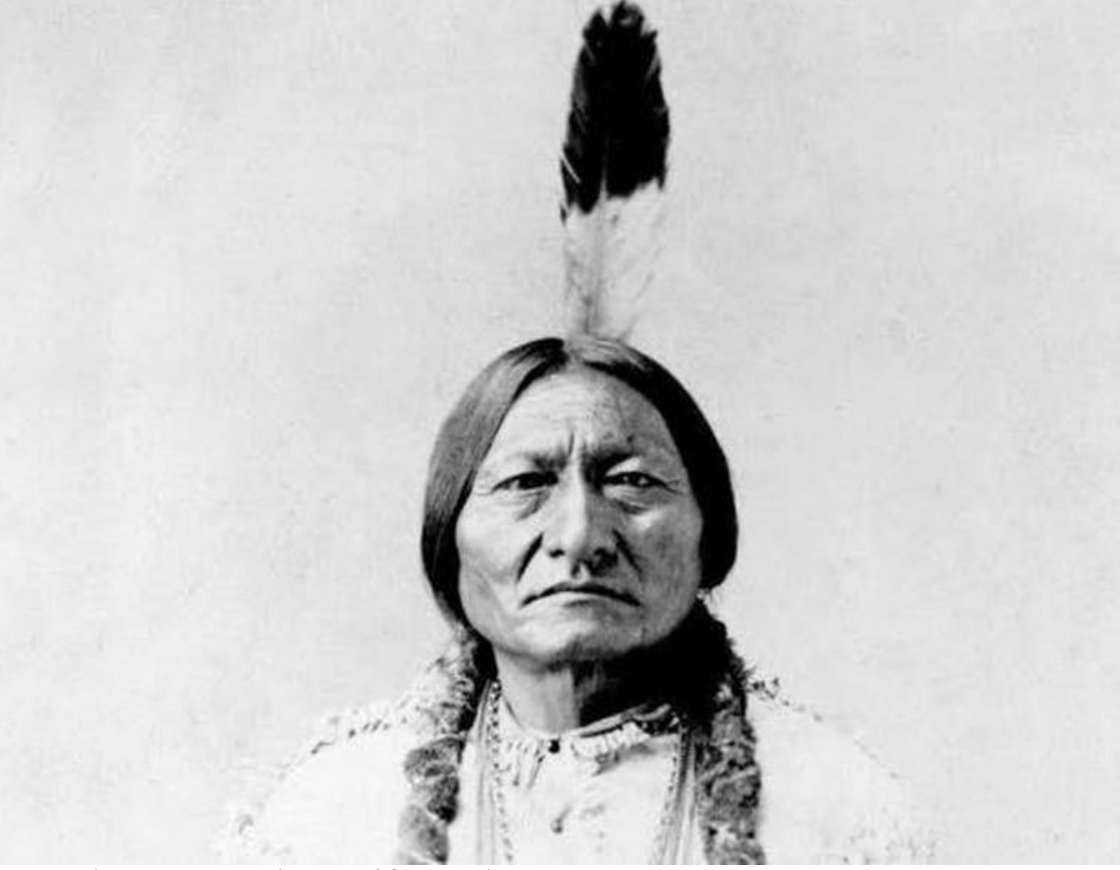
Sitting Bull, the revered leader of the Great Sioux Nation, stood as a powerful figure among Plains Tribal Nations resisting colonization. Feared by American forces during the settler wars and vilified after his death, his legacy was deliberately distorted by those who sought to diminish his influence. Yet, a new chapter is being written—one that sheds light on his true role as a patriot, song composer, and cultural icon of the Hunkpapa Lakota.
Rediscovering a Silenced Voice
New audio recordings and written research featured on the Lakota Songs website promise a deeper understanding of Sitting Bull—not only as a warrior, but as a gifted singer and composer whose cultural contributions were largely erased from public record.

A Missed Opportunity
In the years following Sitting Bull’s death in 1890, one key figure who absorbed and perpetuated negative views of him was ethnomusicologist Frances Densmore, who visited Standing Rock between 1911 and 1914. Her fieldwork preserved a wealth of Indigenous songs and oral traditions. But when it came to Sitting Bull, she remained silent.
“She was clearly influenced to avoid Sitting Bull’s songs and ideas,” says Courtney Yellow Fat, lead singer of Lakota Thunder and co-producer of the Densmore/Lakota Songs Repatriation Project.
Together with David Swenson of Makoche Studios in Bismarck, Yellow Fat has helped recover and add Sitting Bull’s missing songs to the Lakota Songs website. These pieces, not included in Densmore’s landmark book Teton Sioux Music & Culture, were reconstructed through historical documents and oral history.
The Roots of Exclusion
An unpublished research paper by the late Isaac Dog Eagle Jr. (Standing Rock), a descendant of Sitting Bull, and Dr. Carole A. Barrett, a retired American Indian Studies professor, reveals why Densmore omitted Sitting Bull’s songs. They found documentary evidence that Major James McLaughlin, the Indian agent at Standing Rock, influenced Densmore during her stay with him and his wife, Marie, in Fort Yates, ND.
According to her own correspondence, Densmore was persuaded that Sitting Bull had negative traits and was “intensely Indian.” Though she acknowledged that many songs were associated with him, she admitted, “no attempt was made to collect many of these songs or to study the character of Sitting Bull.”
“It’s a significant loss,” said Yellow Fat. “In Lakota and Dakota society, singers are highly respected. Historically, a man could not be a leader unless he could compose and perform songs.”
Songs Finally Heard
To fill the gap left by Densmore, 18 Sitting Bull songs—documented through oral histories and research from the late 1920s—have been added to the Lakota Songs archive. These were originally collected by Robert Higheagle (Standing Rock) and Walter S. Campbell (aka Stanley Vestal) for the 1932 biography Sitting Bull, Champion of the Sioux, a work that challenged decades of distortion.
The new additions include lyrics, contextual interpretations, and performance recordings by Yellow Fat, who has deep family ties to Sitting Bull’s history. On his mother’s side, he descends from Lieutenant Little Eagle, one of the Standing Rock Indian Policemen involved in Sitting Bull’s 1890 arrest. On his father’s side, he is a descendant of Thunder Hawk, Sitting Bull’s childhood friend.
Today, Yellow Fat continues the legacy, leading songs at the Sitting Bull Sun Dance along the Grand River in South Dakota—135 years after Sitting Bull's death.
For Educational Use
The Densmore/Lakota Songs Repatriation Project is dedicated to education. All materials—audio, video, texts, photographs, and illustrations—are freely available for non-commercial, educational use. However, the cultural knowledge and teachings remain the intellectual and cultural property of the Standing Rock Sioux Tribe.
Available Resources on the Lakota Songs Website:
-
Audio and Lyrics of 18 Sitting Bull songs
-
Introductory Commentary by Courtney Yellow Fat
-
"Twenty-Five Songs Made by Sitting Bull" (1929), collected and translated by Robert P. Higheagle
-
1994 Analysis of Sitting Bull’s songs by Dog Eagle Jr. & Dr. Barrett
-
Podcast featuring Yellow Fat and Dr. Barrett discussing Sitting Bull’s musical legacy
-
Background on Frances Densmore and her Standing Rock recordings
-
Updated e-book version of Teton Sioux Music
-
Restored wax cylinder recordings by Densmore
-
75 songs from the Densmore collection re-recorded in 2022 by Standing Rock singers
-
30 educational videos exploring song meanings
-
Eight supplemental writings for further study
Additional Educational Videos:
-
Importance of the White Buffalo Calf Maiden
-
Project Overview
-
Voices of the Singers Involved
-
The Očhéthi Šakówiŋ (Seven Council Fires)
-
The Sun Dance
Note: Any use beyond educational purposes requires prior approval from the Standing Rock Sioux Tribe.
Project Support:
This expansion of the Sitting Bull Songs collection was supported by Humanities North Dakota with guidance from Executive Director Brenna Gerhardt.
More Stories Like This
Zuni Youth Enrichment Project Takes Top Emerging Artist Apprentices to Phoenix for Artistic Exploration and Cultural ImmersionFrom Dishwasher to Award-Winning Chef: Laguna Pueblo's Josh Aragon Serves Up Albuquerque's Best Green Chile Stew
Rob Reiner's Final Work as Producer Appears to Address MMIP Crisis
Vision Maker Media Honors MacDonald Siblings With 2025 Frank Blythe Award
First Tribally Owned Gallery in Tulsa Debuts ‘Mvskokvlke: Road of Strength’
Help us defend tribal sovereignty.
At Native News Online, our mission is rooted in telling the stories that strengthen sovereignty and uplift Indigenous voices — not just at year’s end, but every single day.
Because of your generosity last year, we were able to keep our reporters on the ground in tribal communities, at national gatherings and in the halls of Congress — covering the issues that matter most to Indian Country: sovereignty, culture, education, health and economic opportunity.
That support sustained us through a tough year in 2025. Now, as we look to the year ahead, we need your help right now to ensure warrior journalism remains strong — reporting that defends tribal sovereignty, amplifies Native truth, and holds power accountable.
 The stakes couldn't be higher. Your support keeps Native voices heard, Native stories told and Native sovereignty defended.
Stand with Warrior Journalism today.
Levi Rickert (Potawatomi), Editor & Publisher