




- Details
- By Darren Thompson
A logistics company and several of its affiliates agreed to pay more than a half-million dollars to two Washington tribes and several government entities as part of a consent decree lodged by the Department of Justice earlier this year.
Lyden Inc. and its affiliates will pay $556,250 to a group of trustees that includes the Muckleshoot Indian Tribe, the Suquamish Indian Tribe, the state of Washington and the U.S. government. The settlement funds will be used to restore the habitat along Seattle’s Lower Duwamish River, which was “injured” by releases of hazardous substances and oil, according to a legal filing in federal court in Seattle.

“The Lower Duwamish River, which flows into Elliott Bay, has been subject to considerable levels of industrial and other uses by numerous parties throughout its history and into the present,” the filing says. “These contaminants have had serious impacts on the aquatic organisms and other natural resources that inhabit, or come into contact with, contaminated sediments or eat contaminated prey.”
According to the court filing, the defendants' business operations resulted in releases of hazardous substances, including but not limited to, polycyclic aromatic hydrocarbons (PAHs), tributyltin, bis(2-ethylhexyl) phthalate, and phenol to the Duwamish River. PAHs are a class of chemicals that occur naturally in coal, crude oil, and gasoline, according to the Centers for Disease Control. The most significant endpoint of PAH toxicity is cancer, according to the Agency for Toxic Substances and Disease Registry.
The plaintiffs in the legal action include the U.S. National Oceanic and Atmospheric Administration (NOAA), the U.S. Department of Interior, the state of Washington’s Department of Ecology, and the two tribes.
The defendants in the legal action include Lynden, Knik Construction Co., Douglas Management Co., Alaska Marine Lines Inc., Swan Bay Holdings Inc., Bering Marine Corp., LTI, Inc., Lynden Transport, Inc. and three limited liability companies.
Lynden Inc. did not respond to a request for comment by Native News Online.
The Environmental Protection Agency (EPA) declared the Lower Duwamish Waterway a “Superfund” site in 2001. Known by the agency as the Lower Duwamish Waterway Superfund site, it’s eligible for a special federal cleanup program funded by the Comprehensive Environmental Response, Compensation, and Liability Act (“CERCLA”) because of the identified severity of contamination. Superfund sites are polluted locations that require a long-term response to clean up hazardous material contaminations.
As of March 29, 2023, there were 1,336 Superfund sites on the EPA’s National Priorities List, which is up from 1,334 from Native News Online’s reporting last year. There is no comprehensive list of how many Superfund sites are on, or near, tribal lands. According to the Government Accountability Office, the EPA does not have reliable data identifying National Priorities List sites on tribal property or those affecting tribes.
This is not the first time the two tribes have been involved in legal action to help restore the Duwamish from environmental harm.
In June 2021, the United States District Court for the Western District of Washington finalized a consent decree that called for Vigor Industrial LLC and Exxon Mobil Corporation to pay $815,817 for habitat restoration of the Duwamish River. The Muckleshoot and Suquamish tribes were plaintiffs in that legal action, along with the NOAA, the U.S. Department of the Interior, and the State of Washington.
More Stories Like This
Southern Sierra Miwuk Nation Gets 900-Acres ofLand BackChilkat Indian Village Tells New Palmer Mine Owners They Are “Not Welcome” in Chilkat Valley
Tribes, Coastal Group Ask Army Corps to Revoke Permit for Texas Export Terminal
Michigan Tribes Tell Supreme Court: Don’t Bail Out Enbridge
Alaskans Raise More Than $1 Million For Communities Devastated by Typhoon Halong
Help us defend tribal sovereignty.
At Native News Online, our mission is rooted in telling the stories that strengthen sovereignty and uplift Indigenous voices — not just at year’s end, but every single day.
Because of your generosity last year, we were able to keep our reporters on the ground in tribal communities, at national gatherings and in the halls of Congress — covering the issues that matter most to Indian Country: sovereignty, culture, education, health and economic opportunity.
That support sustained us through a tough year in 2025. Now, as we look to the year ahead, we need your help right now to ensure warrior journalism remains strong — reporting that defends tribal sovereignty, amplifies Native truth, and holds power accountable.
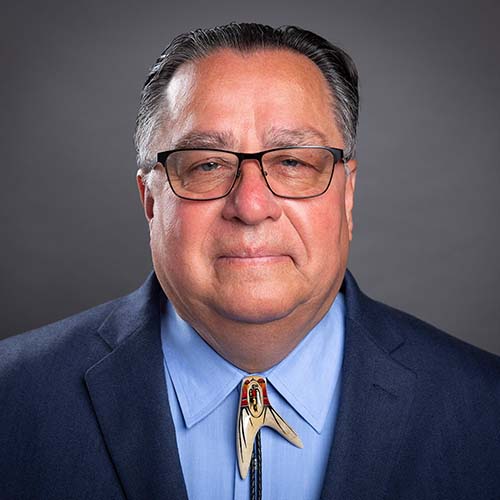 The stakes couldn't be higher. Your support keeps Native voices heard, Native stories told and Native sovereignty defended.
Stand with Warrior Journalism today.
Levi Rickert (Potawatomi), Editor & Publisher