- Details
- By Kyle Edwards
BILLINGS, Mont. –– The U.S. Supreme Court on Monday upheld a lower court ruling that blocked an important environmental permit for the Keystone XL oil pipeline, delivering another major setback to a project that’s been long-disputed by Indigenous environmental groups.
Canadian company TC Energy––which plans to use the Keystone XL to transport crude from Canada to the Gulf Coast––needs the permit to build the pipeline across U.S. rivers and streams. Construction had recently begun on the pipeline and now the project, which moved forward after President Donald Trump signed an executive order in support of the Keystone XL in 2017, faces more delay and uncertainty.
Though Monday’s ruling also cleared the way for some 70 other pipeline projects to proceed under a fast-track permitting process and is a partial victory for the oil and gas industry, the order comes after two other pipeline shutdowns within the past two days: the Atlantic Coast gas pipeline on Sunday and the contentious Dakota Access pipeline on Monday.
In May, a federal judge sided with environmental groups and required new oil and gas pipelines go through an arduous permitting and approval process to construct projects across lakes and rivers.
That ruling effectively canceled an environmental permit for several pipeline projects, which authorized and accelerated work on projects set to cross bodies of water. The ruling also stated that the U.S. Army Corps of Engineers failed to consider the damage that would be done to the environment and endangered species, and ordered that projects that received the permit be halted while an environmental impact study takes place.
Monday’s order invalidated the previous court’s ruling, but excluded the Keystone XL.
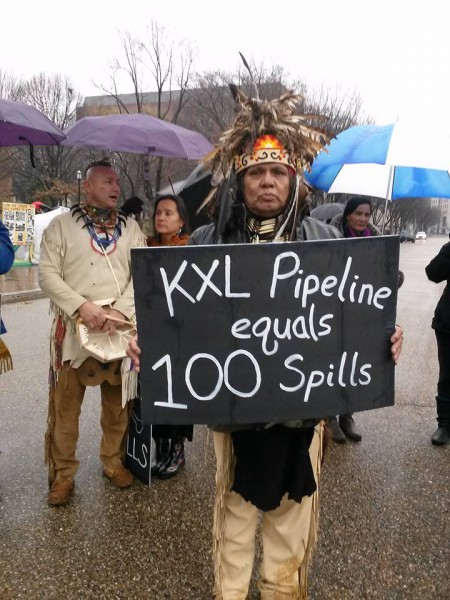
The Assiniboine and Gros Ventre tribes of the Fort Belknap Indian Reservation in Montana and South Dakota’s Rosebud Sioux tribe have long opposed the pipeline, arguing that the Keystone XL was approved despite the potential damage oil spills and construction could have on cultural sites. Proposed in 2008, the pipeline would carry up to 830,000 barrels of oil per day from Alberta’s oil sands to refineries on the Gulf of Mexico.
Joe Biden, the presumptive Democratic presidential nominee, has said he would kill the Keystone XL project if he wins the election this fall.
More Stories Like This
Native News Weekly (August 25, 2024): D.C. BriefsUS Presidents in Their Own Words Concerning American Indians
Native News Weekly (January 4, 2026): D.C. Briefs
What Native American Members of Congress Are Saying about the Venezuela Operation
Ramos Measure Seeks to Prevent Suicides at High-Risk Bridge Sites
Help us defend tribal sovereignty.
At Native News Online, our mission is rooted in telling the stories that strengthen sovereignty and uplift Indigenous voices — not just at year’s end, but every single day.
Because of your generosity last year, we were able to keep our reporters on the ground in tribal communities, at national gatherings and in the halls of Congress — covering the issues that matter most to Indian Country: sovereignty, culture, education, health and economic opportunity.
That support sustained us through a tough year in 2025. Now, as we look to the year ahead, we need your help right now to ensure warrior journalism remains strong — reporting that defends tribal sovereignty, amplifies Native truth, and holds power accountable.
 The stakes couldn't be higher. Your support keeps Native voices heard, Native stories told and Native sovereignty defended.
Stand with Warrior Journalism today.
Levi Rickert (Potawatomi), Editor & Publisher