



- Details
- By Kitcki Carroll
Guest Opinion. As the vestigial frost from a northern-plains winter gave way to a new spring, a father and his family were forcibly removed from their home. While it may be assumed this removal was for something resembling property foreclosure, it was not. Rather, it was one of many forced removals and relocations of Native Americans by the U.S. that utilized cruel displacement from known and familiar lifeways, killing many through sickness and exertion.
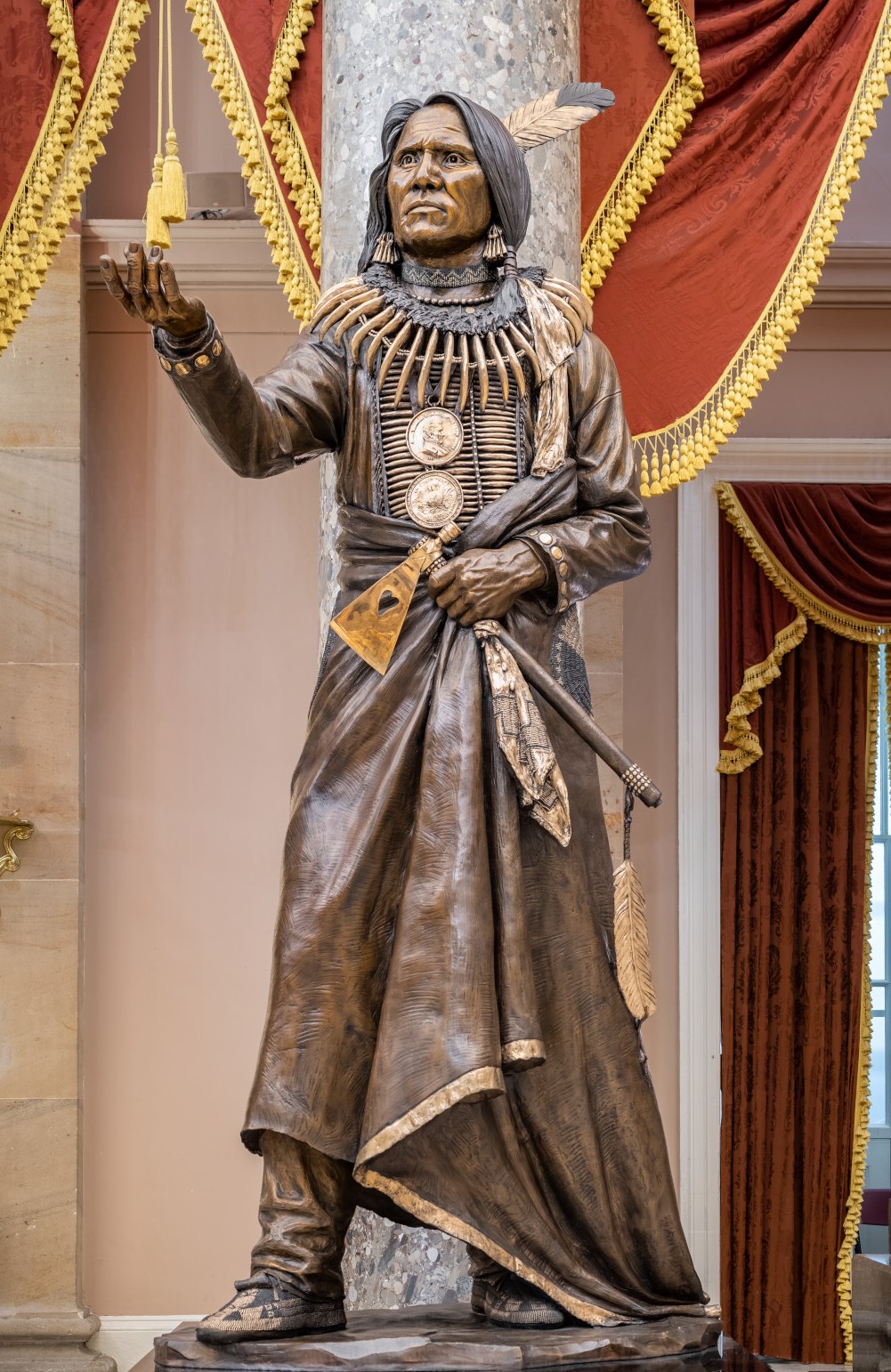
The father was Chief Standing Bear, a respected leader of his Ponca people, and the year was 1877. The removal of the Ponca from their ancestral homelands to the Oklahoma Territory has policy origins in the eastern U.S. This story is one of many Trail-of-Tears-tragedies initiated by the 1830 Indian Removal Act, and one of many such removal, termination, and assimilation policies designed by the U.S. to provide itself with the legal basis to support its unjust actions against Native Americans. These policies have spanned centuries and exemplify the plague of greed, rooted in a self-proclaimed divine entitlement, manifest destiny, and dehumanization.
Hundreds of Ponca became ill and/or died along the journey, including Chief Standing Bear’s son Bear Shield. To fulfill his son’s dying wish to be buried on his ancestral homelands, Chief Standing Bear attempted to return his remains, only to be arrested in Nebraska for defying federal orders to stay within newly established reservation boundaries. In pursuit of the justice he had been denied, he and his supporters argued that he had been unlawfully detained and filed a writ of habeas corpus.
In 1879, the court issued its decision in Standing Bear v. Crook. For the first time in the history of the U.S. legal system, the court affirmed that Native Americans were in fact “persons” under the law who could petition the court. Ultimately, he was granted the freedom, and associated humanity, previously denied. It was a significant legal moment in Native American-U.S. relations, and the decision provided Chief Standing Bear with the ability to fulfill his son’s wish. Although the fight to undo past wrongs continues, and the protection and promotion of our inherent sovereign rights is ongoing, this moment provided the legal foundation for Native Americans to access U.S. courts in the pursuit of justice.
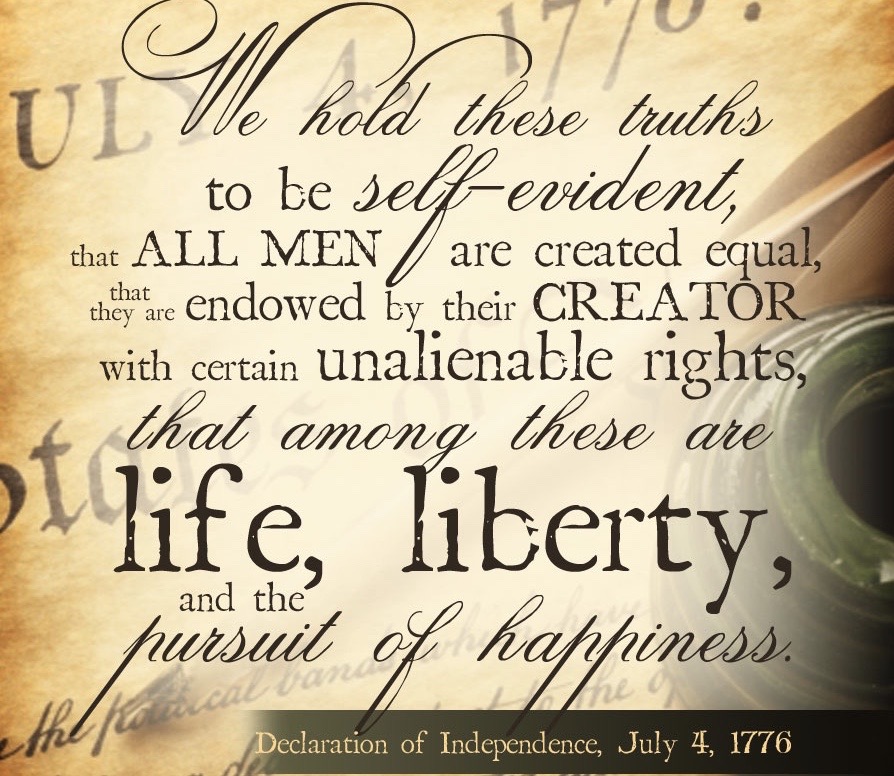
This landmark decision validated that we were human in two ways, by providing the first instance of legal opinion that a Native was a “person,” and by backing it up that with the granting of a freedom equal to that of other “persons” under the law – a moment of equality in a marred history, but that nonetheless moved us closer to the U.S. Declaration of Independence’s self-evident truth that all men are created equal with unalienable rights endowed by our Creator.
I have long posited that the Native American-U.S. relationship offers a unique perspective on the broader national challenges of today. As a nation, we continue to declare these principles even though they have not been equally applied to all throughout our history, and they were not the operating assumption of those who arrested Chief Standing Bear. History teaches us here that equal treatment is an acknowledgement of our humanity, and it is the responsibility of the government to uphold this equality and associated humanity through just execution of the law.
If we allow the memories from our collective history to fade into obscurity, the potential for our shortcomings to repeat themselves become likely, allowing the stench of these moments to linger across time. Unfortunately, in these challenging times, we appear to be ignoring that which we should have already learned. We must ask ourselves hard questions. How have images and acts of dehumanization re-emerged and been normalized in the modern day? Is our current discord really the intention of our Creator, or friction manufactured by our own frailty? How have we become so lost?
The ability to draw upon common sense to address the issues dividing us is disappearing. We have lost the ability to be thoughtful and empathetic with one another. Toxic partisanship has infested our discourse. External power has become an accepted principle and preferred measure of strength. Zero-sum thinking has become a limiting solution to problems. Faux patriotism is now an acceptable measure of our fealty. Extreme fringe thinking now dominates the places of influence. Instead of understanding history and valuing truths and facts, we blindly capitulate to confirmation bias via reinforced echo chambers and manipulative talking heads. Each of these things moves us further away from each other, and from a common ground center where compromise, and thus solutions, exist.
To correct, we must stop actions that interfere with any human’s right to life, liberty, and the pursuit of happiness, regardless of our own individual beliefs. We must restore an appreciation that we are all in this together and rediscover a center rooted in sensibility, practicability, mutual respect, and stop the “othering” that results from ignorance and misplaced anger and fear. It is time to acknowledge that no one group decides the meaning and definition of love, family, faith, or patriotism, nor monopolize ownership over them. If humanity is our greatest common denominator, equality will follow, including equality under the law. If we commit to this moment as an opportunity for a reset, redeclare our commitment to each other, the middle ground re-emerges, and polarizing politics soften.
As the Standing Bear v. Crook trial came to its conclusion, Chief Standing Bear extended his hand out and said, “That hand is not the color of yours, but if I pierce it, I shall feel pain. If you pierce your hand, you also feel pain. The blood that will flow from mine will be of the same color as yours. I am a man. The same God made us both.” When in the Course of Human Events, when We the People become so lost that we fail to recognize the damage we are inflicting upon ourselves, may we all appreciate the wisdom of this sentiment, not just during Native American Heritage Month, but always.
With special acknowledgement to Jackie Smith for her contributions.
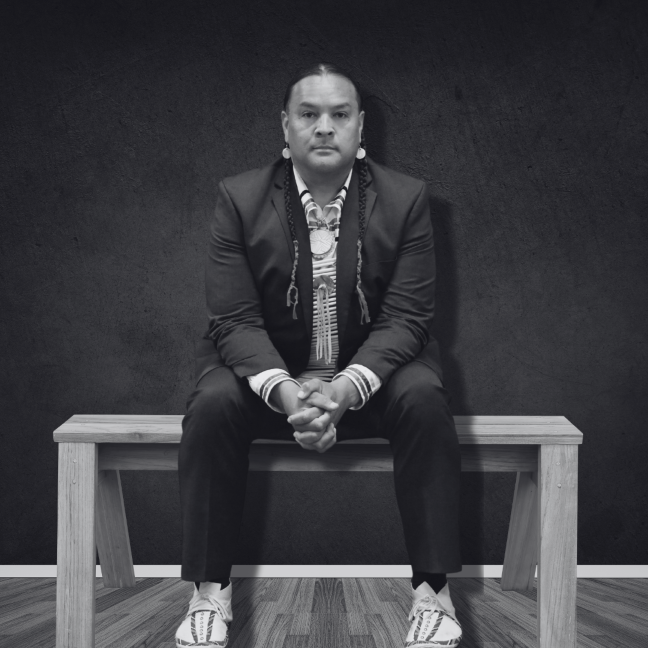
Kitcki A. Carroll is an enrolled citizen of the Cheyenne and Arapaho Tribes and a descendant of Cheyenne Peace Chief, Chief Black Kettle. Since 2010, he has proudly served as the Executive Director for USET and USET SPF, a non-profit and inter-tribal organization advocating on behalf of thirty-three (33) federally recognized Tribal Nations from the Northeastern Woodlands, down the Atlantic coast to the Everglades, and across the Gulf of Mexico.
Established in 1969, USET and USET SPF collectively advocate on behalf of its thirty-three member Tribal Nations at the regional and national level. In his capacity as Executive Director, Mr. Carroll works to protect and promote the sovereignty rights of USET and USET SPF members. He is a strong advocate for all Native people and actively works to ensure that the United States recognizes, honors,
and fulfills its sacred trust and treaty responsibilities and obligations to Indian Country.
More Stories Like This
Extending the Affordable Care Act Is a Moral Imperative for Indian CountryAll Is Fair in … War?
Why Federal Health Insurance Policy Matters to Cherokee Nation
The Absence of October's Job Report Shows Why Native American Communities Need Better Data
Tribal IDs Are Federally Recognized. ICE Agents Are Ignoring Them.
Help us defend tribal sovereignty.
At Native News Online, our mission is rooted in telling the stories that strengthen sovereignty and uplift Indigenous voices — not just at year’s end, but every single day.
Because of your generosity last year, we were able to keep our reporters on the ground in tribal communities, at national gatherings and in the halls of Congress — covering the issues that matter most to Indian Country: sovereignty, culture, education, health and economic opportunity.
That support sustained us through a tough year in 2025. Now, as we look to the year ahead, we need your help right now to ensure warrior journalism remains strong — reporting that defends tribal sovereignty, amplifies Native truth, and holds power accountable.
 The stakes couldn't be higher. Your support keeps Native voices heard, Native stories told and Native sovereignty defended.
Stand with Warrior Journalism today.
Levi Rickert (Potawatomi), Editor & Publisher