



- Details
- By Professor Victoria Sutton
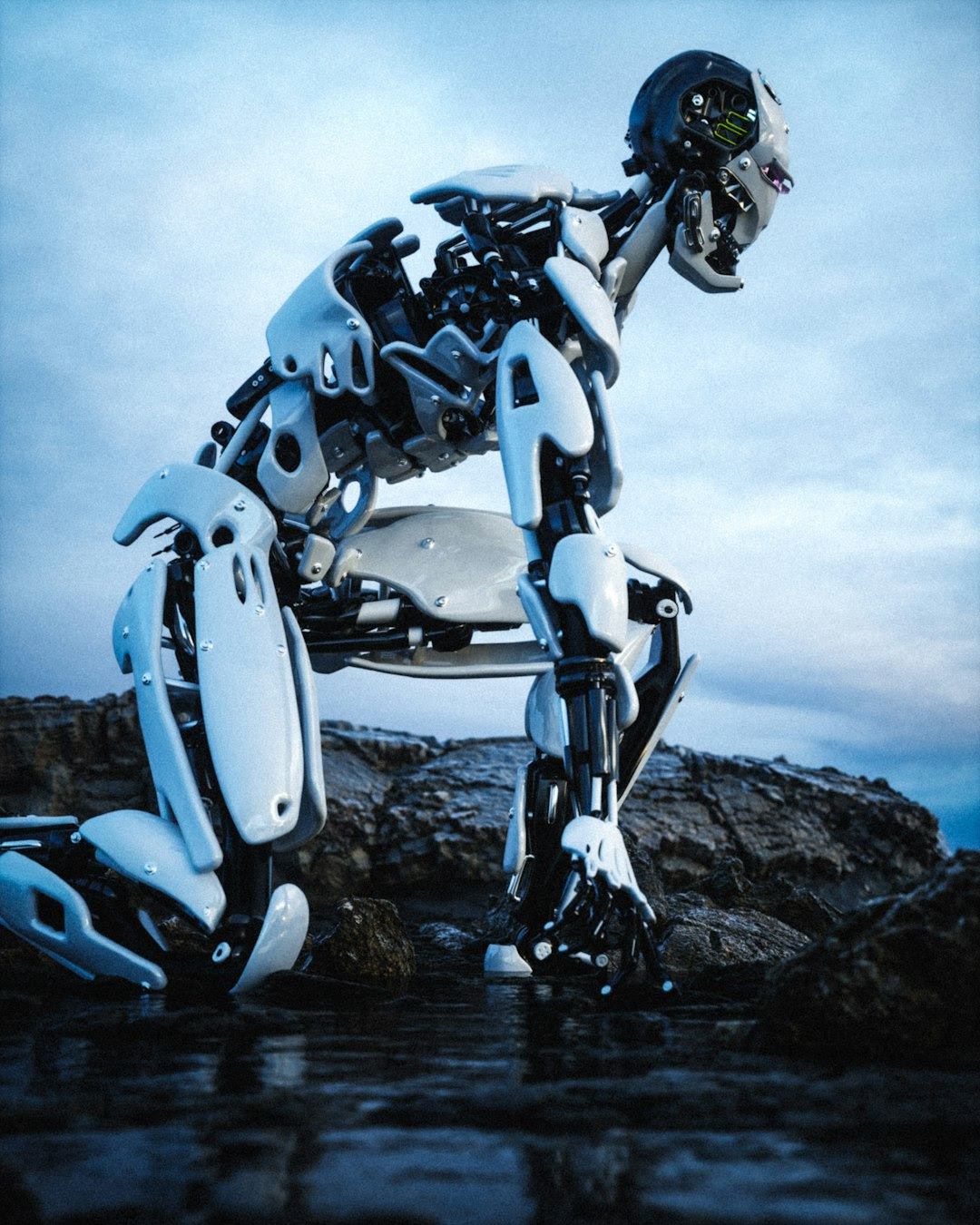
Guest Opinion. We enhance ourselves with glasses and contacts and even canes and crutches, and we think nothing of it. But what if we enhance ourselves with technology that makes us not just up to normal performance, but better than normal human performance—or with different capabilities than a human?
For centuries, major technological advances have been made based on the need to gain superiority in armed conflict. From the long bow to the nuclear bomb, we have used enhancements beyond original hand-to-hand combat. But can we enhance the human body to be a better fighting machine? Efforts are underway with exoskeleton armor and body sensors in the field.

Meanwhile, in civilian life, the use of body enhancements ranges from the ornamental to the functional. Beyond the tattoo, magnets and small scanning devices are implanted below the skin to pick up paperclips or open one’s own locked car doors. The people who do this are often called biohackers, though some call them cyborgs.
In 2018, a biohacker named MeowMeow in New South Wales, Australia, implanted the chip from his mass transit pass card into his hand so that he could simply wave his hand for entry into the transit system. The government agency became aware of it and canceled his pass, but he purchased another one and performed a second implant. He was fined with a criminal charge for failing to produce a ticket when asked, but the judge eventually dismissed the charge, finding that he had not taken his actions in order to avoid paying the fare.
An industry has grown from this community, and a company named “Dangerous Things” continues to develop implantable devices for personal use.
In the summer of 2022, it was reported that Lepht Anonym, a British biohacker, was the first to implant more than 50 devices in their body. The first Wi-Fi and USB storage device combination was implanted in their arm to receive, transmit, and store files. It was a success until they hit their arm on a taxi door and experienced complications requiring its removal.
This community is growing worldwide, and it is likely to become more acceptable as a result. But is there any safety regulation to protect the public from this growing use of implantable devices?
The general answer is “no.” There is one implantable device approved by the FDA that is a small chip similar to those used in pets to store contact information. This human implant is designed to store medical information about the person, and because it is related to medical treatment, it is subject to FDA approval.
This is how these devices fall into an unregulated space: the FDA approves two broad categories of medical products—(1) biologicals, like drugs, and (2) devices, like hip replacement devices. All must be related to treating or diagnosing human health. These implants that store information, share files, transmit Wi-Fi, and open doors are therefore not subject to FDA regulation because they do not make any medical claims.
As products, they could fall under the jurisdiction of the Consumer Product Safety Commission, a non-regulatory body with advisory and warning powers and negotiated recall authority, where products found to be risky can be “voluntarily” recalled by the manufacturer. So far, there have been no issues raised in the biohacking community that would involve the CPSC.
So biohackers exist in a space that is largely unregulated when it comes to buying these devices—and even implanting them.
Implanting the devices subdermally is also an unregulated practice. It is largely a DIY process, and I have seen it done at conferences by participants. Surgeons are regulated by their hospital communities and state licensing authorities, and they are generally reluctant to implant devices that have no approval from any safety authority. As a result, the biohacking community has developed its own surgical practices, which are also unregulated.
The civil tort system is the only mechanism available to recover damages from injuries, and so far it has not been a determinative issue in the biohacking community.
I began this discussion with the question of whether we should be better than we are as humans. Individuals express themselves through body modifications ranging from tattoos to flashing LEDs under their skin, so why not go further with additional human capabilities using programmable devices, Wi-Fi, and storage technologies? At present, any individual is free to do so, with no restrictions. Age can be a limitation, but it is not regulated.
So how widespread is this practice outside the biohacking community?
Sweden has a very active biohacking community, and thousands of people are happy to insert a microchip under their skin for various purposes. As of 2018, approximately 4,000 Swedes had microchips implanted in their thumbs containing personal identification information. This may contribute to making the practice more socially acceptable in Sweden.
In the United States, one employer required its employees to have implanted microchips to buy food from the company cafeteria or store in 2018. By 2022, nine states had laws prohibiting this practice by employers, and by 2024, thirteen states had enacted similar prohibitions.
It is important that we have conversations about these manifestations of transhumanism, particularly when humans do more than is humanly possible. Although slow and often ponderous, the legal system identifies societal risks after tort cases demonstrate harms to individuals that could affect others. Regulation may follow. At present, that legal evolution is underway, and whether through medical malpractice, product liability, or privacy cases, we can expect to see more of this evolution unfold in the future.
Using AI and Neuralink to Enhance Human Cognitive Ability
Elon Musk introduced Neuralink, a chip implanted in the brain as a brain-machine interface (BMI) device, in 2024. This device allows paralyzed individuals to control computers and other devices with their thoughts.
With the rise of artificial intelligence, could the future include the use of BMI devices to enhance human cognitive ability? The possibilities for moving from therapeutic use to enhancement exist.
However, in a Pew Research poll conducted in 2021, a majority of respondents (56%) opposed enhancements, while a majority supported therapeutic uses of implantable devices.
My Documentary
Believing this to be a technology and law topic worthy of exploration, I wrote and produced a short documentary several years ago. In it, I interviewed members of the biohacking community who implant and manufacture devices like those described here. If you would like to view the documentary, the trailer and film are available at the provided link.
See the award-winning short documentary here: Cyborgs-Should we be better than we are?
[This is an updated version of an article published in Unintended Consequences, in 2022.]
To read more articles by Professor Sutton go to: https://profvictoria.substack.
Professor Victoria Sutton (Lumbee) is a law professor on the faculty of Texas Tech University. In 2005, Sutton became a founding member of the National Congress of American Indians, Policy Advisory Board to the NCAI Policy Center, positioning the Native American community to act and lead on policy issues affecting Indigenous communities in the United States.
Help us defend tribal sovereignty.
At Native News Online, our mission is rooted in telling the stories that strengthen sovereignty and uplift Indigenous voices — not just at year’s end, but every single day.
Because of your generosity last year, we were able to keep our reporters on the ground in tribal communities, at national gatherings and in the halls of Congress — covering the issues that matter most to Indian Country: sovereignty, culture, education, health and economic opportunity.
That support sustained us through a tough year in 2025. Now, as we look to the year ahead, we need your help right now to ensure warrior journalism remains strong — reporting that defends tribal sovereignty, amplifies Native truth, and holds power accountable.
 The stakes couldn't be higher. Your support keeps Native voices heard, Native stories told and Native sovereignty defended.
Stand with Warrior Journalism today.
Levi Rickert (Potawatomi), Editor & Publisher