



- Details
- By Chickasaw Nation Media
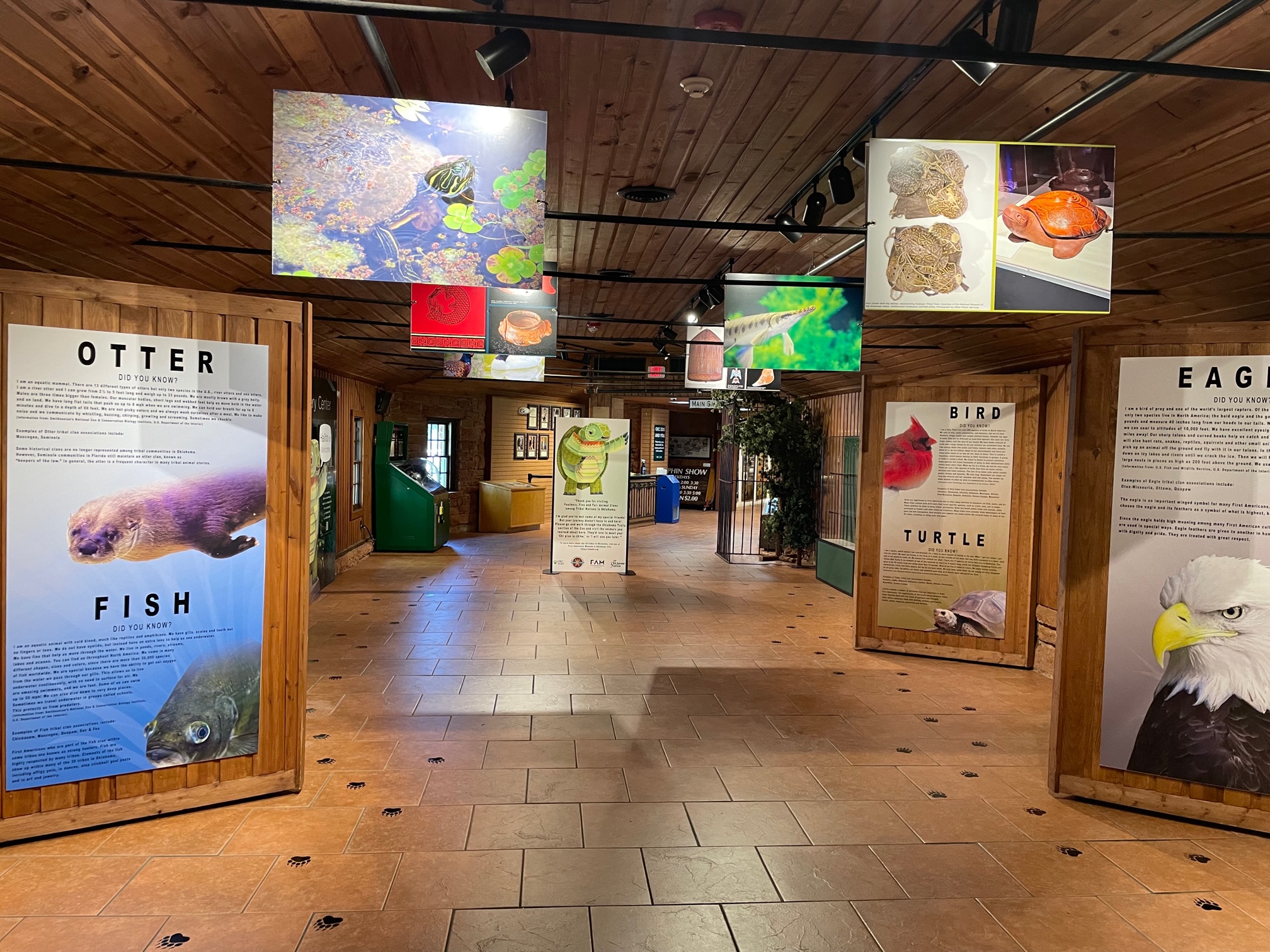
In August 2023, the Chickasaw Nation, First Americans Museum and Oklahoma City Zoo joined in partnership to create an exhibit dedicated to the diverse heritage of the 39 First American nations within Oklahoma. The exhibit, “Feathers, Fins and Furs: Animal Clans Among Tribal Nations in Oklahoma,” is located at the ZooZeum within the Sanctuary Asia section of the Oklahoma City Zoo. The exhibit opened October 2023 and is available for viewing through the end of June.
“The ultimate goal for this project was to bring awareness to the importance of clan animals and their relationships to the 39 tribes in Oklahoma, and to connect the zoo and the First Americans Museum through animals,” Chickasaw Nation Secretary of Culture and Humanities Lisa John said.
Clans, also called kinships, are unique to each tribal community. First American clans are similar to a large, extended family unit. Individuals within the community often have a strong sense of loyalty to their fellow clan members. Many clans are matrilineal, meaning each clan member is linked to a common female ancestor with women often possessing leadership roles.
“The Chickasaws are from a matrilineal society, so that means our identity – who we are – comes from our mother’s side,” Chickasaw Nation Executive Officer of Literary Arts Joe Thomas said.
However, some First American tribes, like the Potawatomi and Osage, had patrilineal clans. Members of patrilineal clans have their lineage determined through men or male relatives.
Kinships often have animal symbols signifying an ancestral relationship to the specific symbol. These animals, known as clan animals, can denote a clan’s values, traditions and social obligations.
“Feathers, Fins and Furs: Animal Clans Among Tribal Nations in Oklahoma” highlights animals inhabiting Oklahoma that had tribal clans named after them.
“We still see our culture being represented today through animals that are associated here in Oklahoma and from our historic Homeland,” Thomas said. “For the Chickasaw Nation, we have the Koi Ishto' clan, and that’s known as a panther clan.”
The exhibit defines the importance of each animal and its relationship to First American communities within Oklahoma.
“Each tribe within Oklahoma has specific clans that represent an aspect of their culture,” Thomas said. “A majority of tribes have clan animals, but there are others that have clans associated with vegetables, solstices and such. It’s not just clan animals, but for the most part on a broad sweep, we were able to connect the 39 tribes together through clan animals.”
The exhibit highlights birds, bison, otters, turtles, elk, fish, panthers and bears.
“We’ve identified several animals, and we provide basic background information on those animals so people have a good understanding of what that animal is and how it relates to Oklahoma,” Thomas said. “Then, we provide the association that a given animal has to different tribes.”
Each animal featured in the exhibit can also be found within the Oklahoma City Zoo’s “Oklahoma Trails” exhibit, allowing visitors to not only learn about the animal’s cultural relevance but also see them in person. Zoo attendees can find the animals spotlighted within the ZooZeum using a complimentary map of the park.
John said creating the exhibit was a major project that would not have been possible without the collaboration of the Chickasaw Nation, the First Americans Museum and the Oklahoma City Zoo.
“It was all hands-on deck – collaborative work,” John said.
“The cultural artifacts are from the First Americans Museum,” Thomas said. “They are able to draw from their inventory, which consists of a wide variety of donations received from the 39 tribes.”
Photography placed in the exhibit was a joint project between the three entities.
The Chickasaw Nation contributed research and graphic design development for the exhibit.
“The researchers were tasked with visiting with other tribes and with other cultural instructors from the different tribes to learn more about those specific clan animals,” Thomas said. “We had illustrators create graphic panels for the exhibit itself.”
More Stories Like This
Center for Native Futures Hosts Third Mound Summit on Contemporary Native ArtsFilmmakers Defend ‘You’re No Indian’ After Demand to Halt Screenings
A Native American Heritage Month Playlist You Can Listen to All Year Long
11 Native Actors You Should Know
Five Native American Films You Should Watch This Thanksgiving Weekend
Help us defend tribal sovereignty.
At Native News Online, our mission is rooted in telling the stories that strengthen sovereignty and uplift Indigenous voices — not just at year’s end, but every single day.
Because of your generosity last year, we were able to keep our reporters on the ground in tribal communities, at national gatherings and in the halls of Congress — covering the issues that matter most to Indian Country: sovereignty, culture, education, health and economic opportunity.
That support sustained us through a tough year in 2025. Now, as we look to the year ahead, we need your help right now to ensure warrior journalism remains strong — reporting that defends tribal sovereignty, amplifies Native truth, and holds power accountable.
 The stakes couldn't be higher. Your support keeps Native voices heard, Native stories told and Native sovereignty defended.
Stand with Warrior Journalism today.
Levi Rickert (Potawatomi), Editor & Publisher