- Details
- By Native News Online Staff
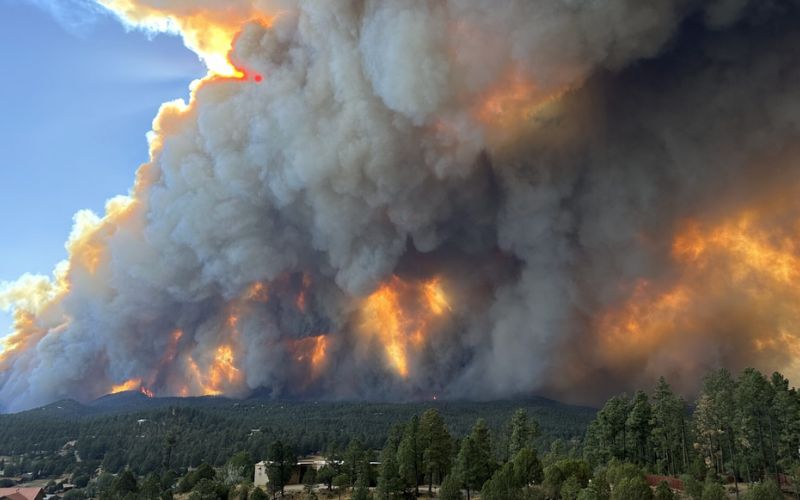
Close to 25,000 acres have been burned in two ongoing wildfires on the Mescalero Apache Indian Reservation and U.S. Forest Service lands in South Central New Mexico, causing mandatory evacuations, utility outages, scorched structures, and at least two deaths, tribal and state officials confirmed.
Since Monday, June 17, more than 8,000 residents in Southern New Mexico have been evacuated from their homes due to reports of two wildfires: The South Fork fire near Ruidoso, New Mexico, and the Salt fire, 7 miles west of Mescalero, New Mexico, on the tribe’s reservation.
In the week since, the fires have razed 1,400 structures, caused widespread power outages, and even killed two people. Last Wednesday, New Mexico State police confirmed two fire-related deaths, with potential additional fatalities to come. Over the weekend, residents were hit by a second natural disaster—flash flooding—that limited firefighter access to the burns on Sunday, according to officials.

Evacuations were lifted in the area by Monday, though certain road closures remain in effect, and residents are urged “to stay informed and cautious, especially with the potential for flooding and debris flows from incoming storms,” according to the state’s wildfire information hub.
As of Monday morning, The South Fork fire, the larger of the two, had scorched more than 17,550 acres and was 37 percent contained, according to New Mexico’s official update.
The second burn, the Salt fire on the Mescalero Apache Reservation, has burned more than 7,000 acres of tribal land and remains only 7 percent contained, according to authorities.
On June 20, President Joe Biden issued a disaster declaration for parts of southern New Mexico, freeing up funding and more resources as crews worked to keep the flames from spreading. Currently, more than 1,110 personnel are staffed on fire response and suppression, according to local authorities. Governor Michelle Lujan Grisham declared a state of emergency for Lincoln County and the Mescalero Apache Reservation.
The Federal Bureau of Investigation is currently investigating the cause of the flames, which ignited amid temperatures well into the 90s. The agency is offering up to $100,000 for information on “the person or persons responsible for starting the fires” near Ruidoso, New Mexico.
More Stories Like This
Southern Sierra Miwuk Nation Gets 900-Acres ofLand BackChilkat Indian Village Tells New Palmer Mine Owners They Are “Not Welcome” in Chilkat Valley
Tribes, Coastal Group Ask Army Corps to Revoke Permit for Texas Export Terminal
Michigan Tribes Tell Supreme Court: Don’t Bail Out Enbridge
Alaskans Raise More Than $1 Million For Communities Devastated by Typhoon Halong
Help us defend tribal sovereignty.
At Native News Online, our mission is rooted in telling the stories that strengthen sovereignty and uplift Indigenous voices — not just at year’s end, but every single day.
Because of your generosity last year, we were able to keep our reporters on the ground in tribal communities, at national gatherings and in the halls of Congress — covering the issues that matter most to Indian Country: sovereignty, culture, education, health and economic opportunity.
That support sustained us through a tough year in 2025. Now, as we look to the year ahead, we need your help right now to ensure warrior journalism remains strong — reporting that defends tribal sovereignty, amplifies Native truth, and holds power accountable.
 The stakes couldn't be higher. Your support keeps Native voices heard, Native stories told and Native sovereignty defended.
Stand with Warrior Journalism today.
Levi Rickert (Potawatomi), Editor & Publisher