- Details
- By Native News Online Staff
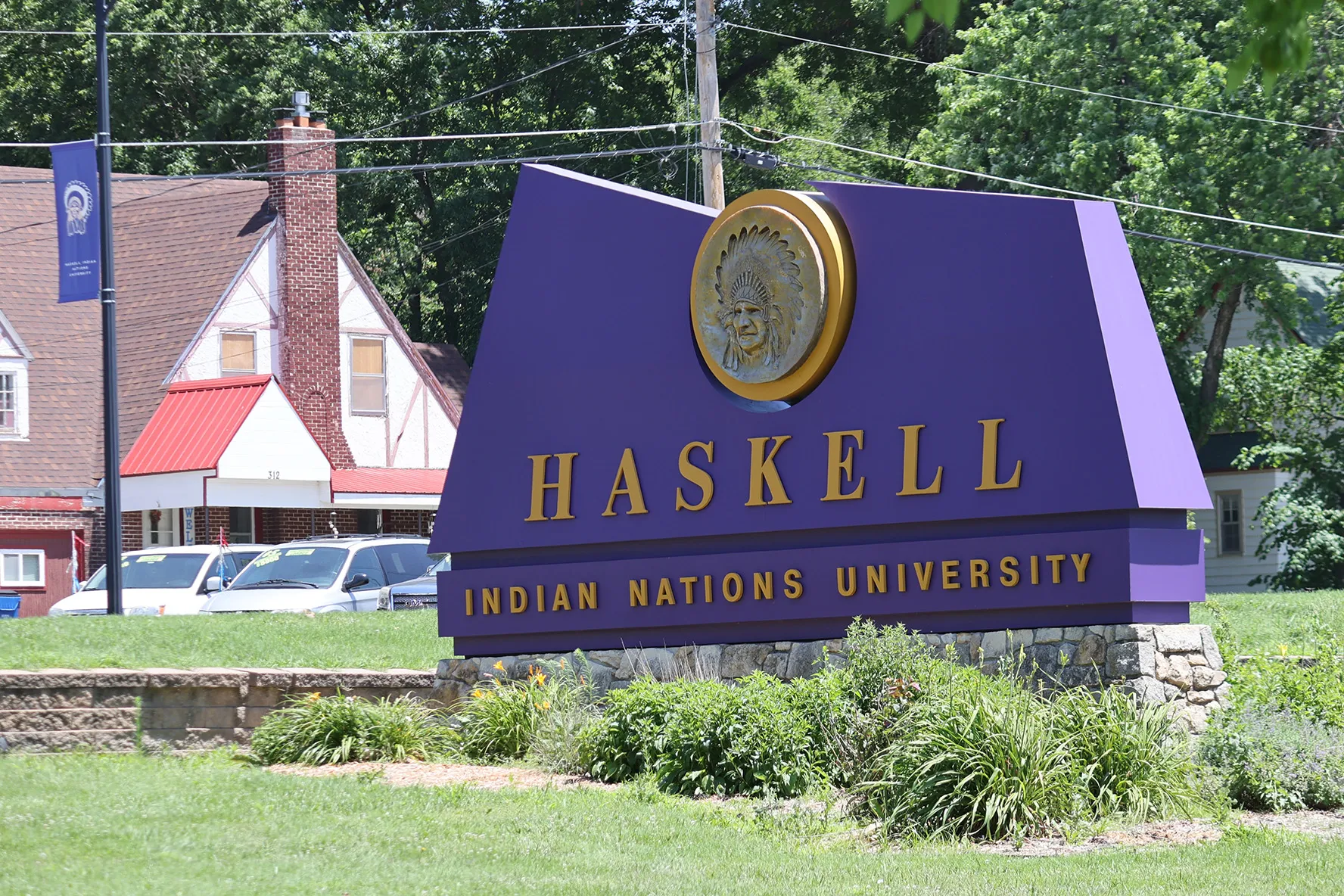
The case, represented by the Native American Rights Fund (NARF), was brought before the U.S. District Court for the District of Columbia.challenges the staff reductions at the Bureau of Indian Education (BIE) and the BIE-run schools, Haskell Indian Nations University (Haskell) and Southwestern Indian Polytechnic Institute (SIPI).

The Bureau of Indian Education (BIE) funds and operates a federal education system as part of its trust responsibility to Tribal Nations, established through treaty rights. Central to upholding these rights is Tribal consultation, a legal requirement. However, on February 11, 2025, President Donald Trump ordered large-scale reductions in federal staffing (EO 14210, 90 FR 9670). In response, the BIE implemented mass layoffs, severely disrupting operations at Haskell Indian Nations University (Haskell), Southwestern Indian Polytechnic Institute (SIPI), and other BIE-run schools across the country. These drastic cuts were carried out without consulting Tribal Nations, in clear violation of federal law.
“We have a say in how BIE operates the education provided to our children in fulfillment of our treaty rights. We will fight to protect the education they deserve and fight to protect the staff that serve them,” Prairie Band Potawatomi Nation Chairman Joseph Rupnick said.
“Tribal Nations and the federal government should be working together to best serve our Native students. Instead, the administration is randomly, without preparation and in violation of their federal trust responsibility, taking away teachers and staff from already-underserved facilities. Our students deserve better,” Pueblo of Isleta Governor Eugene Jiron commented.
“Despite having a treaty obligation to provide educational opportunities to Tribal students, the federal government has long failed to offer adequate services. Just when the Bureau of Indian Education was taking steps to fix the situation, these cuts undermined all those efforts. These institutions are precious to our communities, we won’t sit by and watch them fail,” said Cheyenne and Arapaho Tribes Lieutenant Governor Hershel Gorham.
On the day of the terminations, The Indian Leader, Haskell’s student newspaper, reported:
“For [Haskell] students, the effects are immediately visible. Several courses are now left without their original instructors, putting students’ educational experience in jeopardy. While some faculty members are being asked to take on additional classes to cover the vacancies, this has put an immense strain on the remaining staff. Teachers are now burdened with larger workloads, and the quality of education is at risk as educators juggle responsibilities beyond their capacity.”
Meanwhile, SIPI lost nearly a quarter of its staff. Many classes had no instructors to administer midterm exams scheduled for the following week. After the cuts, power outages lasted for hours due to a lack of maintenance staff. The school also eliminated Residential Advisors, leaving students without support in potentially dangerous dormitory situations.
“They keep saying that these cuts won’t impact individuals and services, but they do – they affect us a lot. Besides the classes that lost instructors, the entire school only has three custodial staff now. The school’s restrooms have overflowing trashcans and no toilet paper. Students are cleaning up the restrooms themselves just to make them usable,” said Haskell Freshman Ella Bowen (Sault Ste. Marie Tribe of Chippewa Indians).
“SIPI already was understaffed and things have gotten much worse. We had a power outage in my dorm for 13 hours because there was no maintenance staff available to restore power. I had to leave my dorm to find somewhere I could submit assignments. There also was a campus-wide power outage that cancelled classes. It is really hard to focus on learning and classes when these interruptions keep happening. Meanwhile, the administrators and faculty that are left are having to cover several jobs. It is really demoralizing,” said SIPI student Kaiya Jade Brown (Navajo).
The widespread staff reductions at BIE, Haskell, and SIPI violate Tribal rights to determine priority fields of study within these schools, Native students’ rights to access adequate post-secondary education, and BIE’s legal obligation to ensure school health and safety (25 U.S.C. 2003). Furthermore, these cuts were carried out without the legally required notification and consultation with Tribal Nations (25 U.S.C. § 2011 and 25 CFR § 32.4(a) and (q)).
“The United States government has legal obligations to Tribal Nations that they agreed to in treaties and have been written into federal law. The abrupt and drastic changes that happened since February, without consultation or even pre-notification, is completely illegal,” said NARF Staff Attorney Jacqueline De León.
“Although the schools have reportedly been able to hire back some of their instructional staff, it ignores all of the other important staff members who are gone. It is not even close to enough. The students and the Tribes deserve better, and we will fight to make sure they get it,” said NARF Deputy Director Matt Campbell.
In February 2025, Haskell University lost over a quarter of its staff, leaving 34 courses without instructors. The welcome back powwow was postponed, the Student Success Center was shut down, and financial aid processing was severely delayed, with some students still awaiting their funds as of March. Staffing cuts reduced the custodial team to just three employees, leading to overflowing trash cans in restrooms, a lack of paper products, and unsanitary conditions in cafeterias and dining areas.
At the same time, SIPI lost nearly a quarter of its staff. Power outages went unresolved for hours due to insufficient maintenance personnel, sometimes forcing class cancellations. Despite ongoing issues with brown, unsafe tap water, necessary repairs were indefinitely postponed due to the staffing cuts. Additionally, midterm exams were left without faculty to administer them, further disrupting students' education.
More Stories Like This
Native Students Can Win $5,000 Scholarship, International Distribution in Pendleton Design ContestAmerican Indian College Fund Raises Alarm Over Plan to Shift Native Programs Away From the Dept. of Education
MacKenzie Scott Foundation Gives $5 Million Contribution to Little Priest Tribal College
Tribal Leaders Push Back on Dismantling of U.S. Department of Education
American Indian College Fund Names 12 Student Ambassadors for 2025–26
Help us defend tribal sovereignty.
At Native News Online, our mission is rooted in telling the stories that strengthen sovereignty and uplift Indigenous voices — not just at year’s end, but every single day.
Because of your generosity last year, we were able to keep our reporters on the ground in tribal communities, at national gatherings and in the halls of Congress — covering the issues that matter most to Indian Country: sovereignty, culture, education, health and economic opportunity.
That support sustained us through a tough year in 2025. Now, as we look to the year ahead, we need your help right now to ensure warrior journalism remains strong — reporting that defends tribal sovereignty, amplifies Native truth, and holds power accountable.
 The stakes couldn't be higher. Your support keeps Native voices heard, Native stories told and Native sovereignty defended.
Stand with Warrior Journalism today.
Levi Rickert (Potawatomi), Editor & Publisher