



Guest Opinion. Each year during the month of November, I am proud that our nation takes this time to reflect on the unique heritage, rich history and special contributions of Native Americans. As a proud member of the Chickasaw Nation of Oklahoma, I always take this special time to reflect on my tribal heritage and the importance of tribes and their members in the United States. And as the longest serving Native American in the U.S. House of Representatives, the privilege and honor it is to represent the interests of tribes in Congress is certainly not lost on me.
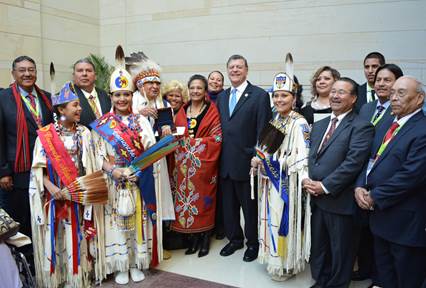
Growing up in Oklahoma, I was fortunate to be immersed in tribal culture and surrounded by family members who shared my ancestry and who worked hard to preserve our special heritage. My great, great grandfather served as the clerk for the Chickasaw Supreme Court. My great grandfather served as the treasurer of the Chickasaw Nation and my great aunt, Te Ata Thompson Fisher, was a famous actress, performer and storyteller whose talents took her all over the world, spreading Native American stories. Finally, my late mother Helen Cole, who remains the greatest influence in my life, was the first Native American woman ever elected to the Oklahoma State Senate.
Across the United States, there are more than 570 federally-recognized tribes – including 39 sovereign tribes in Oklahoma and four headquartered in the Fourth District and another half a dozen with tribal territory and jurisdiction within its boundaries. Native American issues always encourage bipartisan cooperation and attention. As the Republican Co-Chair of the bipartisan Congressional Native American Caucus, I am proud to promote policies that affirm and protect tribal sovereignty and the right to self-governance and preserve the promises made by the federal government in treaty agreements.

Last week, the House advanced the Department of Interior, Environment, and Related Agencies Appropriations Act for Fiscal Year 2024 which includes provisions that would support native communities and protect tribal sovereignty. By not only increasing funding for the Indian Health Service (IHS), but also including advance appropriations for the next fiscal year, this bill ensures secure healthcare access to tribal communities across the country. Not only do Native Americans and Alaska Natives disproportionately suffer from chronic health conditions such as diabetes, heart disease and cancer, but IHS faces extreme uncertainty in funding every year. Through advance appropriations, the IHS system allows Indian health programs to manage budgets, coordinate care and improve health quality outcomes for Native Americans and Alaska Natives effectively and efficiently, even during a continuing resolution or government shutdown.
This legislation also secures necessary funding for the Bureau of Indian Affairs and Bureau of Indian Education, of which I have always championed the importance of programs within. It also includes increased funds to address tribal justice needs such as increased funding necessary for tribal nations in Oklahoma to supplement additional responsibilities in recent years, such as millions of dollars in expenses to pay for additional law enforcement, the absorption of thousands of cases into tribal criminal justice systems and increased investments in associated resources and personnel costs. I look forward to continuing to work with my colleagues in both chambers of Congress to ensure these important provisions are fully realized in the final version of this legislation.
This month and always, it is important Americans celebrate Native American Heritage Month and remember the role tribes and tribal leaders have played in American history. Tribes have greatly influenced the land in which we live, even before the United States came to be, and it is our obligation to uphold the federal trust responsibility to protect their interests and sovereignty.
Rep. Tom Cole (Chickasaw), who represents Oklahoma’s 4th congressional district, is the longest serving Native American in history to serve the U.S. House of Representatives. He currently serves as the chairman of the House Rules Committee.
More Stories Like This
Colorado cannot heal until it confronts Sand Creek honestlyNative American Mothers Deserve to Live
Technology Rooted in Tradition is Strengthening Cherokee Nation
The Lumbee Tribe of North Carolina: #575
Tribes Do Not Need a Greenlight to Build Renewable Energy
Help us defend tribal sovereignty.
At Native News Online, our mission is rooted in telling the stories that strengthen sovereignty and uplift Indigenous voices — not just at year’s end, but every single day.
Because of your generosity last year, we were able to keep our reporters on the ground in tribal communities, at national gatherings and in the halls of Congress — covering the issues that matter most to Indian Country: sovereignty, culture, education, health and economic opportunity.
That support sustained us through a tough year in 2025. Now, as we look to the year ahead, we need your help right now to ensure warrior journalism remains strong — reporting that defends tribal sovereignty, amplifies Native truth, and holds power accountable.
 The stakes couldn't be higher. Your support keeps Native voices heard, Native stories told and Native sovereignty defended.
Stand with Warrior Journalism today.
Levi Rickert (Potawatomi), Editor & Publisher