- Details
- By Neely Bardwell
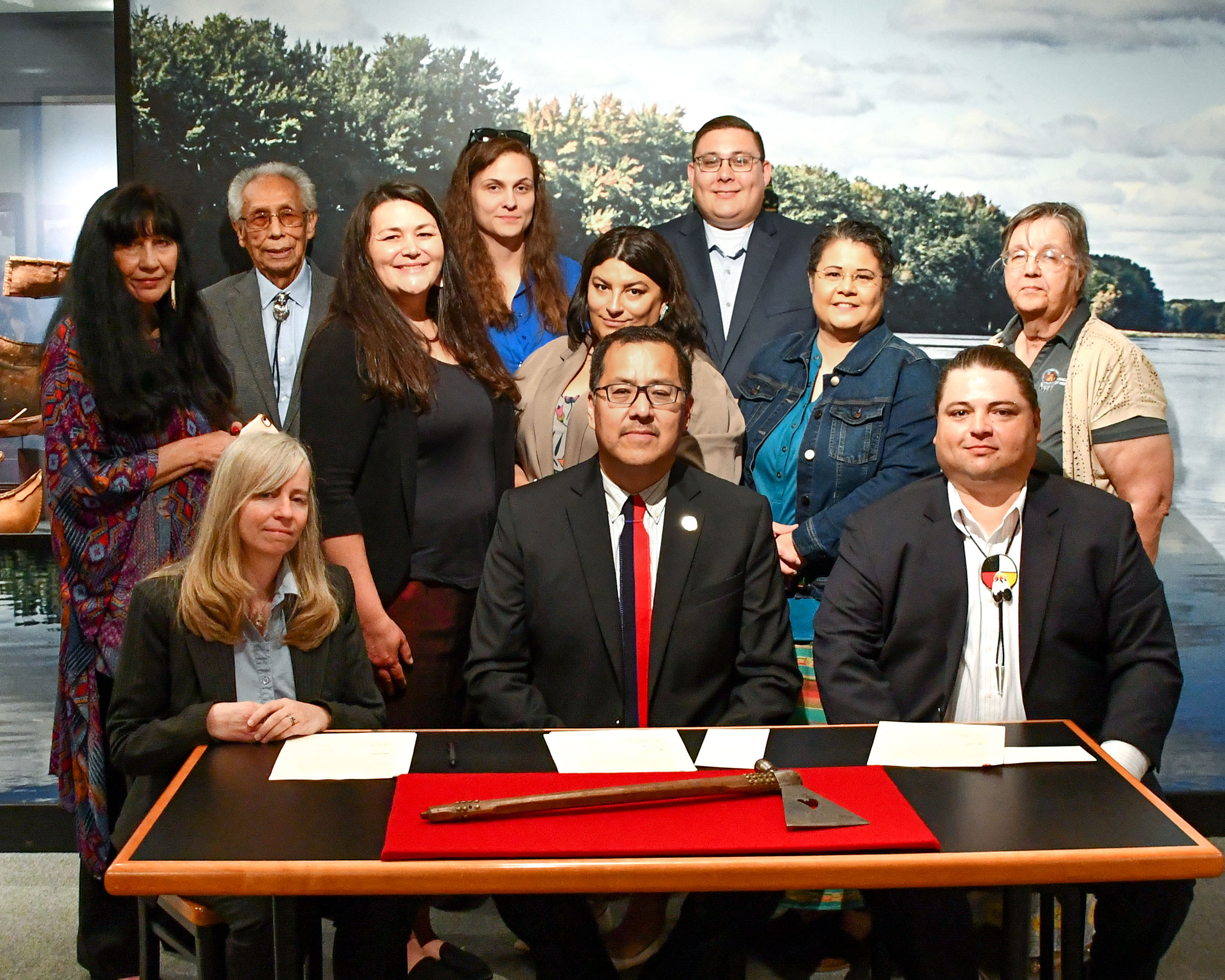
The long-lost pipe-tomahawk that belonged to Chief Standing Bear was finally returned home to the Ponca Tribe of Nebraska on June 3.
Standing Bear is recognized as one of the first civil-rights heroes for Native people. In 1879, he persuaded a federal judge to recognize Native people as persons who are entitled to the right to sue for their freedom. This decision in Standing Bear v. Crook came after Bear sued General George Crook for wrongful imprisonment. Crook had captured and jailed Standing Bear and his band of Poncas in 1877, when, after being forcibly relocated to Oklahoma, they returned to Nebraska to bury Standing Bear’s son.
Several current citizens of the tribe are Standing Bear’s descendants. On June 3, several members of the Ponca Tribal Council and staff visited Harvard University’s Peabody Museum of Archaeology and Ethnology in Cambridge, Massachusetts, to retrieve the pipe-tomahawk. They were joined by members from the Ponca Tribe of Oklahoma to celebrate its return.
The piece of heritage and tradition had been given to John Lee Webster, one of the two lawyers who represented Standing Bear in the Standing Bear v. Crook case. Unfortunately, after Webster died, the pipe-tomahawk was not returned to the tribe’s possession, but sold to a private collector. It changed hands several times before Harvard acquired it in 1982.
Once the Ponca Tribe of Nebraska got wind that the pipe-tomahawk was being held in the Peabody’s collection, they began talking to museum officials about getting it back. Last year, the museum agreed to return it, but COVID-19 prevented the tribe from traveling to Cambridge to repossess it until this month.
Many artifacts from different tribes are still being held in museums across the country. Many have ended up in museum custody through faulty acquisition processes that often go against the wishes of families and communities. Currently, Harvard has around 6,400 Native remains and 13,600 funerary objects.
At the June 3 ceremony, Peabody Museum director Jane Pickering expressed her commitment to do better.
"The Peabody directly benefited from collecting practices that we acknowledge today ignored the wishes and values of families and communities," she said, adding that the museum needs to reflect on and think "about our relationship to affected communities, to try to repair the harm that these practices have caused."
"What's happening here today is what I think we all want to happen, for the Peabody and Harvard not just to do the bare minimum of complying with the law, but to recognize the rightful and moral claims of your sovereign nation," said Shawon Kinew (Ojibwe), a member of the Peabody faculty executive committee.
More Stories Like This
50 Years of Self-Determination: How a Landmark Act Empowered Tribal Sovereignty and Transformed Federal-Tribal RelationsNavajo Nation Council Members Attend 2025 Diné Action Plan Winter Gathering
Ute Tribe Files Federal Lawsuit Challenging Colorado Parks legislation
NCAI Resolution Condemns “Alligator Alcatraz”
NABS Documents 134 More Survivor Stories, Expands Digital Archive in 2025
Help us defend tribal sovereignty.
At Native News Online, our mission is rooted in telling the stories that strengthen sovereignty and uplift Indigenous voices — not just at year’s end, but every single day.
Because of your generosity last year, we were able to keep our reporters on the ground in tribal communities, at national gatherings and in the halls of Congress — covering the issues that matter most to Indian Country: sovereignty, culture, education, health and economic opportunity.
That support sustained us through a tough year in 2025. Now, as we look to the year ahead, we need your help right now to ensure warrior journalism remains strong — reporting that defends tribal sovereignty, amplifies Native truth, and holds power accountable.
 The stakes couldn't be higher. Your support keeps Native voices heard, Native stories told and Native sovereignty defended.
Stand with Warrior Journalism today.
Levi Rickert (Potawatomi), Editor & Publisher