- Details
- By Native News Online Staff
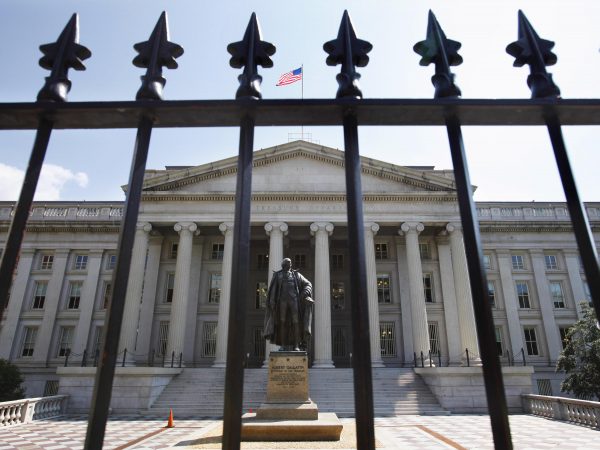
CAMBRIDGE, Mass. — An study released Monday by three leading universities suggests the Trump administration miscalculated in its distribution of $4.8 billion to tribes under the Coronavirus Aid, Relief and Economic Security (CARES) Act.
The study shows that the Department of Treasury used “arbitrary and capricious” data that either overrepresented or underrepresented the tribes’ populations, according to a group of researchers from Harvard, the University of Arizona and UCLA.
The formula Treasury used was borrowed from the Department of Housing and Urban Development’s formula used to distribute Indian Housing Block Grant funds.
The problem with using HUD’s formula is several tribes do not participate in the federal housing program. In the case of the tribes that don’t access HUD funds, they were noted as having zero population.
Key takeaways from the team’s analysis include:
- Different tribal population data series are available, and different series give rise to very different allocations of CARES Act dollars.
- The HUD data series Treasury has chosen purportedly measures, for each reservation, the number of residents who report their race as solely American Indian and Alaska Native (AIAN) or AI/AN in combination with one or more other races.
- The data used by the Treasury reports a number of tribes as having no population (e.g., because they do not participate in HUD’s IHBG housing program) and the chosen series is materially inconsistent with both US Census Department data and tribes’ own data.
- The CARES Act dollars are specifically earmarked for tribal governments. Thus, the case is strong that the Treasury should have used data on each tribe’s population of enrolled tribal citizens. These counts were requested by Treasury and submitted by tribes in mid-April but were not subsequently used by the Department to allocate the CARES Act funds. The resulting allocations demonstrably leave some tribes as “over-represented” and some tribes as “under-represented.”
During a Coronavirus Relief Fund forum held by the Treasury Department with the National Congress of American Indians (NCAI) and the Native American Finance Officers Association, several tribal leaders voiced discontent with the formula used by the Treasury Department and asked the Treasury Department to fix the problem for when further funds are distributed.
To read the complete study, click here.
More Stories Like This
Native News Weekly (August 25, 2024): D.C. BriefsUS Presidents in Their Own Words Concerning American Indians
Native News Weekly (December 7, 2025): D.C. Briefs
Why We Report: Chez Oxendine Shares His Story for Native News Online’s Year-End Campaign
New Amnesty International Report Details Torture, Overcrowding at Krome and ‘Alligator Alcatraz’
Help us defend tribal sovereignty.
At Native News Online, our mission is rooted in telling the stories that strengthen sovereignty and uplift Indigenous voices — not just at year’s end, but every single day.
Because of your generosity last year, we were able to keep our reporters on the ground in tribal communities, at national gatherings and in the halls of Congress — covering the issues that matter most to Indian Country: sovereignty, culture, education, health and economic opportunity.
That support sustained us through a tough year in 2025. Now, as we look to the year ahead, we need your help right now to ensure warrior journalism remains strong — reporting that defends tribal sovereignty, amplifies Native truth, and holds power accountable.
 The stakes couldn't be higher. Your support keeps Native voices heard, Native stories told and Native sovereignty defended.
Stand with Warrior Journalism today.
Levi Rickert (Potawatomi), Editor & Publisher