- Details
- By Neely Bardwell
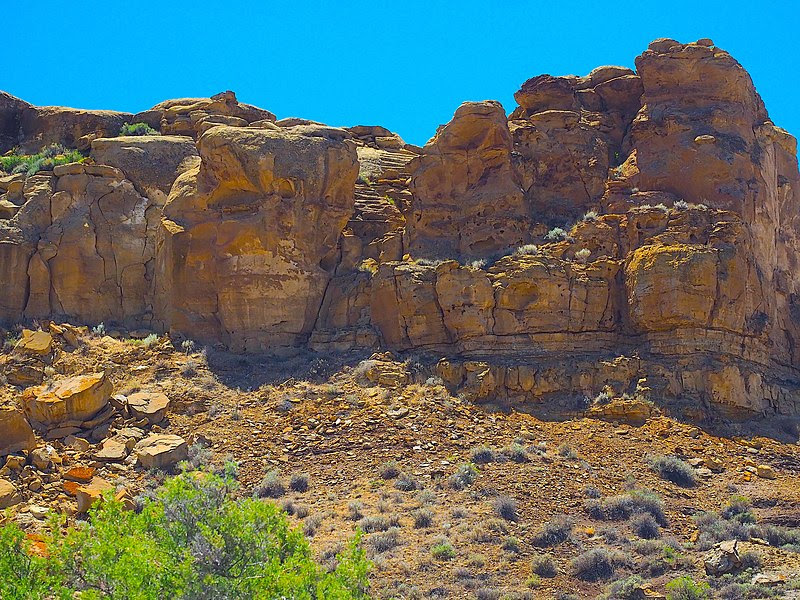
Secretary of the Interior Deb Haaland took action last week to protect the cultural and historic resources in the Chaco Culture Historical Park from encroaching new oil and gas leasing and mining.
Haaland’s action comes after President Biden announced efforts to protect the area at the White House Tribal Nations Summit back in November of 2021.
The action withdraws public lands that surround the Chaco Culture National Historical Park in northern New Mexico from future leasing and mining claims. Through the new public land order, public lands within a 10-mile radius of the park will be protected for the next 20 years.

For approximately the last ten years, the Bureau of Land Management (BLM) has not issued an oil and gas lease within the 10-mile buffer, with a moratorium on new mining claims in place since January 2022 while the assessment of the proposed withdrawal took place.
The 10-mile withdrawal provides the greatest protection for the more than 4,700 known archaeological sites located in the surrounding area of the park, as determined by a BLM review.
The action responds to decades of tribal efforts — along with efforts from elected officials and the public — that sought to ensure the protection of sacred and historic sites and Tribal communities in northwestern New Mexico.
“Efforts to protect the Chaco landscape have been ongoing for decades, as Tribal communities have raised concerns about the impacts that new development would have on areas of deep cultural connection,” Haaland said in a statement. “Today marks an important step in fulfilling President Biden’s commitments to Indian Country by protecting Chaco Canyon, a sacred place that holds deep meaning for the Indigenous peoples whose ancestors have called this place home since time immemorial. I value and appreciate the many Tribal leaders, elected officials, and stakeholders who have persisted in their work to conserve this special area.”
The surrounding desert landscape of the Chaco Canyon contains rich archaeological resources and Pueblo and other tribal nation’s cultural sites, which are still utilized today. Structures in the Chacoan landscape date back approximately 850 - 1250 years, back to when the area was home to a social and religious center for the Chacoan people.
In 1987, the national park was designated as a United Nations Educational, Scientific and Cultural Organization (UNESCO) World Heritage Site. In 2022, there were more than 41,000 visitors to the park.
The withdrawal only applies to public lands and federal mineral estate. Minerals owned by private, state, or tribal entities and valid existing leases are not affected. Any existing leases with well production can continue. This means that any Navajo Nation allottees can continue to lease their minerals.
For future steps, the Department of Interior is starting a broader assessment of the greater Chaco landscape in order to ensure that the sacred sites, stories, and cultural resources in the region are protected for years to come.
In the first phase of the Honoring Chaco Initiative, a regional collaboration among BLM field offices, BIA, and interested Tribes, Pueblos, and other Tribal interests in the Greater Chaco area, a set of 45 broader interviews, as well as planning sessions that culminated in 2.5 days of meetings were conducted. Around 30 participants from various fields, tribal historic preservation officers, tribal organizations, tribally led non-governmental organizations and representatives of New Mexico were included.
More Stories Like This
Trump signs law that revokes some limits on drilling in Alaska’s National Petroleum ReserveSouthern Sierra Miwuk Nation Gets 900-Acres ofLand Back
Chilkat Indian Village Tells New Palmer Mine Owners They Are “Not Welcome” in Chilkat Valley
Tribes, Coastal Group Ask Army Corps to Revoke Permit for Texas Export Terminal
Michigan Tribes Tell Supreme Court: Don’t Bail Out Enbridge
Help us defend tribal sovereignty.
At Native News Online, our mission is rooted in telling the stories that strengthen sovereignty and uplift Indigenous voices — not just at year’s end, but every single day.
Because of your generosity last year, we were able to keep our reporters on the ground in tribal communities, at national gatherings and in the halls of Congress — covering the issues that matter most to Indian Country: sovereignty, culture, education, health and economic opportunity.
That support sustained us through a tough year in 2025. Now, as we look to the year ahead, we need your help right now to ensure warrior journalism remains strong — reporting that defends tribal sovereignty, amplifies Native truth, and holds power accountable.
 The stakes couldn't be higher. Your support keeps Native voices heard, Native stories told and Native sovereignty defended.
Stand with Warrior Journalism today.
Levi Rickert (Potawatomi), Editor & Publisher