- Details
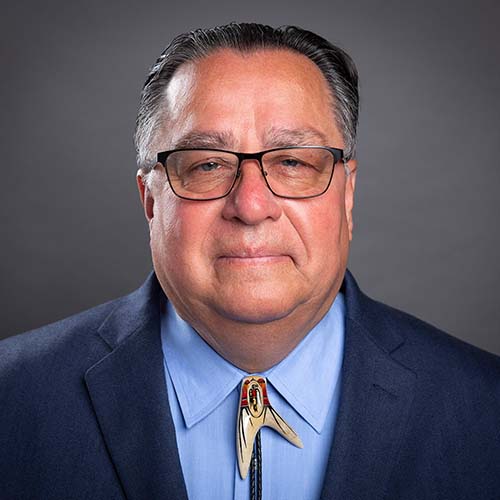
- By Levi Rickert
Opinion. As we mark another Memorial Day, the flags will wave, the bugles will sound, and America will pause — if only briefly — to honor those who gave their lives in service to this country.
On Memorial Day, we honor the men and women who made the ultimate sacrifice by giving their lives in service to our country. On Veterans Day in November, we recognize and thank all who have served in the U.S. armed forces.

For many, Memorial Day is the unofficial kickoff to summer, filled with backyard barbecues and a three-day weekend.
For Native Americans, Memorial Day carries a weight beyond patriotic tradition. It is a moment to reflect not only on the sacrifice of our warriors, but on the complicated legacy of service in a country that has not always honored us in return.
Native Americans serve in the U.S. military at higher rates per capita than any other ethnic group. This is not a new development. From the Revolutionary War to the current conflicts abroad, Native people have stood on the front lines of American wars, often fighting for a country that has repeatedly broken its promises to our people.
The irony is not lost on us. We are the original stewards of this land — yet we have had to fight to be seen, to be counted, and to be heard. And still, we have always answered the call.
I think of the Navajo Code Talkers, who used their sacred language as an unbreakable code during World War II. Their contributions remained classified for decades, their heroism unrecognized. During WWII, 13 of the Navajo Code Talkers were killed in action. Their stories are seldom told on Memorial Day. They should be.
On Memorial Day weekend, I always think of Spc. Lori Piestewa, a Hopi tribal citizen, and a warrior in her own right. Piestewa was the first Native American woman to die in combat while serving in the U.S. military and also the first woman in the entire U.S. military killed in the Iraq War.
Deployed from Fort Bliss in Texas, she had only been in Iraq for five weeks. Piestwea was only 23 years old when she gave her life for this country and her community. She left behind two young children.
For several years, Terry Piestewa, Lori’s father and a Vietnam veteran, wore a baseball cap that read: “All give some, some gave all.”
In the first years after Lori’s death, tribal communities across Indian Country celebrated her life and death. At first, her family found the memorials in her honor difficult. As time passed, the family found the memorials and tributes to Lori beneficial.
“Now that it's been going on a while, it's been helping us to heal,” her father said. “And it helps our grandchildren to know their mother, because when you're that young, you don't know your parents when they leave. Through what is happening to us, our grandchildren are getting to know their mother quite well. They know that there are a lot of people out there still thinking about their mother.”
Terry Piestewa’s words capture something essential about how we honor the fallen. It is not enough to drape a flag over a coffin and call it patriotism. True honor lies in how we care for those left behind. It lies in how we teach our children the full history of this nation—not just the victories, but the betrayals too.
For Native peoples, Memorial Day is inseparable from our long memory of what has been taken and what we have fought to keep. But let us also remember: ours is not only a story of loss, but of endurance.
In these troubling times for the under-represented in the United States, when there are those who want to disregard Diversity, Equity, and Inclusion (DEI), we all should remember a diverse group of men and women who gave the ultimate sacrifice for their country to save and preserve democracy. We know Native Americans were included. That is the value of diversity in the United States.
On this day of memory, may we hold space for grief, for gratitude, and for the hard truths that can make us better. May we honor all who have fallen, and may we work to build a country worthy of their sacrifice.
Thayék gde nwéndëmen - We are all related.
More Stories Like This
The Lie We Keep Telling About Wounded KneeAnother Weapon of Mass Destruction
Colorado cannot heal until it confronts Sand Creek honestly
Native American Mothers Deserve to Live
Technology Rooted in Tradition is Strengthening Cherokee Nation
Help us defend tribal sovereignty.
At Native News Online, our mission is rooted in telling the stories that strengthen sovereignty and uplift Indigenous voices — not just at year’s end, but every single day.
Because of your generosity last year, we were able to keep our reporters on the ground in tribal communities, at national gatherings and in the halls of Congress — covering the issues that matter most to Indian Country: sovereignty, culture, education, health and economic opportunity.
That support sustained us through a tough year in 2025. Now, as we look to the year ahead, we need your help right now to ensure warrior journalism remains strong — reporting that defends tribal sovereignty, amplifies Native truth, and holds power accountable.
 The stakes couldn't be higher. Your support keeps Native voices heard, Native stories told and Native sovereignty defended.
Stand with Warrior Journalism today.
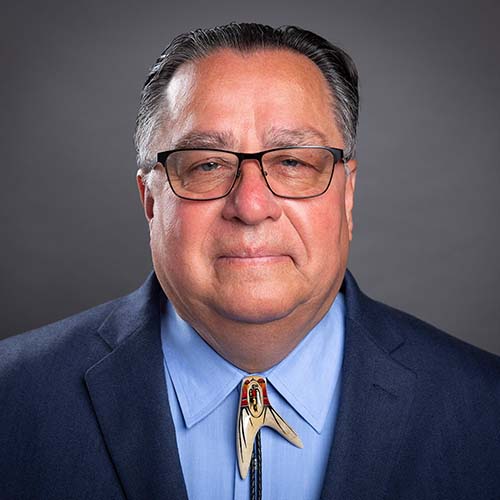
Levi Rickert (Potawatomi), Editor & Publisher