- Details
- By Levi Rickert
Opinion. On the Monday before the 2016 presidential election, I covered campaign stops by the two major candidates — Democratic nominee Hillary Clinton and Republican nominee Donald Trump. Both came to my hometown of Grand Rapids, Michigan, to ask voters for their support.
Clinton’s stop at the Grand Valley State University fieldhouse drew a capacity crowd. She was met by a thunderous afternoon audience that turned out to show its enthusiasm and support.
Later that night, Trump arrived nearly two hours late to a raucous crowd of supporters. As he delivered a campaign stump speech I had already heard dozens of times on cable news, he reached the now-familiar moment when he disparaged the media. Pointing to reporters in the back of the venue, Trump told the crowd to look at “some of the most dishonest people out there—fake news.”
It was as if he had thrown red meat to the crowd. Hundreds of his supporters turned toward us. Many shouted obscenities. Some raised their middle fingers. Having previously heard Trump tell a crowd to “punch the crap out” of someone at one of his rallies and promise to pay the legal expenses, I did not trust a group standing just a few feet from the press gallery. I left the rally feeling highly disrespected.
Trump’s disrespect and disregard for the press are well documented.
So it did not surprise me on Friday when my phone repeatedly alerted me that former CNN anchor Don Lemon was arrested late Thursday night. Also arrested Friday was Georgia Fort, who in 2022 co-founded the Center for Broadcast Journalism to increase diversity across Minnesota media outlets.
The two journalists were arrested for their roles in covering a protest on Jan. 18, 2026, at a church co-pastored by an ICE supervisor.
Following the arrests, the Minnesota Star Tribune, Minnesota Public Radio, the Minnesota Reformer and other state and local news organizations issued a joint statement saying they “strongly condemned” the arrests of both journalists.
URL Media — an organization made up of media partners that represent underserved communities — also issued a statement Friday, saying:
“Reporting the facts, shining a light on the truth and, most importantly, holding the powerful accountable is not a crime — it’s a constitutionally protected right that we have as journalists, publishers and newsrooms. The First Amendment is clear: The work we do as journalists is not only protected, but plays a critical role in our society.”
The recent arrests of journalists for covering protests should concern every American who understands that democracy depends on a free and independent press. These incidents are not merely about two reporters and the circumstances surrounding their detentions. They represent a broader warning about the growing threat to democratic norms and constitutional protections in the United States.
The First Amendment exists because the nation’s founders understood a fundamental truth: power resists accountability. Journalism, at its core, is an act of public service—questioning authority, documenting events and ensuring the public has the information necessary for self-governance. When journalists are arrested while doing that work, the line between law enforcement and political intimidation becomes dangerously thin.
For Native peoples, this moment carries a familiar echo. Indigenous communities have lived through generations of government efforts to suppress truth, control narratives and erase inconvenient realities. From the federal boarding school system to the misrepresentation of treaty obligations, history shows that silencing witnesses and messengers has often preceded grave injustice. In many cases, it was journalists and truth-tellers who helped bring those abuses into the light.
The arrests of Lemon and Fort send a chilling message: bearing witness may come with consequences. That message does not stop with journalists. It extends to protesters, whistleblowers, and ordinary citizens who seek to hold institutions accountable. Democracy cannot function when fear replaces transparency.
Some may argue these arrests were routine enforcement actions. But democracy is not measured by how power treats its allies; it is measured by how power responds to scrutiny. When journalists are treated as suspects rather than safeguards, the balance tilts away from democratic accountability and toward authoritarian impulse.
Native News Online, guided by our mantra, “Warrior Journalism: Defending Tribal Sovereignty,” exists because mainstream narratives have too often ignored or distorted Indigenous realities. Independent journalism has been essential to amplifying Native voices, exposing systemic failures and preserving historical truth. Any effort—intentional or otherwise—to criminalize journalism threatens that mission and weakens the public’s right to know.
This is not about defending personalities or political leanings. It is about defending a principle older than the republic itself: truth must not fear the government. When arrests replace answers and intimidation replaces transparency, democracy begins to fracture.
The arrests of Don Lemon and Georgia Fort should serve as a warning. If journalism becomes a crime, democracy becomes a performance—and history shows that Indigenous peoples are often among the first to pay the price.
Thayék gde nwéndëmen — We are all related.
More Stories Like This
The SAVE America Act Threatens Native Voting Rights — We Must Fight BackThe Presidential Election of 1789
Cherokee Nation: Telling the Full Story During Black History Month
Jesse Jackson Changed Politics for the Better
Native News Online at 15: Humble Beginnings, Unwavering Mission
Help us defend tribal sovereignty.
At Native News Online, our mission is rooted in telling the stories that strengthen sovereignty and uplift Indigenous voices — not just at year’s end, but every single day.
Because of your generosity last year, we were able to keep our reporters on the ground in tribal communities, at national gatherings and in the halls of Congress — covering the issues that matter most to Indian Country: sovereignty, culture, education, health and economic opportunity.
That support sustained us through a tough year in 2025. Now, as we look to the year ahead, we need your help right now to ensure warrior journalism remains strong — reporting that defends tribal sovereignty, amplifies Native truth, and holds power accountable.
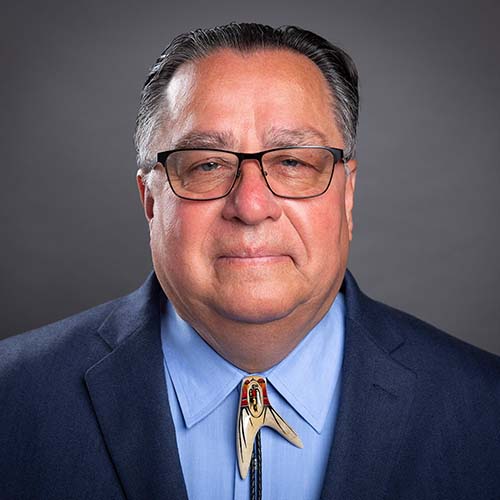 The stakes couldn't be higher. Your support keeps Native voices heard, Native stories told and Native sovereignty defended.
Stand with Warrior Journalism today.
Levi Rickert (Potawatomi), Editor & Publisher