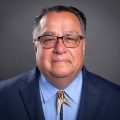
Opinion. Among the important topics discussed at the United Tribes of Michigan meeting in Lansing, Mich., on Thursday was the need for tribal communities to push back against the SAVE America Act, which would require proof of citizenship nationwide to register to vote and would overhaul voting laws.
The SAVE America Act (officially known as the Safeguard American Voter Eligibility Act) is a federal bill focused on changing how voting eligibility and registration work in U.S. federal elections.
The SAVE Act, backed by President Donald Trump, has been promoted by the president with claims of widespread voter fraud, though courts and election officials have repeatedly found no evidence of fraud at a scale that would affect national election outcomes. Recently, the SAVE Act gained the support of U.S. Sen. Susan Collins (R-ME). Her support would mark the 50th Republican vote in the GOP-controlled Senate, potentially allowing the legislation to advance, depending on Senate procedural rules.
Opponents maintain that the SAVE Act is unnecessary because it is already illegal for non-citizens of the United States to vote in federal elections.
Supporters describe the measure as an effort to strengthen election integrity. Critics counter that in Indian Country, the consequences could be severe.
The bill would require every citizen to visit an elections office in person and present documentary proof of U.S. citizenship — such as a passport or birth certificate — to register or re-register. Online and mail-in registration, widely used by millions of voters, would largely disappear under the proposal.
For Native Americans, geography may compound their ability to register to vote. For many Native voters, the nearest election office may be hundreds of miles away. In parts of Alaska, traveling to register could require air transportation. Many tribal citizens lack reliable transportation, cannot take time off work, or cannot afford travel to distant county seats — realities critics say the bill fails to address.
Many tribal citizens do not have the specific forms of documentation the Act would demand. Tribal IDs, which thousands of Native Americans rely on daily, typically do not list place of birth or other citizenship data required under the SAVE Act. As a result, they would not be acceptable forms of proof under the bill as written. Obtaining other documents — including birth certificates and passports — can be expensive and burdensome for Native people who already face systemic inequities.
For far too many Native Americans, the right to vote was never freely given. Centuries of exclusion, discrimination, and legal barriers kept Native people from the ballot box even after they were made U.S. citizens in 1924 through the Indian Citizenship Act. Tribal nations fought for and won critical protections under the Voting Rights Act, which outlawed discriminatory hurdles such as literacy tests and poll taxes that once locked Native voters out of elections.
The Native American Rights Fund (NARF) has raised concerns that the SAVE Act would disproportionately disenfranchise American Indian and Alaska Native voters by blocking them from registering unless they can produce documents many do not possess or that can cost hundreds of dollars to replace. According to NARF’s analysis, when states such as Kansas and Arizona imposed similar “show your papers” requirements, tens of thousands of eligible voters were prevented from registering, with tribal citizens disproportionately affected.
Advocates also point to the symbolic implications. Tribal IDs are issued by sovereign governments, yet under the proposed law they would not be sufficient to establish citizenship for voter registration. Some Native leaders argue that failing to recognize these IDs undermines tribal sovereignty and sends a troubling message about the legitimacy of Native citizenship.
Four Directions Native Vote has long challenged laws that create additional barriers to Native voter participation. OJ Semans, co-executive director of Four Directions, described the proposal as “highly dangerous.”
“The Safeguard American Voter Eligibility (SAVE) Act currently in Congress is highly dangerous legislation. The requirements within the bill would annihilate the Native vote turnout all across America within and without Indian Country,” Semans said in a statement to Native News Online. “Tribes and tribal organizations need to strongly oppose this legislation to their congressional delegation within the House and Senate.”
Opponents also argue that some women could face additional barriers if the name on their identification does not match the name on their birth certificate or passport — a situation that can occur after marriage or divorce.
If enacted, opponents warn, the Act could undo decades of progress and significantly reduce Native voter participation. Tribal leaders are urging consultation, as required under federal law, before any changes to voting procedures that affect tribal nations are adopted.
Our Native ancestors fought to be counted. Many tribal advocates say they cannot allow policies that could once again make it easier to silence their voices.
Wabanaki leaders and citizens should reach out directly to Sen. Susan Collins and make clear how the SAVE Act would affect tribal communities in Maine. In other states, Native voters should contact their senators and representatives and ask where they stand on the bill. Tribal governments should also formally request consultation and submit written opposition before the legislation advances further.
Thayék gde nwéndëmen — We are all related.