The Association on American Indian Affairs (the Association) has announced the release of Strengthening the Circle: Collaborating with Native Nations to Support Native Youth, a groundbreaking guidebook designed for state and local youth justice practitioners working with Native youth. This new resource offers practical strategies for identifying Native youth, building respectful partnerships with Native Nations, and embedding culturally grounded support within youth justice systems.
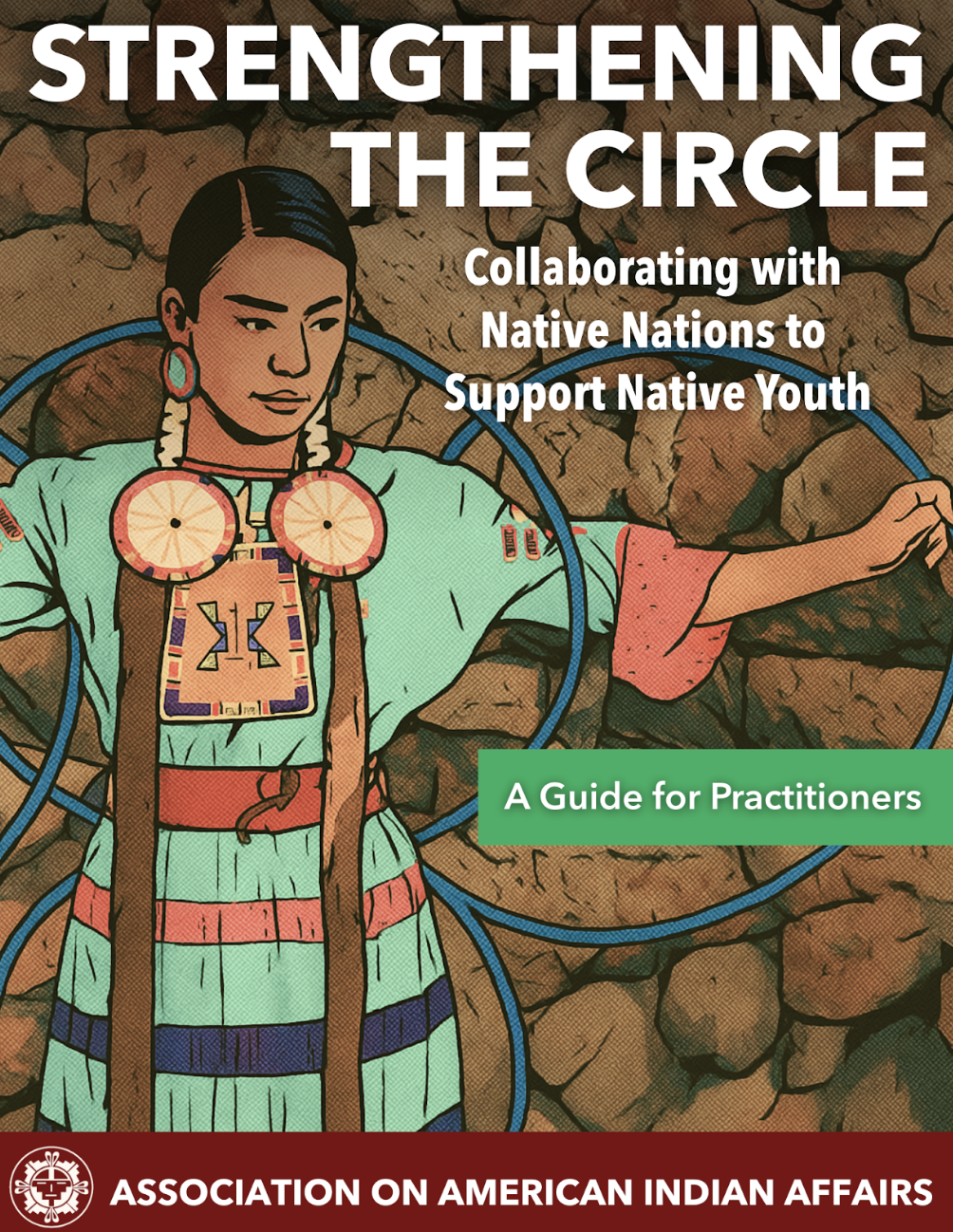
The launch aligns with Youth Justice Action Month (YJAM), a national initiative held each October to raise awareness and promote reforms that create safer, more equitable youth justice systems.
Native youth continue to be overrepresented in detention facilities and face distinct challenges in receiving fair treatment. They are nearly four times more likely than white youth to be incarcerated, and their Native Nations are often not notified or involved in their cases. Strengthening the Circle aims to address these gaps by equipping professionals with actionable steps to collaborate with Native Nations as sovereign governments and to ensure that Native youth have access to culturally appropriate services.
Research from the National Indian Child Welfare Association, the Substance Abuse and Mental Health Services Administration, and other public health studies has shown that strong connections to cultural practices, family, and Native Nations serve as protective factors—supporting resilience, well-being, and long-term success for Native youth.
Justice for Native youth is not only about the outcomes for individuals—it is about the future of sovereign Native Nations and the effectiveness of state systems. When systems disregard identity, Native youth lose connection to their cultures, families, and Nations. This disconnection perpetuates harm and contributes to a long-standing pattern of erasure.
By partnering with Native Nations, states can better allocate limited resources, reduce recidivism, and create healthier, more sustainable outcomes by leveraging the strength of culture and community. Strengthening the Circle provides practitioners with tools to support these changes.
“This guide is a call to action for youth justice professionals,” said Kim Mettler, citizen of the Mandan, Hidatsa and Arikara Nation and Next Generations Director for the Association. “Too many Native youth are pulled into systems that fail to recognize their identity or involve their Nations. This guide offers simple but powerful tools to change that pattern—by centering Native youth in their relatives, cultures, and Nations where they belong.”
“Protecting Native youth is essential to protecting the sovereignty of Native Nations,” said Shannon O’Loughlin, citizen of the Choctaw Nation, Chief Executive and Attorney for the Association. “When Native youth are disconnected from their cultures and communities, entire Nations suffer. This guide serves as an educational tool for non-Native systems, shifting the responsibility of learning about Native sovereignty and culture onto those who work with Native youth.”
Kim Mettler will present a 50-minute session on Strengthening the Circle on October 15 at 3:10 p.m. PT during the 6th Annual Indigenous Children, Youth and Families Conference, hosted by the Washington State Department of Children, Youth and Families. Additionally, on October 23 at 10:00 a.m. PT, she will moderate a one-hour panel discussion hosted by the Association in partnership with the Annie E. Casey Foundation. The panel will feature Annie Brokenleg, coordinator for South Dakota’s State Juvenile Diversion and JDAI committees, and consultant Nick Costales.
Both events are open to the public, with content tailored to local, county, and state youth justice professionals as well as community partners.
Registration details are available at www.Indian-Affairs.org/NativeYouthJustice.html.
The guidebook, funded by the Annie E. Casey Foundation, is available for free download at www.Indian-Affairs.org/NativeYouthJustice.html, where practitioners can also access surveys and request training or technical assistance.
“Together, we can strengthen the circle to support Native youth,” said O’Loughlin.
More Stories Like This
Native News Weekly (August 25, 2024): D.C. BriefsUS Presidents in Their Own Words Concerning American Indians
This Day in History — Dec. 29, 1890: Hundreds of Lakota Killed During the Wounded Knee Massacre
Monday Morning (December 29, 2025): Articles You May Have Missed This Past Weekend
Native News Weekly (December 28, 2025): D.C. Briefs
Help us defend tribal sovereignty.
At Native News Online, our mission is rooted in telling the stories that strengthen sovereignty and uplift Indigenous voices — not just at year’s end, but every single day.
Because of your generosity last year, we were able to keep our reporters on the ground in tribal communities, at national gatherings and in the halls of Congress — covering the issues that matter most to Indian Country: sovereignty, culture, education, health and economic opportunity.
That support sustained us through a tough year in 2025. Now, as we look to the year ahead, we need your help right now to ensure warrior journalism remains strong — reporting that defends tribal sovereignty, amplifies Native truth, and holds power accountable.
 The stakes couldn't be higher. Your support keeps Native voices heard, Native stories told and Native sovereignty defended.
Stand with Warrior Journalism today.
Levi Rickert (Potawatomi), Editor & Publisher