ZUNI, N.M. — Representatives from the Zuni Youth Enrichment Project, A:shiwi A:wan Museum & Heritage Center, and Zuni Pueblo community joined Indigenous knowledge keepers, culture bearers and leaders from around the world at the 2025 International Conference of Indigenous Archives, Libraries, and Museums, in Cherokee, North Carolina, earlier this month.
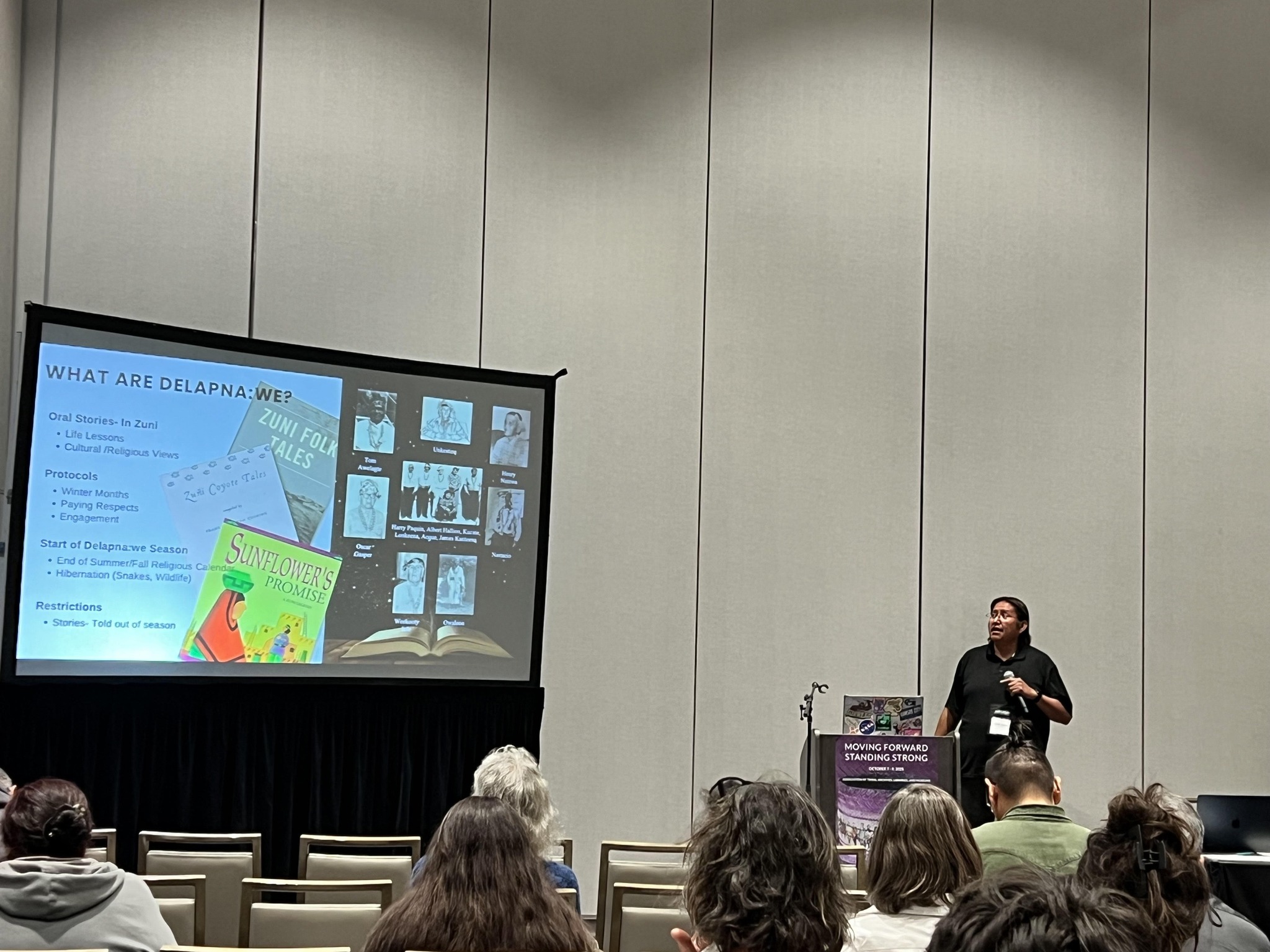
Hosted by the Association of Tribal Archives, Libraries and Museums on Oct. 7-9, the ATALM 2025 conference featured a session led by the Zuni group titled “The Delapna:we Project: Preserving the Art of Zuni Storytelling.” Their participation in the conference was made possible through generous support from the First Nations Development Institute.
Delapna:we are traditional oral stories that were a form of entertainment, intergenerational bonding, and education for Zuni people in the past. The Delapna:we Project in Zuni began as a collaboration between ZYEP, A:shiwi A:wan Museum, Edaakie Arts, ShiwiSun Productions, Zuni Public Library, KSHI Radio, and other Zuni community members—together, they are known as Ho’n A:wan Productions, now preparing for their eighth season.
“Presenting the Delapna:we Project at ATALM was a dream come true,” said Tara Wolfe, ZYEP’s program manager. “I was proud to represent the A:shiwi (Zuni) people for the creative work that is being done to ensure the survival of the language, culture, and traditions.
“I also was proud to showcase my Eastern Band of Cherokee Indians heritage to my colleagues, as my my late father and family are of the Cherokee people,” she added.
During their Oct. 8 session, A:shiwi A:wan Museum technician and cultural educator Curtis Quam, community partners Keith Edaakie and Keith Martinez, and Wolfe represented Ho’n A:wan Productions. They described how a decades-old collection of oral histories inspired the Delapna:we Project, a community-driven effort to preserve the Zuni language, revitalize traditional storytelling, and strengthen intergenerational connection through the performing arts.
In the 1960s, 19 Zuni elders recorded more than 400 hours of stories as part of an oral history project funded by philanthropist Doris Duke, and these invaluable recordings were preserved for decades at the American Folklife Center. In 2017, the recordings returned home, where the A:shiwi A:wan Museum digitized them.
Now, during each winter storytelling season, Zuni youth and families bring these stories to life, blending ancestral knowledge with modern creativity.
“To share the story of how the Doris Duke recordings are continuing to make an impact on the Zuni community was incredible,” Wolfe said. “I was able to dive more into the research of how the recordings were done, the history, and how we are working creatively to increase language continuum and practices.”
Martinez said he was pleased with the presentation, noting that the quartet received notable feedback from the attendees, including a woman who shared her community’s recording project.
“We definitely inspired others,” he said. “Another attendee from Santo Domingo Pueblo is preparing to start his own project, and he wanted to gather some expertise from us on building a team.”
According to Wolfe, this was one of the group’s goals for their session: to give attendees practical ideas for using storytelling, arts, and technology to engage youth, strengthen cultural identity, support wellness, and build connection.
“Our hope was that participants would leave feeling inspired to adapt and replicate similar efforts in their own communities,” Wolfe said.
The quartet offered their insights into how grassroots programs rooted in traditional Indigenous values can foster pride, resilience, and long-term positive outcomes for Native youth. They also shared data from Delapna:we Project participant surveys, showing the project’s measurable impact.
“Seventy-five percent of our parents and guardians report that their children speak more Zuni at home during the project,” Wolfe said. “Ninety percent of our youth say they believe speaking Zuni is important, 90 percent of youth say they feel hopeful about their future, and 100 percent of all respondents say Zuni stories are important to them.”
Along the way, attendees learned about the first two years of stage performances; two pandemic years that required a creative pivot, first to animation and then to a live-action film; a hybrid year with a movie, radio skit, puppet show, and coloring book; and the most recent two years, which saw a return to the stage. A favorite story involved the fifth season, during which the crew traveled to Taos and got snowed in.
“Keith talked about the hardships and triumphs of creating meaningful productions and bringing them to life,” Wolfe said. “He and Curtis both spoke about holding true to what the traditional Delapna:we stories are, and he and Keith Martinez talked about the importance of community voices and connection as well as the partnerships necessary to bring the project to life.”
“The experience was awesome,” Martinez said. “I can see the kids taking over and presenting this themselves one day.”
The Zuni group also was able to enjoy the rest of the conference. Martinez said he benefited from attending other sessions, including one dedicated to community engagement and outreach.
“I was amazed at who was in the room—folks from the First Nations Museum in Oklahoma City, the Pima Library and Language Preservation Team from Phoenix, and Muscogee Creek Productions from Oklahoma,” he said. “We all had similar initiatives but used different tools. The session really helped me see how to continuously build once you have the community engaged.”
Wolfe said she appreciated showing the crew some of the fair festivities, such as stickball games and the Junior Miss Cherokee pageant. The stickball games, in particular, demonstrated how the Tsalagi (Cherokee) language is being incorporated to engage young people.
“Our colleagues even picked up a new word—Ha-le-wi-sda—which means stop,” Wolfe remembered. “That was used numerous times throughout the game, and this showed that language immersion is happening within all Indigenous communities. This was a very powerful and meaningful experience for me.
“It was so inspiring to learn what other communities are doing, taking in all of the learning sessions, and to meet attendees from other communities who came to our session to learn from Zuni’s experiences.”
She added, “The Zuni crew returned empowered to continue into the next season of Delapna:we, strengthened by the sharing, feedback, and further commitment to language revitalization and cultural continuity.”
At Native News Online, our mission is rooted in telling the stories that strengthen sovereignty and uplift Indigenous voices — not just at year’s end, but every single day.
Because of your generosity last year, we were able to keep our reporters on the ground in tribal communities, at national gatherings and in the halls of Congress — covering the issues that matter most to Indian Country: sovereignty, culture, education, health and economic opportunity.
That support sustained us through a tough year in 2025. Now, as we look to the year ahead, we need your help right now to ensure warrior journalism remains strong — reporting that defends tribal sovereignty, amplifies Native truth, and holds power accountable.
The stakes couldn't be higher. Your support keeps Native voices heard, Native stories told and Native sovereignty defended.
Stand with Warrior Journalism today.
Levi Rickert (Potawatomi), Editor & Publisher
About The Author
Author:Levi RickertEmail:This email address is being protected from spambots. You need JavaScript enabled to view it.
Levi "Calm Before the Storm" Rickert (Prairie Band Potawatomi Nation) is the founder, publisher and editor of Native News Online. Rickert was awarded Best Column 2021 Native Media Award for the print/online category by the Native American Journalists Association. He serves on the advisory board of the Multicultural Media Correspondents Association. He can be reached at [email protected].




 The stakes couldn't be higher. Your support keeps Native voices heard, Native stories told and Native sovereignty defended.