




- Details
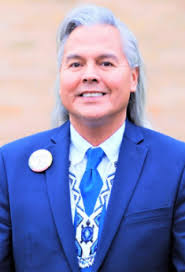
- By Aaron Payment
Guest Opinion. This year marks the 50th anniversary of the Indian Self-Determination and Education Assistance Act (ISDEAA), signed by President Gerald R. Ford on January 3, 1975. The act represents a clear shift from past federal policies of forced assimilation and paternalistic decision-making toward respecting Tribal Nations’ right to self-determination and empowering them to decide what is in their best interest.
Tribal citizen enrollment criteria are a matter of self-determination, and I respect Tribal Nations' right to set their own criteria. However, I urge them to honor other Tribal Nations’ eligibility criteria as well. Following the enactment of ISDEAA, Native Americans were no longer considered "wards of the state" or children in need of the "Great White Father’s care." The education provisions of this act followed years of strong advocacy for Indian education, particularly after the 1969 Kennedy Report by the Senate Indian Affairs Committee, which documented the lowest high school graduation rates for Native Americans compared to other populations, with the most pronounced disparity between Native and white students.

To this day, this disparity persists. This advocacy also led to the creation of the National Advisory Council on Indian Education (NACIE) in 1972. I have served, and continue to serve, as a Presidential appointee on the NACIE Council for ten years.
The enactment of ISDEAA occurred a year before the Michigan Indian Tuition Waiver Act (1976, amended in 1978), which provides college tuition for Native American residents of Michigan who have lived in the state for at least one year. Initially, the law in 1976 required a blood quantum of at least one-half Indian to qualify. This was amended in 1978 to lower the blood quantum to one-quarter as the state recognized that the one-half blood eligibility criterion was inconsistent with the enrollment criteria of Michigan’s Tribes. Therefore, aligning eligibility with tribal enrollment standards is not unprecedented.
Indian education is a treaty and trust obligation. The transfer and acceptance of this federal responsibility to educate Michigan Indians occurred in 1934 through the Comstock Agreement. This agreement, championed by Governor William Comstock, required the State of Michigan to accept the obligation of providing tuition as a replacement for the federal policy of Indian mission and boarding schools. However, the imposition of blood quantum as a discriminatory criterion is inconsistent with Tribal enrollment practices and has been legally discontinued at the federal level since the landmark case of Zar v. Barlow.
Despite this, the State of Michigan continues to impose a blood quantum requirement that conflicts with the citizenship criteria of nearly all 12 federally recognized Michigan Tribes. The late Native American scholar Dr. Vine Deloria Jr. (Standing Rock Sioux) observed, “Only Indians and dogs have to prove their pedigree.” No other racial group in Michigan is subjected to such practices.
Several years ago, as the Tribal Chairperson for the Sault Ste. Marie Tribe of Chippewa Indians, I, along with other Michigan Tribal leaders, discussed the need to raise awareness of the impacts of Indian mission and boarding schools. This effort gained momentum with the support of a Governor committed to meaningful action beyond mere platitudes.
Since then, Michigan Governor Gretchen Whitmer (D) has launched an administrative effort to better understand the policy of Indian boarding schools and their adverse impacts on Michigan Indian populations. Following the Governor’s lead, the Michigan legislature enacted bipartisan legislation and funding to conduct a comprehensive examination of the Indian mission and boarding school experience in Michigan and to propose policy initiatives aimed at healing and addressing the state’s role in forced assimilation.
In the coming weeks, after formal consultation with Tribes, the State of Michigan will publish a report summarizing the findings of this year-long examination, which included engagement with Tribal leaders, consultations, and guidance from representatives appointed by Tribal leadership. Four of Michigan’s 12 Tribal Nations elected Tribal leaders to represent their Tribes, while others appointed experts in repatriation and Indian history.
The result is expected to be an authentic and representative account of the adverse experiences of the past, paired with a positive focus on today’s and future generations. The recommendations aim to ensure history does not repeat itself.
A special acknowledgment is vital to fully appreciate, if not entirely understand, the devastating experiences of direct survivors of these policies.
As an elected Tribal leader, I will propose several policy recommendations for the State of Michigan to consider as part of its atonement for its role in forcibly assimilating our people. One fundamental policy change I recommend is ending the paternalistic practice of dictating which Tribal citizens qualify for the Michigan Indian Tuition Waiver.
This is a racist and discriminatory practice.
While blood quantum requirements were permitted under federal Indian policy until 1983, it is no longer acceptable for anyone other than a Tribal Nation to determine its citizenship criteria. I fully support any Tribe’s right to define its own criteria for citizenship, and I ask for the same respect toward my Tribal Nation’s eligibility criteria.
In addition to atonement for survivors, their families, and descendants, and to honor the state’s acceptance of its treaty and trust obligation for the education of Michigan Natives, I urge the State of Michigan to amend the legislation for the Michigan Indian Tuition Waiver to base eligibility on Tribal citizenship. This would be a significant step toward equity and justice in education for Native Americans in Michigan.
Dr. Aaron A Payment is an elected Tribal Council member for his tribe but submits this Opt Ed and Federal Indian Policy expert. The opinions expressed are his own. He can be reached at [email protected].
More Stories Like This
The Absence of October's Job Report Shows Why Native American Communities Need Better DataTribal IDs Are Federally Recognized. ICE Agents Are Ignoring Them.
Thanksgiving: Part of "Broken Circle Holiday"
Thanksgiving is a Tradition. It's Also a Lie
Decisions About Us, Without Us: Education Dismantling Ignores Tribal Nations
Help us defend tribal sovereignty.
At Native News Online, our mission is rooted in telling the stories that strengthen sovereignty and uplift Indigenous voices — not just at year’s end, but every single day.
Because of your generosity last year, we were able to keep our reporters on the ground in tribal communities, at national gatherings and in the halls of Congress — covering the issues that matter most to Indian Country: sovereignty, culture, education, health and economic opportunity.
That support sustained us through a tough year in 2025. Now, as we look to the year ahead, we need your help right now to ensure warrior journalism remains strong — reporting that defends tribal sovereignty, amplifies Native truth, and holds power accountable.
 The stakes couldn't be higher. Your support keeps Native voices heard, Native stories told and Native sovereignty defended.
Stand with Warrior Journalism today.
Levi Rickert (Potawatomi), Editor & Publisher