EAGLE BUTTE, SD — The Cheyenne River Youth Project continued its series of seasonal Lakota culture camps in August with Koskalaka Woaphiye Wichothi (young men’s healing camp). The camp took place on Aug. 15-17 at Wakanyeja Kin Wana Ku Pi (The Children Are Coming Home), CRYP’s 39-acre property adjacent to Bear Butte State Park.
“I got to do everything I wanted to do this summer in just one weekend at that camp,” said one of the seven youth participants, who ranged in age from 13 to 17.
“This is a powerful statement,” said Julie Garreau, CRYP’s founder and chief executive officer. “It demonstrates that providing access to cultural heritage and sacred places is critical for the healthy development of our young people. It fosters pride and strength in a way that is essential for them to have a more resilient future.”
The two-night camp focused on what it means to be a Lakota Wicasa (man), incorporating lessons about healthy expressions of masculinity, effective ways to manage emotions and channel them into positive action, and how to connect with other young men through healthy activities. CRYP Arts Manager Wakinyan Chief and Garden & Facilities Manager Dalton Fischer guided the group, joined by Lakota culture bearer and mentor Seth Picotte.
During the weekend, campers participated in inípi (Lakota sweat lodge), learning that the ceremony is not only about cleansing but also about letting go. They also listened to the story of Pte San Win (White Buffalo Calf Pipe Woman), and learned how Lakota spirituality rests on the sacred balance of the divine feminine and masculine.
“A true Lakota Wicasa is a provider, protector and defender of women, children and elders,” Wakinyan Chief said. “He is never a predator.”
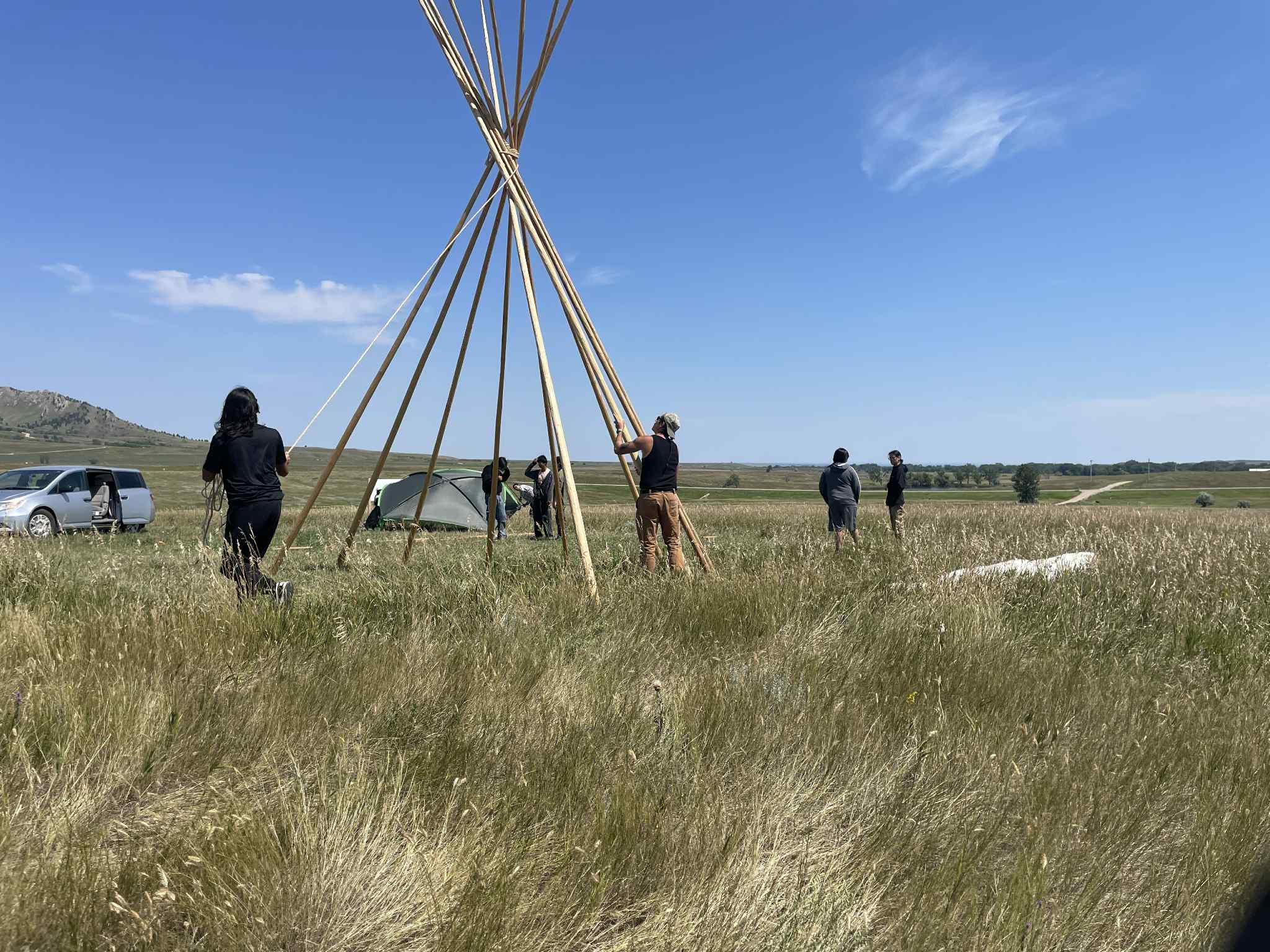
Campers also hiked to the 4,426- and 7,242-foot summits of sacred Matȟó Pahá (Bear Mountain, or Bear Butte) and Heȟáka Sápa (Black Elk Peak), and engaged in individual hanbléčiya (meditation). In their surveys, campers said other highlights included learning how to put up a tipi, swimming at Sylvan and Pactola lakes, connecting around the campfire, and learning more about Lakota culture from a male perspective.
“Camp was an amazing experience,” said one camper. Another said, “It was helpful because it got me out of Eagle Butte and grounded with nature,” while a third added, “I want to experience more stuff like this.”
When asked if they have male role models in their lives, many campers included Wakinyan Chief and Dalton Fischer on their lists. One observed, “I didn’t, until meeting Wakinyan.”
They also shared that they believe a good Lakota Wicasa will be respectful and honest, help his relatives, provide for his family, avoid alcohol and drugs, and live Wólakhota (in keeping with Lakota values and lifeways). One camper said he wants to become “a kind man, who is strong, honest and humble,” and another said he wants to be “strong, courageous, respectful and honest.”
This is CRYP’s second seasonal camp of 2025. In early June, teen participants in the Wetu (Spring) Camp hiked the Bear Butte Summit Trail and learned more about the ecology of the untouched mixed-grass prairie—including the traditional foods and medicines that grow wild on CRYP’s certified-organic property.
Next on deck: A fall young men’s healing camp for the teens who complete Lakol Wicho’han kin Kikoskalakapi, CRYP’s Lakota Culture Internship. According to Wakinyan Chief, the camp will include a shield medallion workshop with Austin Red Dog, who also will teach Lakota language and culture. Additional Lakota Wicasa mentors will take part in the camp, as well.
The nearly 37-year-old nonprofit youth organization purchased Wakanyeja Kin Wana Ku Pi in 2024—reclaiming access to sacred places long separated from the Lakota people by reservation boundaries. After the formal naming and dedication ceremony in April, CRYP went on to host healing camps for young women and young men at the property.
“When we purchased these 39 acres across from Matȟó Pahá, some might have seen it as a risk,” Garreau said. “We saw it as a strategic investment in our youth—a sacred act of healing that would provide a safe, permanent space for cultural reconnection and reclamation.
“Wakanyeja Kin Wana Ku Pi is proving the value of our investment with every camp,” she continued. “The results have been transformative, and at CRYP, we remain deeply dedicated to investing in spaces that heal and empower the next generation so we can move forward as a strong nation.”
Garreau said she and the CRYP team are looking forward to offering even more culture camps, teen internship activities and workshops. The property also will continue to serve as a convenient home base for field trips to sacred sites such as Heȟáka Sápa, Maka Oniye (Breathing Earth/Wind Cave) and Matȟó Tipila (Bear Lodge/Devils Tower).
Help us defend tribal sovereignty.
At Native News Online, our mission is rooted in telling the stories that strengthen sovereignty and uplift Indigenous voices — not just at year’s end, but every single day.
Because of your generosity last year, we were able to keep our reporters on the ground in tribal communities, at national gatherings and in the halls of Congress — covering the issues that matter most to Indian Country: sovereignty, culture, education, health and economic opportunity.
That support sustained us through a tough year in 2025. Now, as we look to the year ahead, we need your help right now to ensure warrior journalism remains strong — reporting that defends tribal sovereignty, amplifies Native truth, and holds power accountable.
The stakes couldn't be higher. Your support keeps Native voices heard, Native stories told and Native sovereignty defended.



 The stakes couldn't be higher. Your support keeps Native voices heard, Native stories told and Native sovereignty defended.