- Details
- By Kaili Berg
The Twenty-Nine Palms Band of Mission Indians has secured federal recognition for one of its most sacred sites.
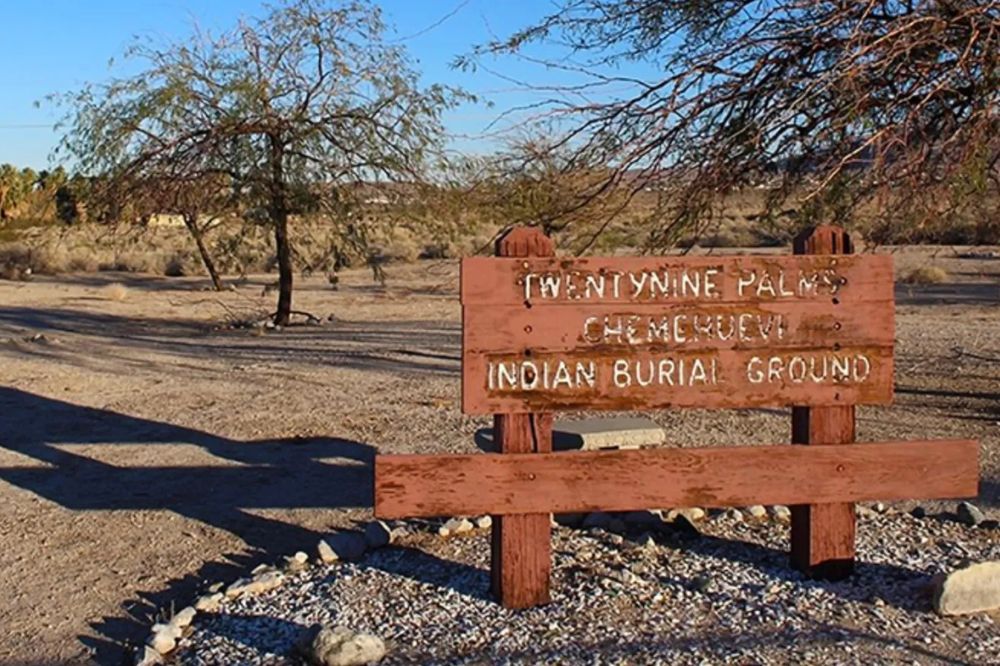
The U.S. National Park Service confirmed this week that the Tribe’s ancestral Chemehuevi cemetery in Twentynine Palms has been added to the National Register of Historic Places.

The cemetery holds the remains of the Tribe’s Chemehuevi ancestors and represents centuries of history in the southeastern California desert, long before the arrival of settlers or government surveys.
For thousands of years, the Chemehuevi people were nomadic, traversing what is now California, Utah, Nevada, and Arizona, following embedded migratory foot trails that still mark the land.
In the 1860s, they settled at the Oasis of Mara at the foot of the Little San Bernardino Mountains, an area that today is part of Joshua Tree National Park.
“Burial grounds are significant to Indigenous culture and our tribal identity; our ancestors are part of this land for all eternity,” said Tribal Chairman Darrell Mike in a statement. “The Tribe has a rich history throughout the entire southeastern desert region dating back since time immemorial. The National Park Service designation links our tribal heritage to these expansive lands and the cemetery is just one location that will be preserved for generations.”
The reservation lands of the Twenty-Nine Palms Band of Mission Indians today span both San Bernardino and Riverside counties, separated by Joshua Tree National Park.
The Tribe’s traditional use area stretches from southern Death Valley to the Salton Sea, and from west of Victorville to the borders of Nevada and Arizona.
The National Register listing ensures the cemetery’s historical and cultural significance will be formally acknowledged and protected, preserving an essential part of the Tribe’s story, and the region’s, for future generations.
More Stories Like This
NCAI Passes Two Emergency Resolutions on Immigration Enforcement ActivitiesChickasaw Lighthorse Police Officer named Indian Country Law Enforcement Officer of the Year
Indian Gaming Association Rallies Broad Coalition Against Sports Event Contracts It Calls Illegal Threat to Tribal Sovereignty
Navajo Resources and Development Committee Issues Notice on Livestock Inspection Requirements
American Prairie, Tribal Coalition Files Protest Over Rescinded Grazing Rights
Help us defend tribal sovereignty.
At Native News Online, our mission is rooted in telling the stories that strengthen sovereignty and uplift Indigenous voices — not just at year’s end, but every single day.
Because of your generosity last year, we were able to keep our reporters on the ground in tribal communities, at national gatherings and in the halls of Congress — covering the issues that matter most to Indian Country: sovereignty, culture, education, health and economic opportunity.
That support sustained us through a tough year in 2025. Now, as we look to the year ahead, we need your help right now to ensure warrior journalism remains strong — reporting that defends tribal sovereignty, amplifies Native truth, and holds power accountable.
 The stakes couldn't be higher. Your support keeps Native voices heard, Native stories told and Native sovereignty defended.
Stand with Warrior Journalism today.
Levi Rickert (Potawatomi), Editor & Publisher