- Details
- By Native News Online Staff
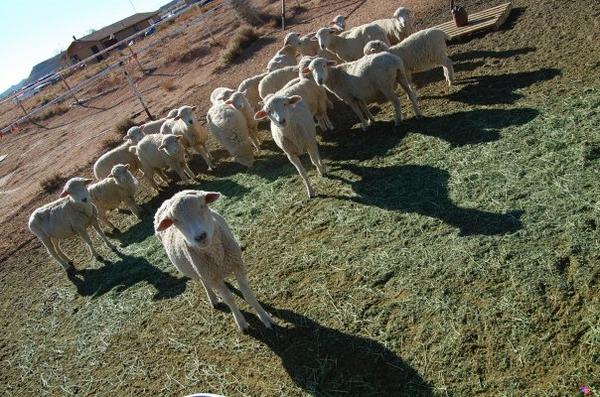
The Navajo Resources and Development Committee (RDC) is informing Navajo Nation livestock owners about a memorandum issued Feb. 9 by the Division of Natural Resources and the Department of Resource Enforcement. The memorandum clarifies the livestock inspection process and outlines the documentation required to legally obtain a resale permit and transport livestock to auction.
RDC Chair Brenda Jesus emphasized that the inspection requirements promote responsible livestock management and help protect rangelands throughout the Navajo Nation.
“Navajo Nation laws are intended to protect our land from overgrazing, exceeding livestock carrying capacity, and livestock theft,” said Chair Jesus. “These guidelines ensure livestock owners can follow the proper procedures while safeguarding our grazing resources for future generations. The RDC is also working to update laws so they align with current governmental structures and operations.”

According to the memorandum, livestock owners must obtain a certificate of inspection—also known as a resale permit—before transporting livestock to a sale destination, in accordance with 3 N.N.C. § 1256. The certificate verifies ownership and confirms that the individual transporting or selling the livestock is authorized to do so.
Under 3 N.N.C. § 1254, livestock owners must provide a list of brands or other appropriate proof of ownership. Livestock inspectors are responsible for verifying that the individual in possession of the livestock is the owner or otherwise authorized to sell the animals.
The memorandum addresses four key documentation areas related to livestock inspections: grazing permits, tally counts, livestock inventory, and branding. It explains that grazing permits and related ownership documents establish proof of brand ownership and authorized grazing areas, supporting responsible land use and permit accountability.
It further clarifies that tally counts and livestock inventories are not required to verify ownership when issuing resale permits. Tally counts are conducted to ensure grazing capacity is not exceeded, while livestock inventories assist with theft investigations and missing livestock reports.
Additionally, the memorandum specifies that the “-N” brand is required only for livestock bearing three-character brands on the left side of the animal and is not required for all state-branded livestock.
The Resources and Development Committee encourages livestock owners to review the full memorandum for detailed information on acceptable proof-of-ownership documentation and livestock inspection procedures.
More Stories Like This
‘This is who we are’: Northern Cheyenne Tribe reclaims cultural belongings from UMIndian Gaming Association Condemns CFTC Over Prediction Markets, Warns of Threat to Tribal Sovereignty
Committee Advances 20% Increase to Navajo Child Support Guidelines
Navajo Committee Advances $84M Transportation Improvement Plan
NCAI Passes Two Emergency Resolutions on Immigration Enforcement Activities
Help us defend tribal sovereignty.
At Native News Online, our mission is rooted in telling the stories that strengthen sovereignty and uplift Indigenous voices — not just at year’s end, but every single day.
Because of your generosity last year, we were able to keep our reporters on the ground in tribal communities, at national gatherings and in the halls of Congress — covering the issues that matter most to Indian Country: sovereignty, culture, education, health and economic opportunity.
That support sustained us through a tough year in 2025. Now, as we look to the year ahead, we need your help right now to ensure warrior journalism remains strong — reporting that defends tribal sovereignty, amplifies Native truth, and holds power accountable.
 The stakes couldn't be higher. Your support keeps Native voices heard, Native stories told and Native sovereignty defended.
Stand with Warrior Journalism today.
Levi Rickert (Potawatomi), Editor & Publisher