- Details
- By Levi Rickert
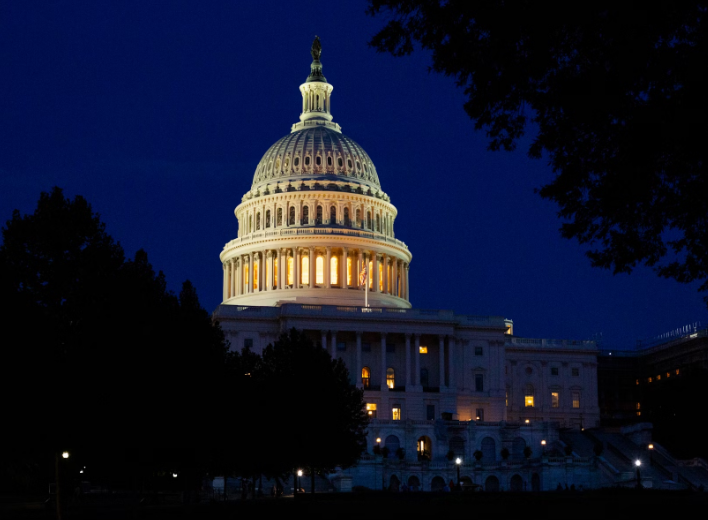
The U.S. Senate on Friday evening passed a broad government funding package intended to keep most federal agencies operating through the end of the fiscal year, but unresolved disputes over Department of Homeland Security (DHS) funding make a partial federal government shutdown likely to begin this weekend.
Senators approved the bipartisan measure by a 71–29 vote, sending it to the House of Representatives, which is currently out of session and is not expected to take up the bill until Monday. Because current funding expires at midnight Friday, some federal agencies could begin shutdown procedures early Saturday morning.
The Senate-approved agreement, backed by President Donald Trump and negotiated by congressional leaders from both parties, would fund most federal departments through September 30, 2026, including Defense, State, Health and Human Services, and Transportation. Funding for DHS — which includes Immigration and Customs Enforcement and Customs and Border Protection — was excluded from the long-term deal and instead extended for two weeks to allow further negotiations.
The split reflects deep political divisions over immigration enforcement policy. Democrats have pushed for significant reforms at DHS, including independent oversight measures, mandatory body cameras for agents, and restrictions on certain enforcement tactics following public outcry over two recent fatal encounters involving federal immigration officers. Republican leaders have opposed many of those proposals, complicating efforts to finalize full-year DHS funding.
Senate Majority Leader Chuck Schumer and Republican leaders agreed to temporarily separate DHS funding from the broader spending package as a way to avoid a longer government shutdown. However, because the House has not yet voted on the legislation, a brief partial shutdown — expected to last through the weekend — appears likely.
For tribal nations and Native communities, even short-term shutdowns can have serious consequences. Past funding lapses have disrupted services provided by the Bureau of Indian Affairs and the Indian Health Service, delayed tribal infrastructure projects, and furloughed federal employees who administer programs critical to Indian Country.
Democrats have indicated they will use the two-week DHS extension to press for reforms they say would improve accountability and public safety, while Republicans continue to emphasize border security funding and oppose new mandates on enforcement agencies.
House Speaker Mike Johnson has said lawmakers will return next week to consider the Senate-passed measure. Tribal leaders and advocates are closely monitoring developments, citing the potential impact on federal services that Native communities rely on.
More Stories Like This
Native News Weekly (August 25, 2024): D.C. BriefsNavajo Nation Mourns the Passing of Former Vice President Rex Lee Jim
Deb Haaland Earns Endorsement From Communications Workers of America Local 7076
University Soccer Standout Leads by Example
Two Native Americans Named to Democratic Congressional Campaign Committee's“Red to Blue” Program
Help us defend tribal sovereignty.
At Native News Online, our mission is rooted in telling the stories that strengthen sovereignty and uplift Indigenous voices — not just at year’s end, but every single day.
Because of your generosity last year, we were able to keep our reporters on the ground in tribal communities, at national gatherings and in the halls of Congress — covering the issues that matter most to Indian Country: sovereignty, culture, education, health and economic opportunity.
That support sustained us through a tough year in 2025. Now, as we look to the year ahead, we need your help right now to ensure warrior journalism remains strong — reporting that defends tribal sovereignty, amplifies Native truth, and holds power accountable.
 The stakes couldn't be higher. Your support keeps Native voices heard, Native stories told and Native sovereignty defended.
Stand with Warrior Journalism today.
Levi Rickert (Potawatomi), Editor & Publisher