A new state law aimed at preventing suicides on California bridges and overpasses will take effect in January, alongside another measure allowing San Bernardino County to expand its local parkland.
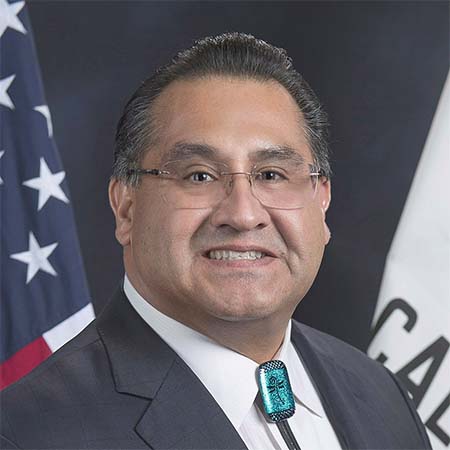
The suicide prevention law, AB 440 by Assemblymember James C. Ramos, requires the California Department of Transportation, in consultation with the Department of Public Health, to identify best practices for deploying countermeasures designed to prevent suicides on state bridges and overpasses.
The issue has hit close to home in the Inland Empire. In September 2024, two Rancho Cucamonga teenagers died by suicide on the Interstate 210 Freeway at the Haven Avenue overpass.
AB 440 builds on Ramos’ earlier efforts to expand mental health services and suicide prevention statewide. In 2020, his AB 2112 established the Office of Suicide Prevention as California’s lead agency for coordinating and streamlining suicide prevention efforts and resources.
“California must do more to confront the great tragedy of suicide in our communities,” Ramos said. “Suicide strikes every community, every age group. Sadly, it is the third leading cause of death for persons 10 to 24 years of age, and the second leading cause of death among Native American youth 10 to 20 years of age. Individuals in distress often just need a pause to reconsider actions that can lead to irreversible harm for themselves and their loved ones. Barriers on bridges and other interventions can create that pause and prevent tragedies.”
Studies have shown physical barriers are effective in reducing suicides at high-risk locations. Research published in the Journal of Preventive Medicine found such barriers significantly reduce suicide attempts, and a Senate Health Committee analysis reported that the installation of a net on the Golden Gate Bridge led to a reduction in suicides.
We did not attain our online goal. Please support our year-end campaign. CLICK HERE TO DONATE.

“Gov. Newsom’s signature on AB 440 is an important statement of California’s commitment to preventing suicide,” said Lyn Morris, CEO of Didi Hirsch. “Making our roads and bridges safer for people in crisis is a meaningful action that will prevent lives from being lost and families from being shattered. This bill also shows that with collaboration and dedication California can take on even greater leadership in suicide prevention. We are grateful for Assemblymember Ramos’ commitment to bringing these resources to California communities.”
Didi Hirsch sponsored the bill. Supporters include the Bridge Rail Association, California Alliance of Child and Family Services, California Hospital Association, California Police Chiefs Association, the National Alliance on Mental Illness California, San Bernardino County, the city of Rancho Cucamonga and United Domestic Workers/AFSCME Local 3930, among others.
Another Ramos measure taking effect, AB 385, addresses long-standing restrictions on a 4.2-acre portion of Glen Helen Regional Park that was purchased decades ago with state grant funds. Under prior law, San Bernardino County could not repurpose or exchange the land without legislative approval.
The new law authorizes the county to dispose of the restricted land if it replaces it with parkland of equal or greater size and recreational value.
“My bill grants state authorization for the county to move forward with a major project to enhance the region’s quality of life and boost the local economy,” Ramos said. “The proposed multiuse project will bring new amenities, including expanded recreational opportunities for residents and visitors alike. This is an important local-state collaboration that I welcome.”
Other Ramos bills signed this year include three tribal measures enacted on California Native American Day: AB 221, which streamlines the tribal grant process; AB 977, which addresses the repatriation of Native American human remains; and AB 1369, which reinforces students’ rights to wear tribal regalia at high school graduation ceremonies.
Two additional measures, AB 31 and AB 53, were included in the 2025–26 state budget. AB 31 creates a pilot program granting state peace officer status to tribal law enforcement officers, while AB 53 establishes a new state income tax exemption of up to $20,000 for military retirees. California had previously been the only state without tax relief for veterans. Eligible retirees may claim the exemption on their 2025 tax returns.
More information on these measures is available at Ramos’ legislative website.
More Stories Like This
Native News Weekly (August 25, 2024): D.C. BriefsNavajo Nation Mourns the Passing of Former Vice President Rex Lee Jim
Deb Haaland Earns Endorsement From Communications Workers of America Local 7076
University Soccer Standout Leads by Example
Two Native Americans Named to Democratic Congressional Campaign Committee's“Red to Blue” Program
Help us defend tribal sovereignty.
At Native News Online, our mission is rooted in telling the stories that strengthen sovereignty and uplift Indigenous voices — not just at year’s end, but every single day.
Because of your generosity last year, we were able to keep our reporters on the ground in tribal communities, at national gatherings and in the halls of Congress — covering the issues that matter most to Indian Country: sovereignty, culture, education, health and economic opportunity.
That support sustained us through a tough year in 2025. Now, as we look to the year ahead, we need your help right now to ensure warrior journalism remains strong — reporting that defends tribal sovereignty, amplifies Native truth, and holds power accountable.
 The stakes couldn't be higher. Your support keeps Native voices heard, Native stories told and Native sovereignty defended.
Stand with Warrior Journalism today.
Levi Rickert (Potawatomi), Editor & Publisher