- Details
- By Native News Online Staff
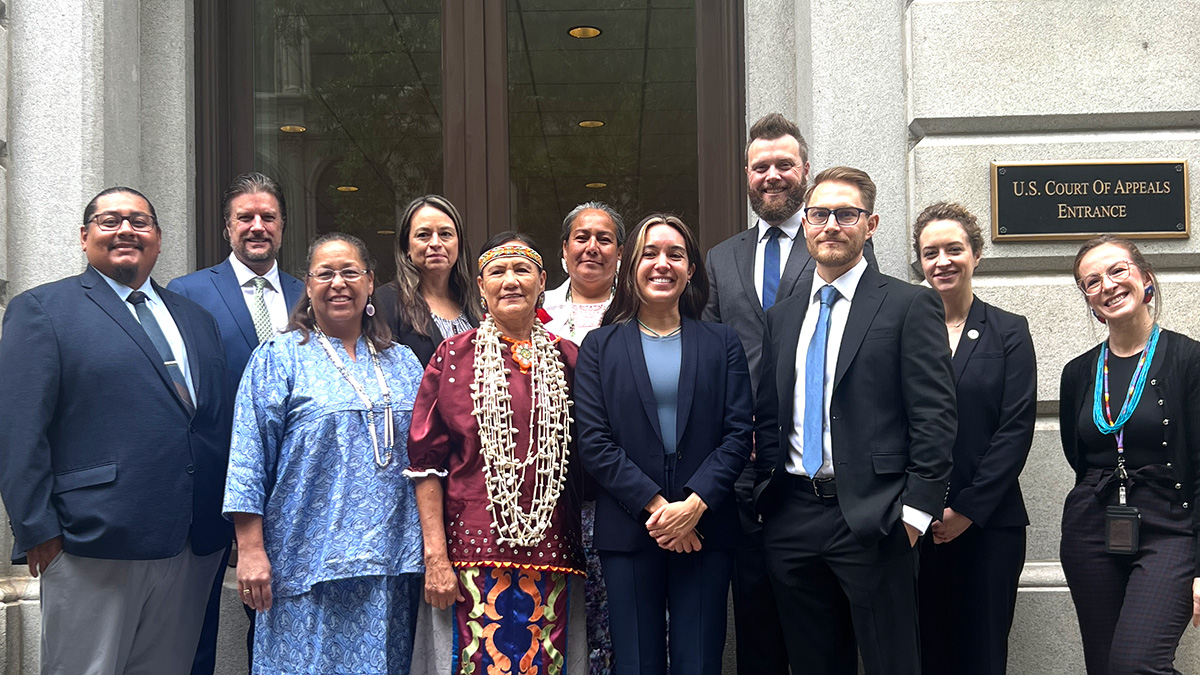
On September 10, 2025, the Winnebago Tribe of Nebraska presented oral argument before the United States Court of Appeals for the Fourth Circuit in Winnebago Tribe of Nebraska v. United States Department of the Army. The hearing marked the Tribe’s appeal of the U.S. District Court for the Eastern District of Virginia’s August 2024 dismissal of its lawsuit under the Native American Graves Protection and Repatriation Act (NAGPRA). The case seeks to secure the return of the remains of two Winnebago children, Samuel Gilbert and Edward Hensley, who are buried at the Carlisle Barracks Post Cemetery.
The District Court had ruled that NAGPRA did not apply to the remains of children who died at Carlisle and were interred there. In its appeal, the Winnebago Tribe argued that both the purpose and plain language of NAGPRA require the repatriation of Samuel and Edward to their Tribal homeland.
NARF Staff Attorney Beth Margaret Wright urged the appellate court to reverse the lower court’s decision, stating:
“The District Court should be reversed. NAGPRA’s purpose is to provide Indian Tribes with a statutory right to bring home the remains of their own citizens from places they do not belong. NAGPRA provides Indian Tribes additional rights to ensure repatriation is tailored to the unique needs of Indian Tribes.”
During oral argument, Winnebago’s counsel described the historical mistreatment of the children’s remains. After Samuel and Edward died at Carlisle, the U.S. government buried them without notice to—or consent from—their families or the Tribe. In 1927, the Army relocated the children's remains from their original burial site to the current location at Carlisle Cemetery. That process involved excavating the remains, placing them haphazardly into boxes, and reinterring them—again without notice or consent.
Wright explained that NAGPRA not only mandates the return of Native American human remains to Tribal communities, but also acknowledges the long history of disrespect and improper control by federal agencies and institutions. These actions, she emphasized, denied Tribes the dignity of burying their relatives in accordance with their cultural and spiritual traditions.
The Winnebago Tribe now seeks to bring Samuel and Edward home—more than 125 years after their deaths—to provide them with the proper burials they were unjustly denied.
More Stories Like This
Committee Advances 20% Increase to Navajo Child Support GuidelinesNavajo Committee Advances $84M Transportation Improvement Plan
NCAI Passes Two Emergency Resolutions on Immigration Enforcement Activities
Chickasaw Lighthorse Police Officer named Indian Country Law Enforcement Officer of the Year
Indian Gaming Association Rallies Broad Coalition Against Sports Event Contracts It Calls Illegal Threat to Tribal Sovereignty
Help us defend tribal sovereignty.
At Native News Online, our mission is rooted in telling the stories that strengthen sovereignty and uplift Indigenous voices — not just at year’s end, but every single day.
Because of your generosity last year, we were able to keep our reporters on the ground in tribal communities, at national gatherings and in the halls of Congress — covering the issues that matter most to Indian Country: sovereignty, culture, education, health and economic opportunity.
That support sustained us through a tough year in 2025. Now, as we look to the year ahead, we need your help right now to ensure warrior journalism remains strong — reporting that defends tribal sovereignty, amplifies Native truth, and holds power accountable.
 The stakes couldn't be higher. Your support keeps Native voices heard, Native stories told and Native sovereignty defended.
Stand with Warrior Journalism today.
Levi Rickert (Potawatomi), Editor & Publisher