




- Details
- By Professor Victoria Sutton
Guest Opinion. Holidays and the law around them may not be your first thought when you think about these official and unofficial events; but those who follow my work know I have written a couple of books on two different holidays. My first was The Legal Kiss (2012) for Valentine’s Day, and the second was Halloween Law (2012). So Groundhog Day seemed to warrant at least an investigation into legal issues that might involve it.
It turns out that most of the law around Groundhog Day is proposed law. There were a few attempts to recognize Groundhog Day as an official holiday or for other purposes, but most were unsuccessful.
Federal holidays can be created by the U.S. Congress under the authority of 5 U.S.C. § 6103. Groundhog Day has never been considered for designation as a federal holiday, so all federal offices, courts, and banks remain open on Groundhog Day, unless it falls on a weekend.
States, Cities, and Groundhog Day Recognition
Texas proposed a Groundhog Day state holiday in 1949, but H.S.R. No. 37 was introduced, read, and tabled on the same day. It was apparently an attempt at humor. Representative Zivley introduced the bill proposing to kill all the groundhogs so they would not see their shadow, which would bring more “misery” to the already snowbound people of Central Texas. Not everyone found it humorous.


A Chicago alderman had a “pet” proposal to create a Groundhog Day official city holiday to celebrate the groundhog. He claimed it made better predictions than the government and therefore should be honored. According to the Encyclopedia of Chicago for 1909, the year of the “Plan of Chicago,” purportedly taken from various news sources:
Alderman John J. “Bathhouse John” Coughlin of Chicago’s First Ward introduced a resolution that would make Groundhog Day a legal city holiday. Coughlin, a saloonkeeper who earned his nickname from his days as a rubber in a bathhouse, deemed the resolution his “pet measure.” Coughlin praised the groundhog, saying its “prognostications are invariably correct, which cannot be said of the men whom the government pays big wages to dope out the weather for us.”
After more than one attempt elsewhere, Alaska claimed the honor of being the only state to successfully pass an official state holiday on February 2 of each year. The only state to successfully pass a law making the day an official state holiday had everything except the groundhog — it is Marmot Day. Senate Bill 58 proclaims it is “[a]n Act establishing February 2 of each year as Marmot Day, and providing for an effective date.” And what a unifying idea this was: the bill passed unanimously, with 40 senators voting yea and zero senators voting no. It became effective July 10, 2009.
When Germans brought the tradition of using February 2 as the day to assess whether there would be an early spring, they had to adopt the groundhog instead of the badger or hedgehog used in Germany, at least according to traditional lore. It was not about the wisdom of the rodent in predicting the weather (whereas Indigenous tradition may look to animal behavior), but rather a concrete way to document whether the sun was shining — if the rodent had a shadow, then the sun was sufficiently shining.
It is not surprising, then, that in a place where marmots are most numerous (from Alaska to Montana), Alaska would choose the marmot, an alpine ground squirrel. The holiday is intended to celebrate Alaskan culture, and suitable school programs are encouraged by law. Apparently, Alaska was inspired to select the marmot by Owosso, Michigan, where they had been celebrating the marmot — also substituting for the groundhog — but on July 25. According to one source, “At 12:45 p.m., a marmot is positioned outside its hole, and if it goes into its hole, legend has it that summer is over; if it does not go into its hole, there will be one more month of summer.” There is no indication that Alaska uses the marmot for weather prediction.
Most disappointing, however, is Pennsylvania for not even trying. Not a single bill has ever been proposed, at least none that could be found, to create an official Groundhog Day state holiday. Punxsutawney, Pennsylvania — the home of the Punxsutawney Groundhog Club and the famous “Punxsutawney Phil,” the groundhog — deserves at least a try by its state legislature.
To read more articles by Professor Sutton go to: https://profvictoria.substack.
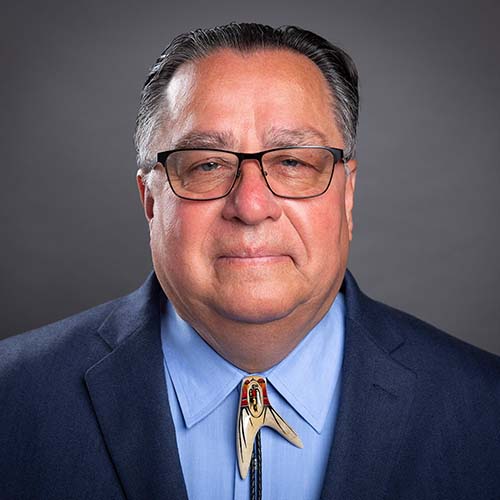
Professor Victoria Sutton (Lumbee) is a law professor on the faculty of Texas Tech University. In 2005, Sutton became a founding member of the National Congress of American Indians, Policy Advisory Board to the NCAI Policy Center, positioning the Native American community to act and lead on policy issues affecting Indigenous communities in the United States.
Help us defend tribal sovereignty.
At Native News Online, our mission is rooted in telling the stories that strengthen sovereignty and uplift Indigenous voices — not just at year’s end, but every single day.
Because of your generosity last year, we were able to keep our reporters on the ground in tribal communities, at national gatherings and in the halls of Congress — covering the issues that matter most to Indian Country: sovereignty, culture, education, health and economic opportunity.
That support sustained us through a tough year in 2025. Now, as we look to the year ahead, we need your help right now to ensure warrior journalism remains strong — reporting that defends tribal sovereignty, amplifies Native truth, and holds power accountable.
 The stakes couldn't be higher. Your support keeps Native voices heard, Native stories told and Native sovereignty defended.
Stand with Warrior Journalism today.
Levi Rickert (Potawatomi), Editor & Publisher