



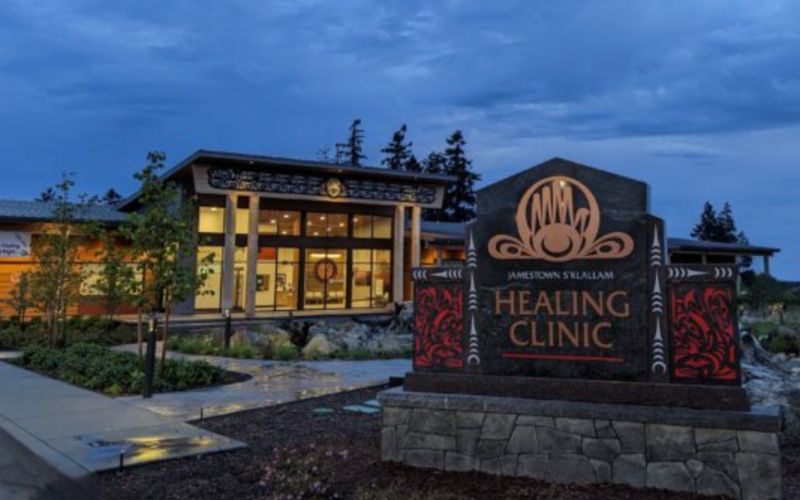
- Details
- By Jazmin Orozco Rodriguez for KFF Health News
The Trump administration is touting its $50 billion Rural Health Transformation Program as the largest-ever U.S. investment in rural health care. But the government made minimal mention of Native American tribes in sparsely populated areas and in need of significant improvements to health care access.
This article was originally published in KFF Health News.
Federally recognized tribes can’t directly apply for a share of the rural health fund — only states can. And states aren’t required to consider tribes’ needs. But state applications for the five-year payout show some states with significant Native American populations did so anyway.
Workforce development, technology upgrades, and traditional healing are a few of the initiatives specifically aimed at Native American communities that some states included in their applications, which were due to the Centers for Medicare & Medicaid Services on Nov. 5. The fund was a late addition to the One Big Beautiful Bill Act in response to worries about the harm the spending reductions in Republicans’ bill would have on rural hospitals’ finances.
Some states, including Idaho, Nevada, and Oregon, are also considering setting aside 3% to 10% of their federal payouts to distribute among tribes. Washington proposed setting aside $20 million per year.
Federally recognized tribes have direct relationships with the U.S. government, but state governments also allocate resources to tribes and can create policies that support tribal priorities. States and tribes share concerns about the effect that the massive GOP budget bill, which President Donald Trump signed into law in July, will have on the U.S. health system. The law is expected to reduce federal Medicaid spending by nearly $1 trillion and increase the number of uninsured by approximately 10 million people, according to KFF, a health policy information nonprofit that includes KFF Health News.
Catherine Howden, a CMS spokesperson, said that states are required to develop their applications in collaboration with key stakeholders, including the state governments’ tribal affairs offices or tribal liaisons, as well as “Indian health care providers, as applicable.” But these entities do not include tribal governments or official tribal representatives.
Tribes can apply for Rural Health Transformation Fund subgrants through their states. But during a recent call with federal health officials, tribal leaders expressed frustration about being regarded as just another stakeholder in the issue rather than sovereign nations. Tribal sovereignty guides most government-to-government consultations over proposed federal actions that would have a substantial effect on tribes.
“Even in a scenario where tribal consultation is required, the quality and quantity of that tribal consultation on a state-by-state basis is all over the place,” said Liz Malerba, director of policy and legislative affairs for the United South and Eastern Tribes Sovereignty Protection Fund, which advocates for tribal nations from Texas to Maine. Malerba is a citizen of the Mohegan Tribe.
Federal policy works better when tribal nations are directly eligible for funding that supports essential services in their communities, Malerba said, adding that tribal leaders are concerned that the reach of the program into their communities will vary considerably.
There are 574 federally recognized tribes and more than 7 million Native American and Alaska Native people in the U.S. The population faces a lower life expectancy and among the poorest health outcomes when compared with other demographics. The Indian Health Service, the federal agency responsible for providing health care to Native Americans and Alaska Natives, has been historically underfunded by Congress.
KFF Health News analyzed how 12 states with significant Native American populations took tribes into account as they developed plans for the pot of federal money.
Idaho, Washington, Montana, and Arizona were among the states that held tribal consultations or listening sessions ahead of the Nov. 5 application deadline.
In states that did not initiate input from tribes, some Native American leaders made sure their voices were heard in other public hearings. Jerilyn Church, CEO of the Great Plains Tribal Leaders’ Health Board, said she attended an October public meeting in South Dakota because she felt it was important for state leaders to consider how they could use the program’s resources on reservations. There are nine federally recognized tribes in the state, and Native American people make up 9% of the population.
“I felt like we needed to help be that advocate,” said Church, a citizen of the Cheyenne River Sioux Tribe.
In the proposed initiatives included in its rural fund application, South Dakota identified tribal community needs such as improved telehealth and funding for doula programs. It also said the state will continue meeting with the Great Plains tribal health board throughout the five-year funding cycle.
In Oklahoma — where more than 14% of the population is Native American, a higher share than in most other states — tribal representatives were invited to weigh in with the rest of the public when the state was gathering information for its application, the details of which have not been publicly released.
“We’ve welcomed input from any Oklahoman,” said state health department spokesperson Erica Rankin-Riley.
North Dakota identified tribes in its state as partners in the Rural Health Transformation Program and included initiatives such as expanding physician residency slots with tribal-specific rotations and opportunities for farm-to-table food distributions. But lawmakers there declined to support a proposal that would have pledged 5% of its federal allotment to tribes. There are five federally recognized tribes in the state, and Native Americans make up nearly 5% of the population.
Some states did include proposals to fund high-priority initiatives for tribes.
Washington’s application for the rural fund included an initiative focused on improving health among Native American communities. Its goals include investing in workforce development for tribes, better care coordination between tribes and rural hospitals, and $2.4 million annually to support Washington State University’s rural health education programs, including its Indigenous health program.
Alaska’s proposal included integrating Indigenous traditional healing in Alaska Native village clinics. It would include offering traditional-healing house calls, hands-on training for healers, and traditional-medicine training for health care providers and staff, according to the application.
One of Oregon’s five initiatives would support the state’s nine federally recognized tribes in improving health outcomes. The state estimates the initiative would require $20 million per year, or 10% of the Rural Health Transformation Program award.
Whether or not states identified funding for tribes or included tribal priorities in their proposals, tribes will be eligible to apply to their states for subgrants of the Rural Health Transformation Program money. While larger tribes that have more resources, such as grant writers and staff to implement programs, could benefit, smaller tribes may struggle to produce competitive applications.
Church said that the Great Plains Tribal Leaders’ Health Board will know the fruits of its labor when states are notified of their rural health fund allotments by the end of the year.
“Hopefully the work that we did, the advocacy that we did, and the outreach,” Church said, “will result in resources getting to our tribes.”
KFF Health News South Dakota correspondent Arielle Zionts contributed to this report.
Help us defend tribal sovereignty.
At Native News Online, our mission is rooted in telling the stories that strengthen sovereignty and uplift Indigenous voices — not just at year’s end, but every single day.
Because of your generosity last year, we were able to keep our reporters on the ground in tribal communities, at national gatherings and in the halls of Congress — covering the issues that matter most to Indian Country: sovereignty, culture, education, health and economic opportunity.
That support sustained us through a tough year in 2025. Now, as we look to the year ahead, we need your help right now to ensure warrior journalism remains strong — reporting that defends tribal sovereignty, amplifies Native truth, and holds power accountable.
 The stakes couldn't be higher. Your support keeps Native voices heard, Native stories told and Native sovereignty defended.
Stand with Warrior Journalism today.
Levi Rickert (Potawatomi), Editor & Publisher