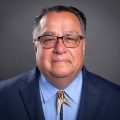
Chuck Hoskin Jr., principal chief of the Cherokee Nation, has been barred from speaking again on the floor of the Oklahoma House of Representatives following remarks in support of Medicaid expansion.
The decision came after Hoskin addressed lawmakers during Cherokee Nation Legislative Day on April 8, 2026, where he advocated for protecting Medicaid expansion in Oklahoma. His comments drew criticism from House leadership, particularly Republican Kyle Hilbert, who is the speaker of the Oklahoma House of Representatives. Hilbert said the speech crossed into political advocacy.
“What I had concern with was going on to the House floor and making a political speech,” Hilbert said, adding that Hoskin took a position “knowingly contrary to the majority” of the chamber.
Hilbert announced that Hoskin would no longer be invited to speak on the House floor, citing what he described as a pattern of “politically pointed speeches.” Despite the decision, the speaker indicated he intends to continue working with the Cherokee Nation on policy matters.
The Cherokee Nation released the following response to the announcement:
“Given the gravity in which the speed of the Medicaid Expansion bills were developing, and the vast impact repealing these bills has on the Cherokee Nation — $162 Million that goes directly into improving the tribe’s health care system and $222 Million into the northeastern Oklahoma economy – Chief Hoskin’s speech on the House Floor was timely, respectful, and measured. Chief Hoskin has great respect for Speaker Hilbert and considers him a friend.”
The controversy underscores ongoing tensions between tribal leaders and state officials, particularly over healthcare policy. Medicaid expansion has been a key issue in Oklahoma politics, with some Republican lawmakers seeking to scale back or restructure the program, while tribal governments have emphasized its importance to Native communities.
Hoskin has been a vocal advocate for healthcare access, often highlighting the role Medicaid plays in supporting tribal health systems and rural populations. His remarks at the Capitol were part of broader efforts by tribal leaders to influence state policy decisions that directly affect their citizens.
While the move to bar Hoskin from the House floor is largely symbolic, it reflects deeper political divisions between state leadership and tribal nations. It also raises questions about the role of tribal voices in state policymaking, particularly on issues where tribal and state priorities diverge.