



- Details
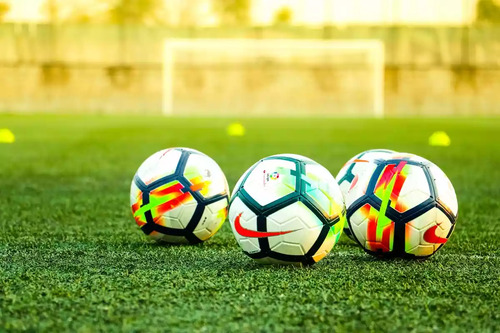
The second ball in a game (not just who hits it first) is what creates the value of the second ball. The second ball indicates whether a team will continue applying pressure or transition as the opposing team gains momentum. Although the second ball is often uninteresting to watch, it is here that teams must make choices that can ultimately determine whether they win the match.
Compactness Creates Recovery Chances
The teams that are most successful when they compress vertically will be most advantageous in competing for the second ball. When defenders and midfield players play close together, they have the ability to react to one another in order to immediately defend each other. As with well-formed betting systems (such as the Melbet APK), timing and closeness are critical components during times of duress and high pressure. For instance, in their peak performance years, nearly all 50/50 opportunities were considered attacking opportunities because of the use of space that Liverpool's team was using on the ball.
First Duels Set Up the Second
Whether a team wins their second ball will depend largely on how well they manage the first ball. The area of play after losing an initial aerial battle can determine the second action. As important as the intended outcome is, so too is the intention of winning the first ball.
The following details always seem to have an effect on the possession of the second ball:
- Centre-backs and midfielders clearly communicate with each other about the first ball.
- Aerial battles are directed with purpose by the attacking players.
- Teams line up staggered to prepare for the potential of both the flick-on and the knock-down.
When all three of the above items are done correctly, the location of the second ball is then somewhat predictable. With that predictability comes better chances of securing the second ball. First touches need not be perfect to secure the second ball; what must be perfect is control over what follows the first touch.
Coordinated Midfield Pressure
The second ball is the most likely to be contested when the midfield players become the first line of the attack. Pressing is a deliberate tactic for midfielders such as Declan Rice and Federico Valverde, who also have a clear goal in mind. Like the tactics involved using Melbet iOS, they also calculate their positioning and therefore can choose the right moment to start their run, delay the opponent, and create an opportunity to intercept the ball.
Their unit movement is horizontal to create a blocking position on each side of the field and to occupy the area where they anticipate the opponent's player will drop into. However, it is not a reactive response; they do not run after the ball. Instead, they analyze the ball's trajectory and the anticipated space to create an opportunity to intercept it before contact. This enables them to create a "live" pressure trap on the opponent and to force hurried decisions by applying pressure that compels the opponent to rush their decision-making. If executed properly, what was a 50-50 situation (ball may go either way) has now become a 70-30 situation.
Defensive Line Positioning
Instead of reacting to what is happening, defenders can read the duel's action to anticipate where the next opportunity will arise. For example, a center back such as Rúben Dias has already moved up one-half step before the second contact occurs; this could either be to create an opportunity for counter-pressing or to invite the opposing team's attack to develop into an opportunity for their midfielders to gain possession of the second ball.
Unlike central defenders, full-backs will typically play a much quieter defensive role because the second ball has been contested, and both teams have possession. The full back may tuck in close to the center of the field if the opposing side's attacking midfielder and wide midfielder are pressing high; however, the full back can remain at his widest point if the opposing team's attacking midfielder and wide midfielder do not press high.
Training for Instinct, Not Luck
The best teams don't count on "luck" to succeed in this area of the game, but rather practice the specific scenarios that will create second-ball opportunities. While they may look like true "50/50"s, these are actually practiced situations that lie within a chaotic mess. Coaches instruct their players to develop specific spacing, timing, and angles to make the reaction to second balls almost automatic. The ultimate objective is to have an instinctual response, which allows them to react faster and better than their opponents. The difference between winning a duel and taking control of the next sequence of play is the ability to recognize and react to second-ball opportunities immediately. Teams such as Manchester City and Atlético Madrid design their systems with this concept in mind. Rather than waiting for the ball to be in the air, anticipating where it will land is key to success in this area of the game, and this is clearly not based on chance; it is by design.