



- Details
- By HarperCollins
About the book:
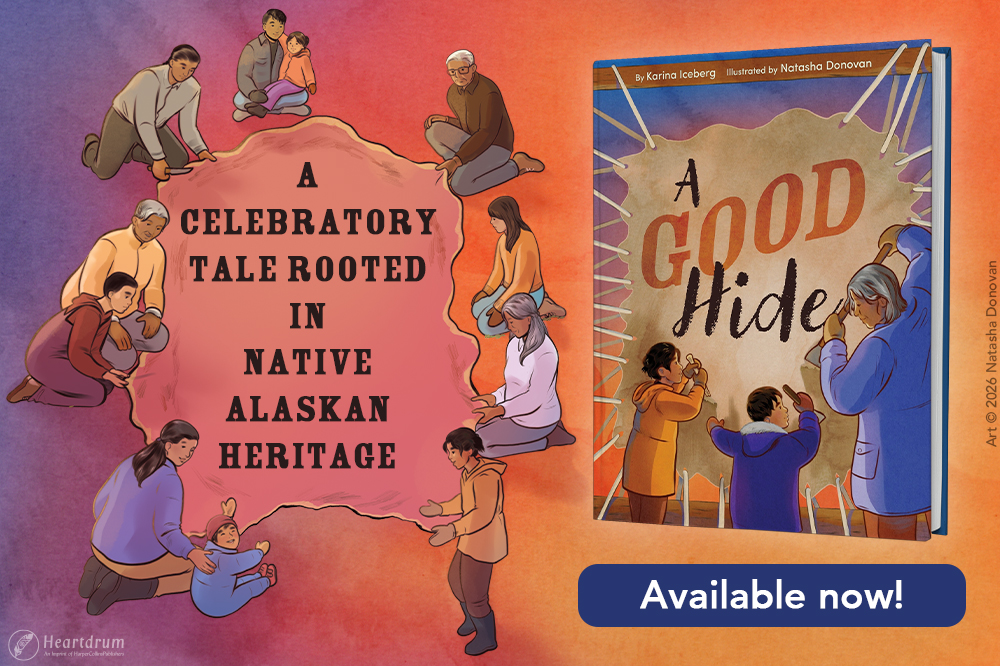
From these hands, old to new, a tradition of love passes through.
It’s moose season in Alaska and when the hunt is over, the community comes together to transform the raw moose hide into something truly special, step by step, with the work of many hands.
From stretching and scraping to making brain stew, each part of the process is a celebration! With humor and heart, debut author Karina Iceberg (Aleut/Alutiiq) and award-winning illustrator Natasha Donovan (Métis) share a resonant message of gratitude, community, and shared knowledge as an intertribal Native Alaskan community works together to tan a moose hide.
An author's note from Karina Iceberg:
In Alaska, fall means moose season. In fact, many schools schedule a fall break specifically for hunting. A moose can feed an entire family through the long winter—a matter that is not taken lightly. For thousands of years, after a successful hunt for whale, walrus, seal, otter, bear, moose, or any other game, Native Alaskans have used all parts of the animal in a gesture of both respect and gratitude. Many continue that tradition to this day by making use of all parts of the moose, including its hide, which can be tanned in the manner depicted in this book. Moose hide is a versatile material used to make a wide variety of important items like moccasins, mittens, clothing, pieces of regalia, cord, rope, quivers, and bags. Large, tanned hides are kept whole for making shelters.
The particular techniques of tanning a hide can vary from tribe to tribe, village to village, family to family. Like recipes, they all have their own distinctive flavor. A few techniques I've described were more common in the past, such as the use of urine and brain matter. However, some people still use these age-old methods because they accomplish more naturally exactly what the modern chemical alternatives do: treat, soften, and smooth the hides so that it doesn't decay or stiffen into rawhide. I have often thought that the many unique yet interconnected ways of tanning represent our larger Native community: a huge intricate tapestry of individual threads, old and new, each with something to offer and some still being woven in.
As an Alaskan Native myself (Aleut-Alutiiq), I know how lucky it is that I am here because of the survival skills of my ancestors. If it were not for the moose, I might not exist! When I am out on a moose hunt—whether scouting on the slow waters of an inland river or hiking with the red fall brush underfoot—I am grateful to have the opportunity to honor my ancestors and the animals by continuing this tradition.
We are thankful for the moose, for our communities, and for a good hide.
Help us defend tribal sovereignty.
At Native News Online, our mission is rooted in telling the stories that strengthen sovereignty and uplift Indigenous voices — not just at year’s end, but every single day.
Because of your generosity last year, we were able to keep our reporters on the ground in tribal communities, at national gatherings and in the halls of Congress — covering the issues that matter most to Indian Country: sovereignty, culture, education, health and economic opportunity.
That support sustained us through a tough year in 2025. Now, as we look to the year ahead, we need your help right now to ensure warrior journalism remains strong — reporting that defends tribal sovereignty, amplifies Native truth, and holds power accountable.
 The stakes couldn't be higher. Your support keeps Native voices heard, Native stories told and Native sovereignty defended.
Stand with Warrior Journalism today.
Levi Rickert (Potawatomi), Editor & Publisher